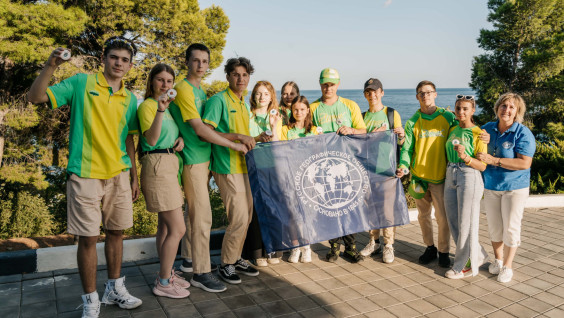
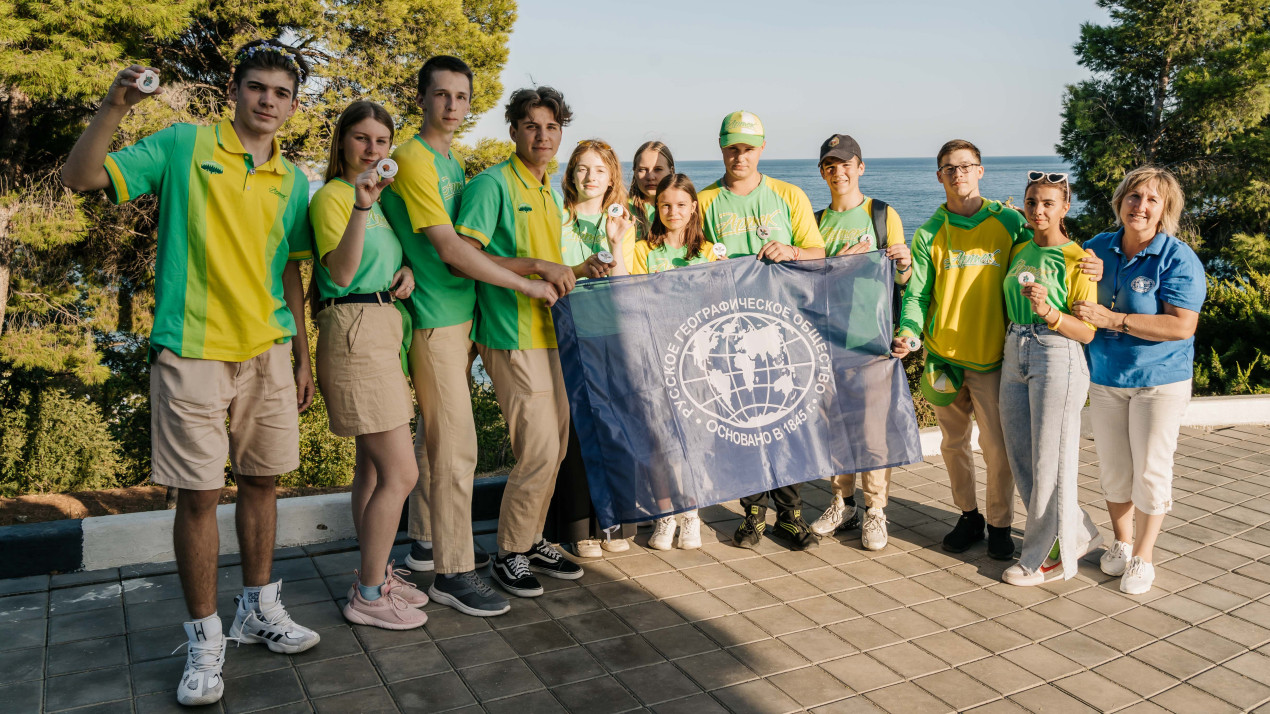
Session participants. Photo: Ksenia Gasitsa
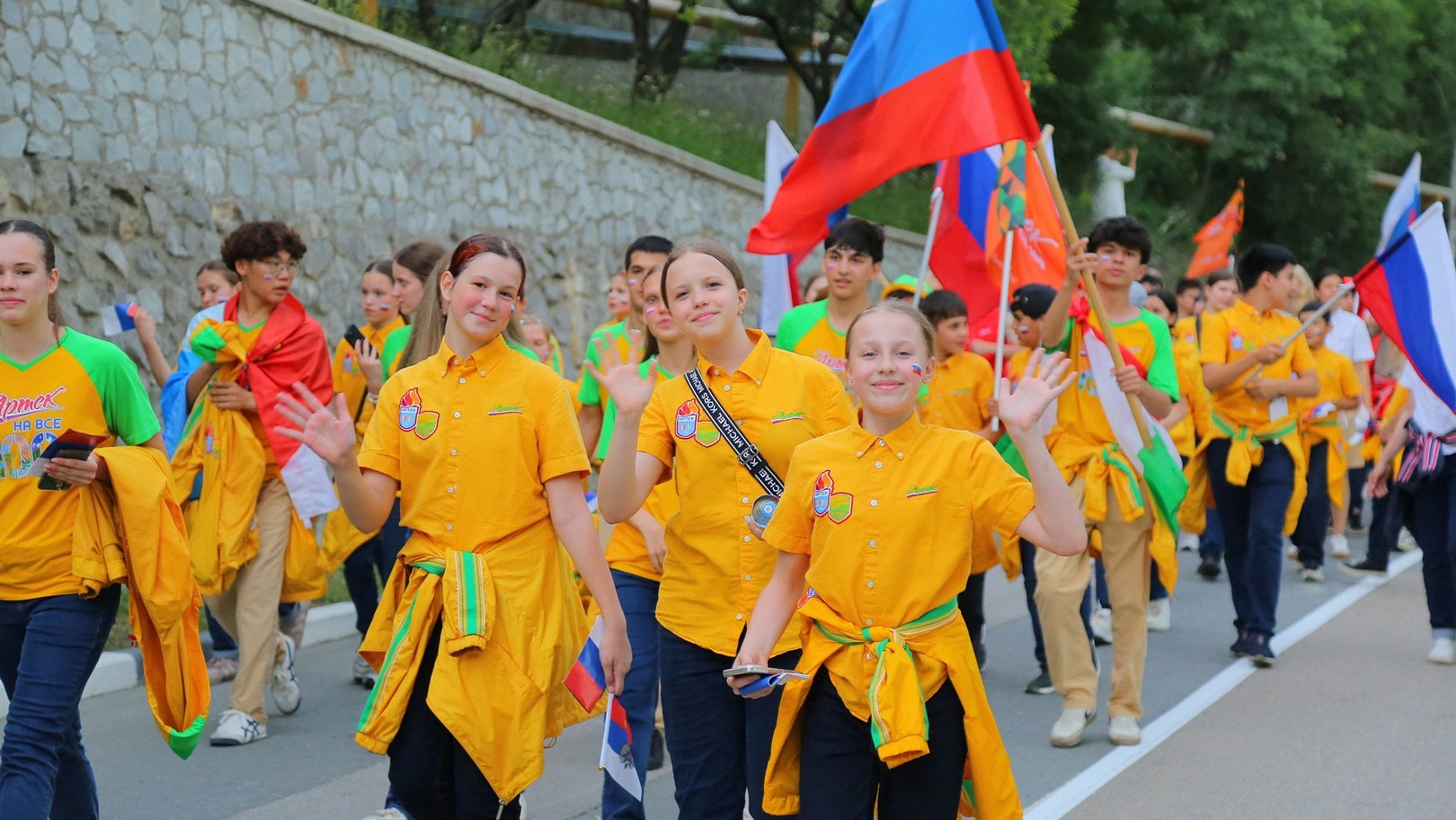
The specialized session of the Russian Geographical Society «World of Discoveries» has ended at the international children’s center «Artek». It was attended by 300 schoolchildren from Russia, Belarus, Kazakhstan, Armenia, and Tajikistan. In three weeks, the students got acquainted with the achievements of geographical science, met with scientists and travelers, searched for treasures, climbed Mount Ayu-Dag and mastered artificial intelligence.
«We have been holding specialized sessions of the RGS for 12 years and every time we try to assemble the program in a new way. Our main goal is to introduce children to the most advanced and interesting technologies. As part of the current session, 'Artek’ hosted a series of festivals, with experts from many organizations working with the young people to show the diversity of Earth sciences. And, perhaps, this place will spark a dream in one of these talented kids, which will determine their professional future,» said Ivan Chaika, Chairman of the Krasnodar Regional Branch of the RGS.
The session opened with the RGS Festival, which set the tone for the entire training. The kids got acquainted with the key areas of the organization’s activities, and each participant received a «Pioneer’s Diary». Young geographers took part in a large-scale quest, where they learned how to work with a compass, Mohs scale, and assessed water samples from various sources.
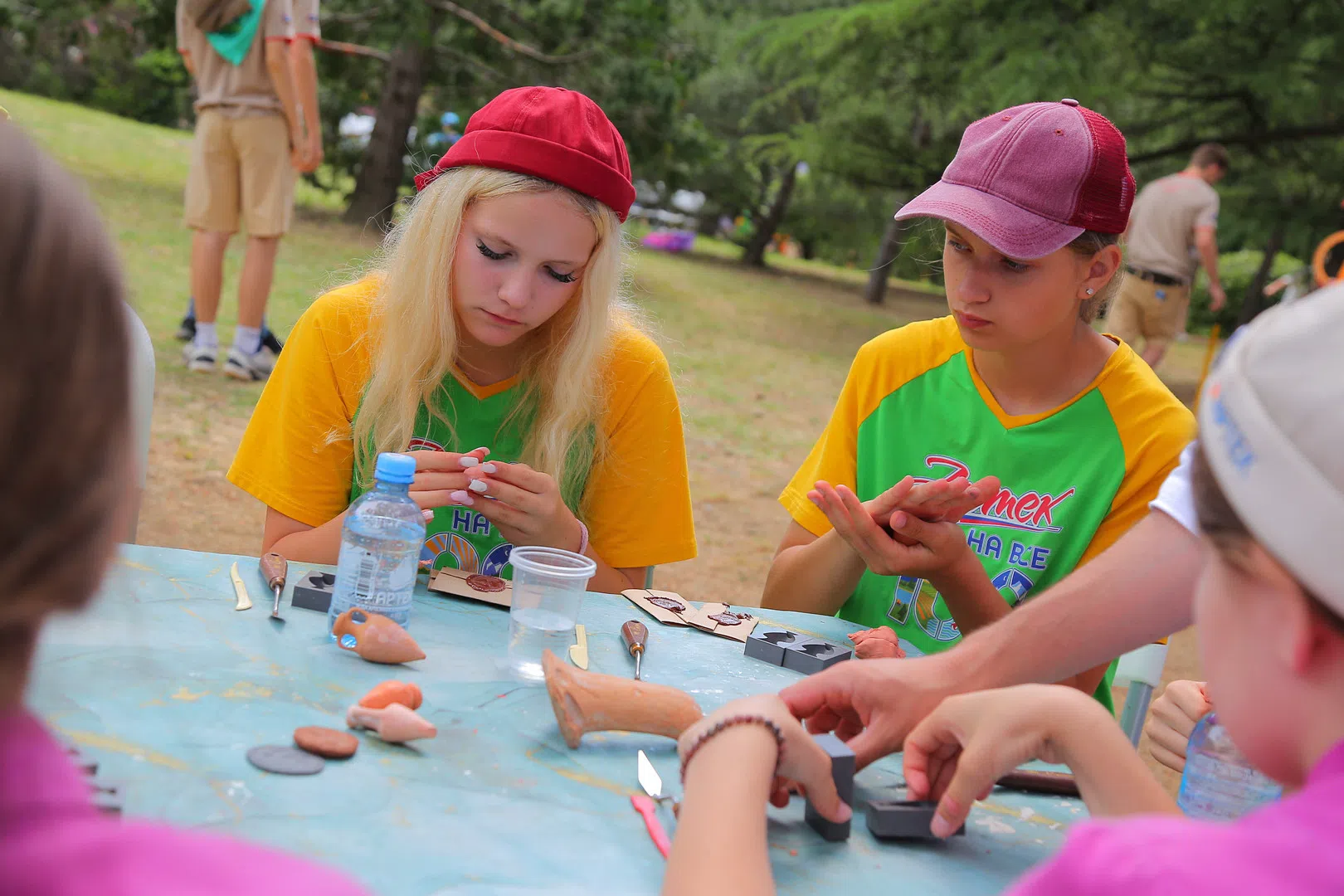
At the festival «Ancient Heritage of Russia: The Link between Times and Peoples» they met with experts: Candidate of Historical Sciences Viktor Kropotov and employee at the Alupka Museum-Reserve Anastasia Kudrey. The scientists spoke about the influence of Hellenic culture on the Crimea, the Taurians, the Scythians, and the Tauric Chersonese. But the highlight was the practice: Dmitry Brazhnikov, Bogdan Bobrinev, and Aleksandr Deev, employees at the Tauric Chersonese Museum-Reserve, conducted master classes on creating Byzantine mosaics and sculpting antique amphorae.
«I really enjoyed the lesson, as we were told about the history of Antiquity and its influence on modern culture. The most memorable thing was that a whole museum appeared on the site of ancient Chersonese, where you can try yourself as Roman legionnaires,» said Ilya Maltsev, a participant in the session.
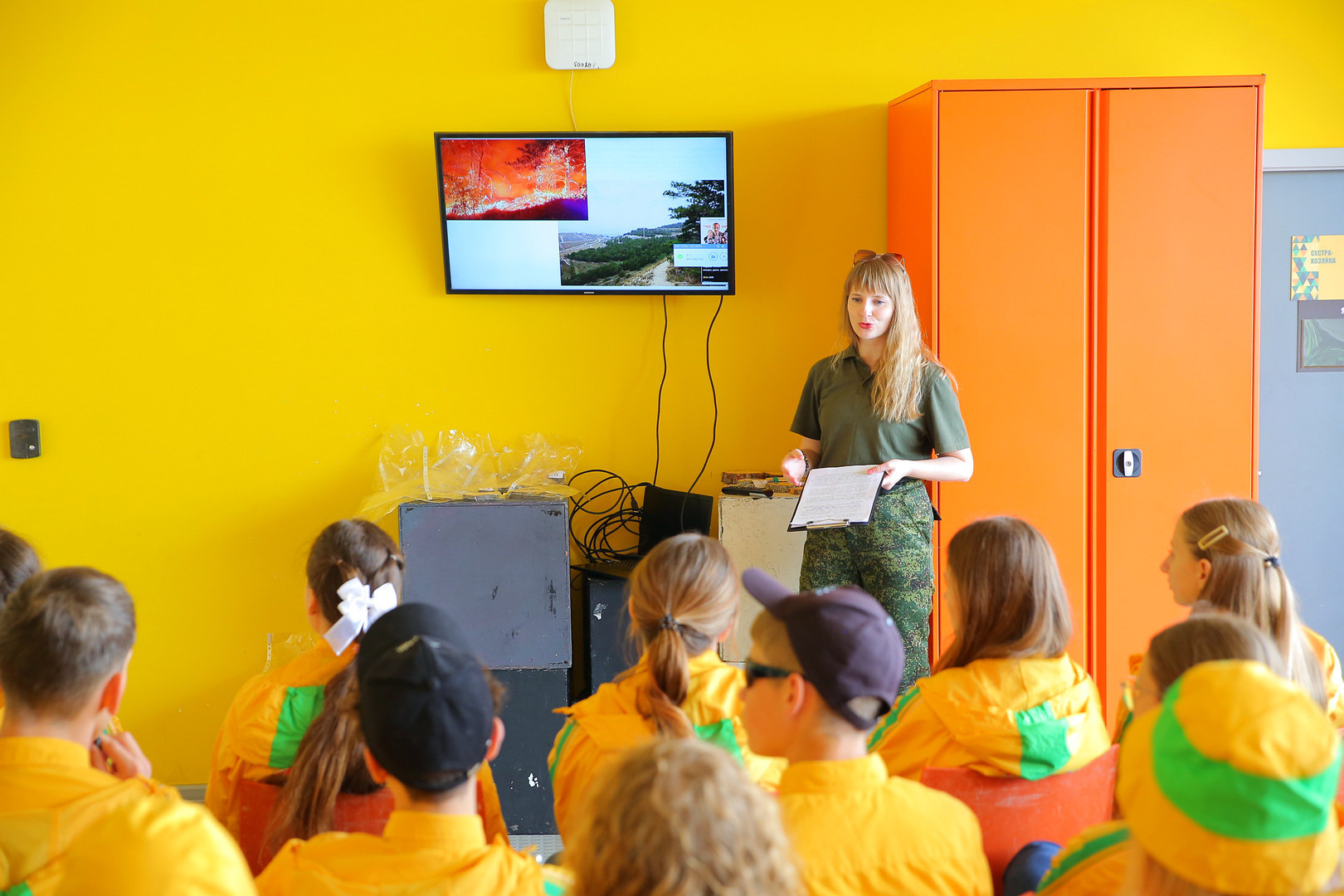
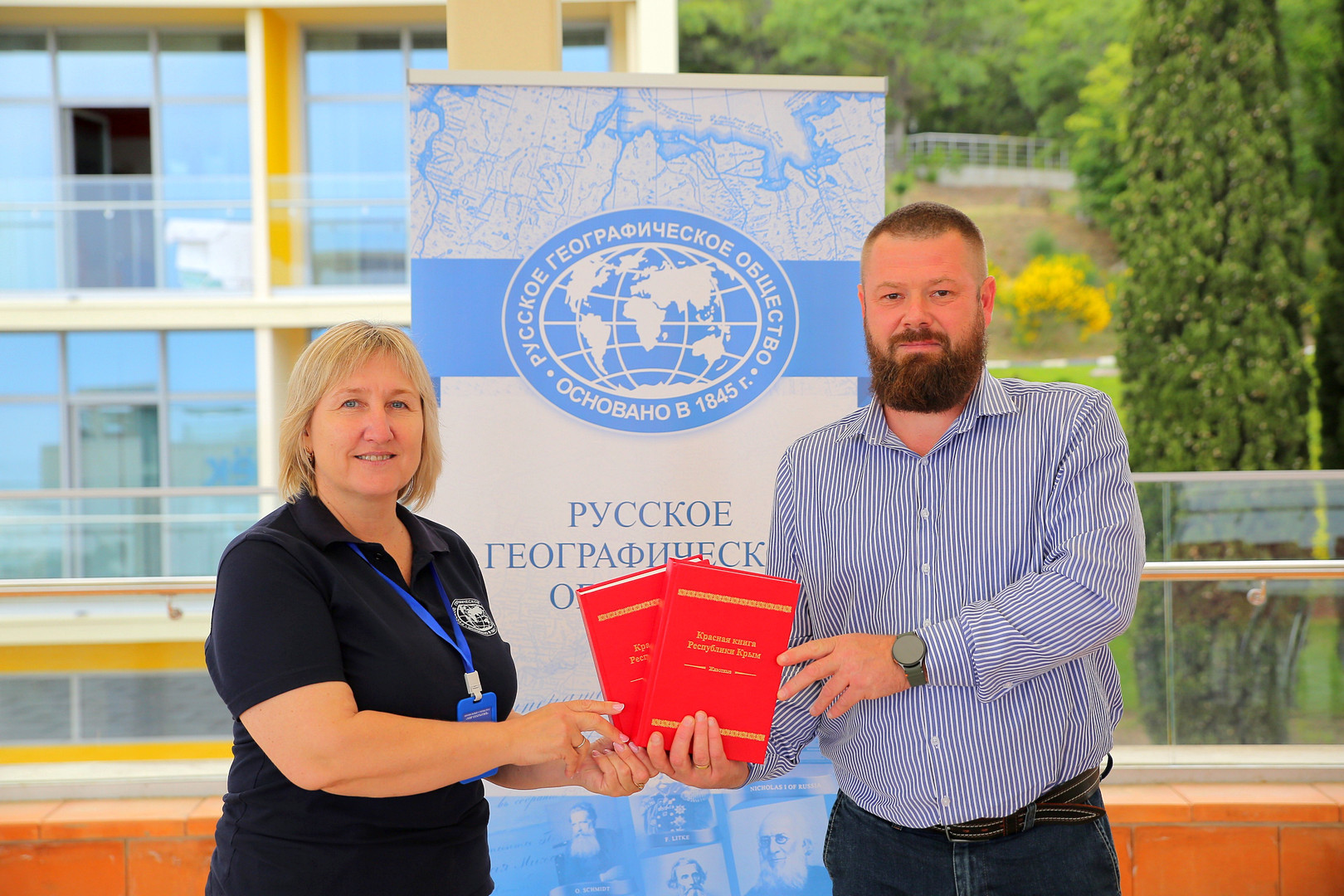
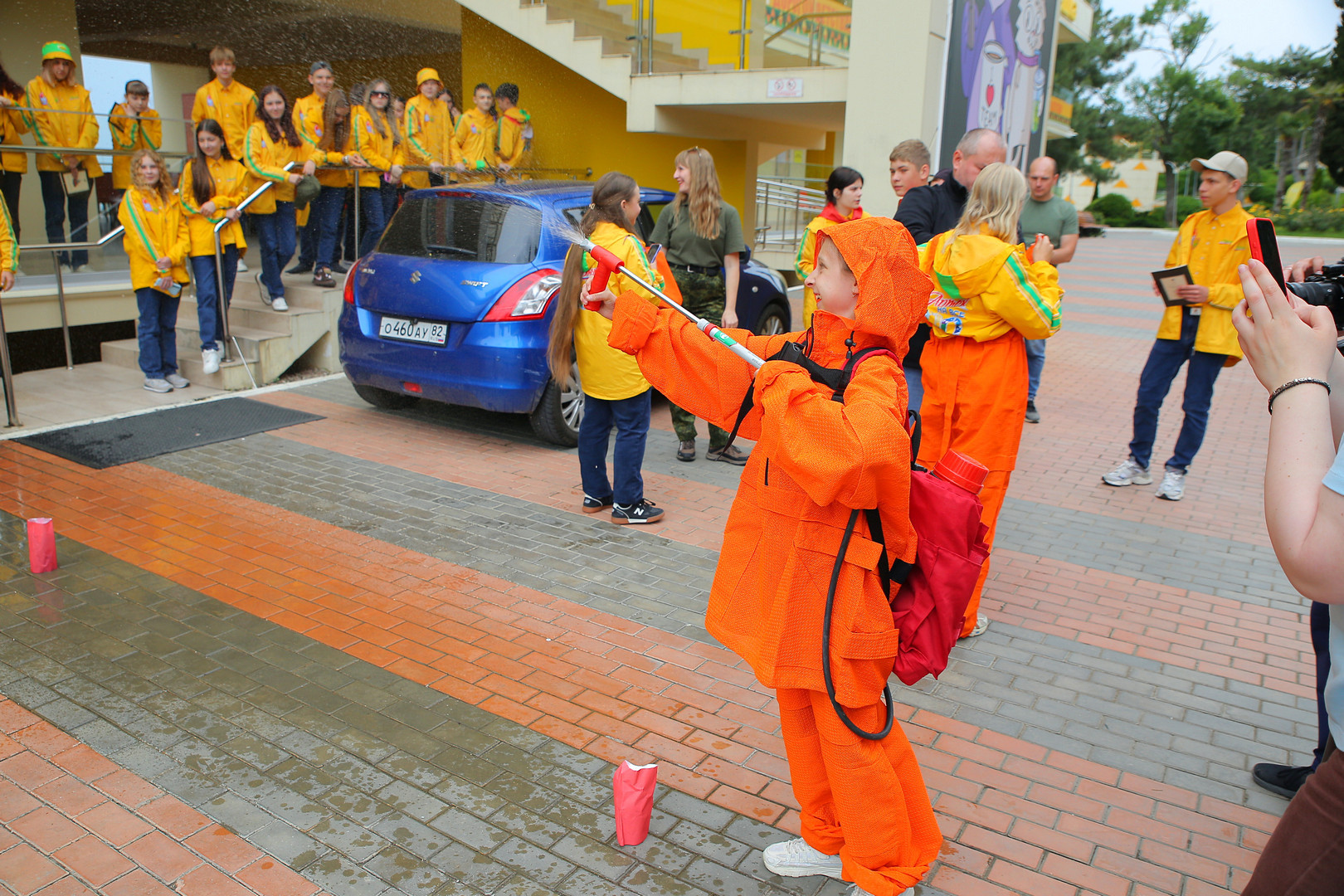
The ecological festival, held with the support of the Ministry of Ecology and Natural Resources of the Republic of Crimea, brought together leading experts from the region. Deputy Minister of Ecology of Crimea Aleksandr Bereznev handed over a two-volume Red Book of the Republic of Crimea to the library of «Artek». Svetlana Peskovets, a specialist at the Ministry, demonstrated fire extinguishing equipment, and Maksim Shnendrak and Refat Useinov, specialists from the Center for Laboratory Analysis and Technical Measurements of the Republic of Crimea, taught the children how to work with gas analyzers and aspirators. Teachers from the Moscow State University branch in Sevastopol, Vladimir Gubanov and Ekaterina Bazyura, spoke about global warming and the ecology of the Black Sea.
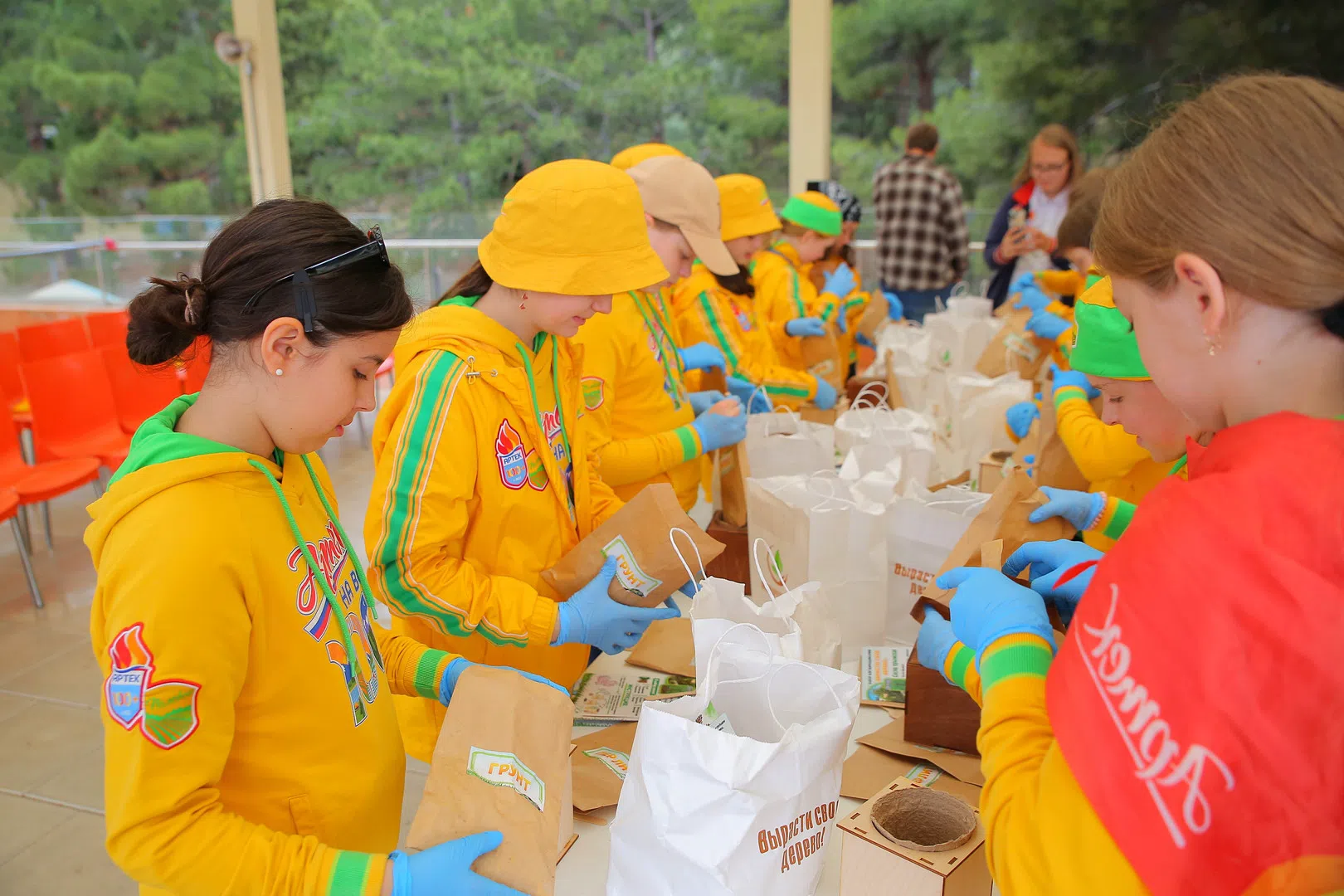
A lecture by Grigory Prokopov, a senior lecturer at the Crimean Federal University (CFU), about dodo birds whose disappearance was cause by humans, aroused great interest. Dmitry Epikhin, Candidate of Biological Sciences, and Aleksandr Rudyk, Senior lecturer at the Department of Geoecology at CFU, introduced the children to the system of specially protected natural territories in Russia and the reserves of the Crimea. The day ended with a master class «Grow Your Tree» by Anastasia Ganzina, representative of the Ministry of Ecology and Natural Resources of the Republic of Crimea, during which each participant planted a pine seed in the ground.
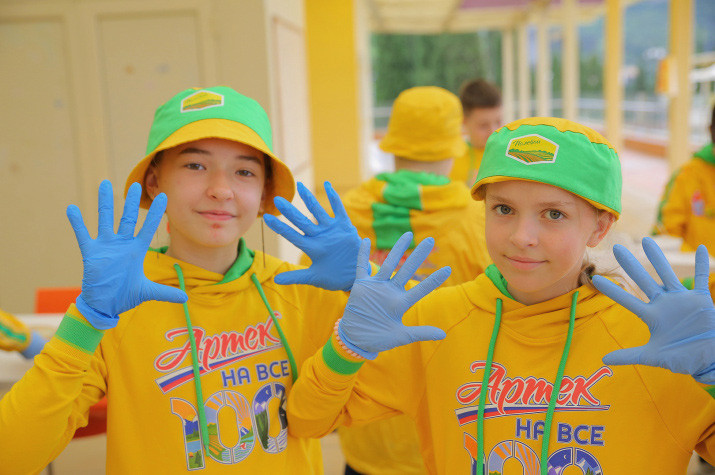
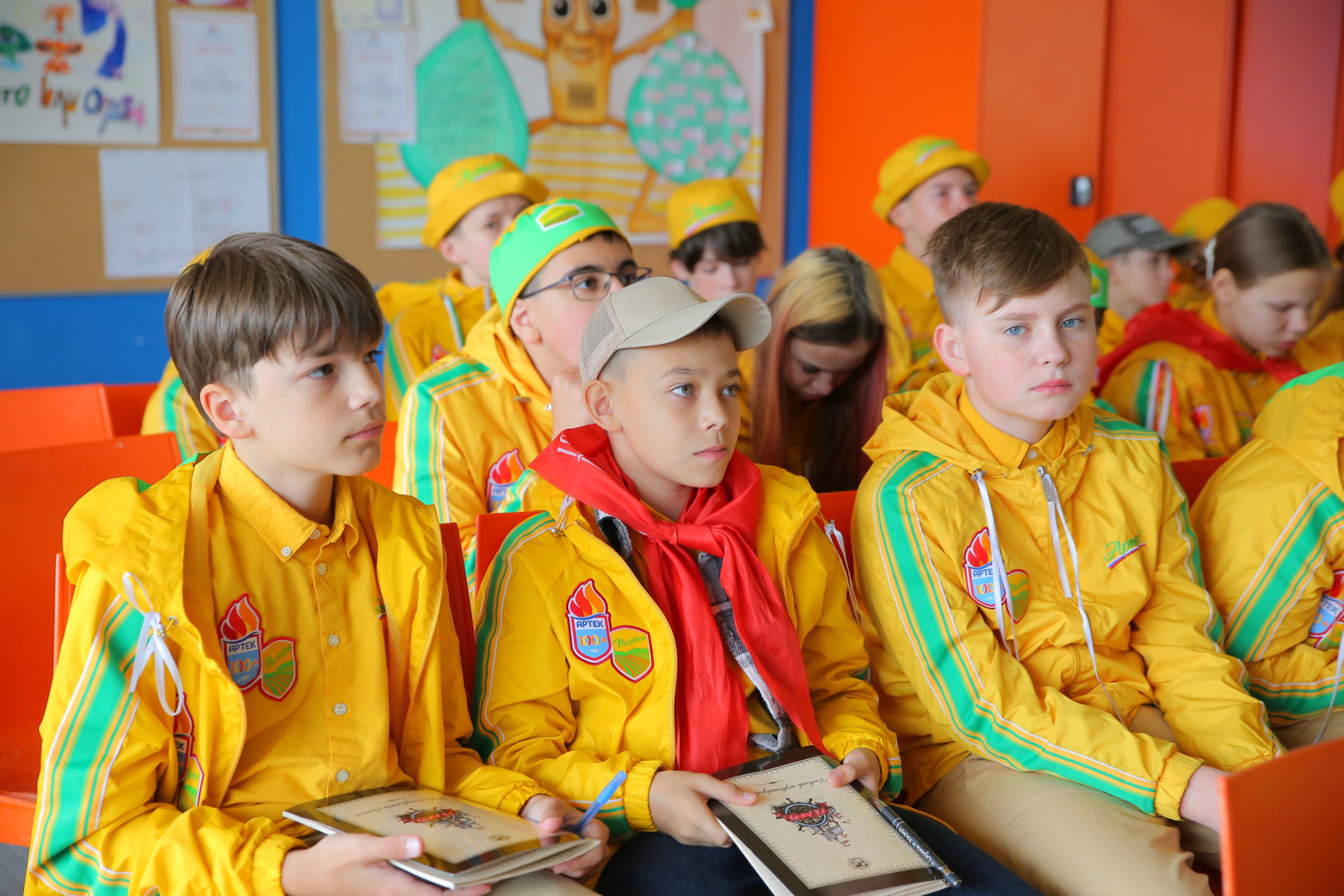
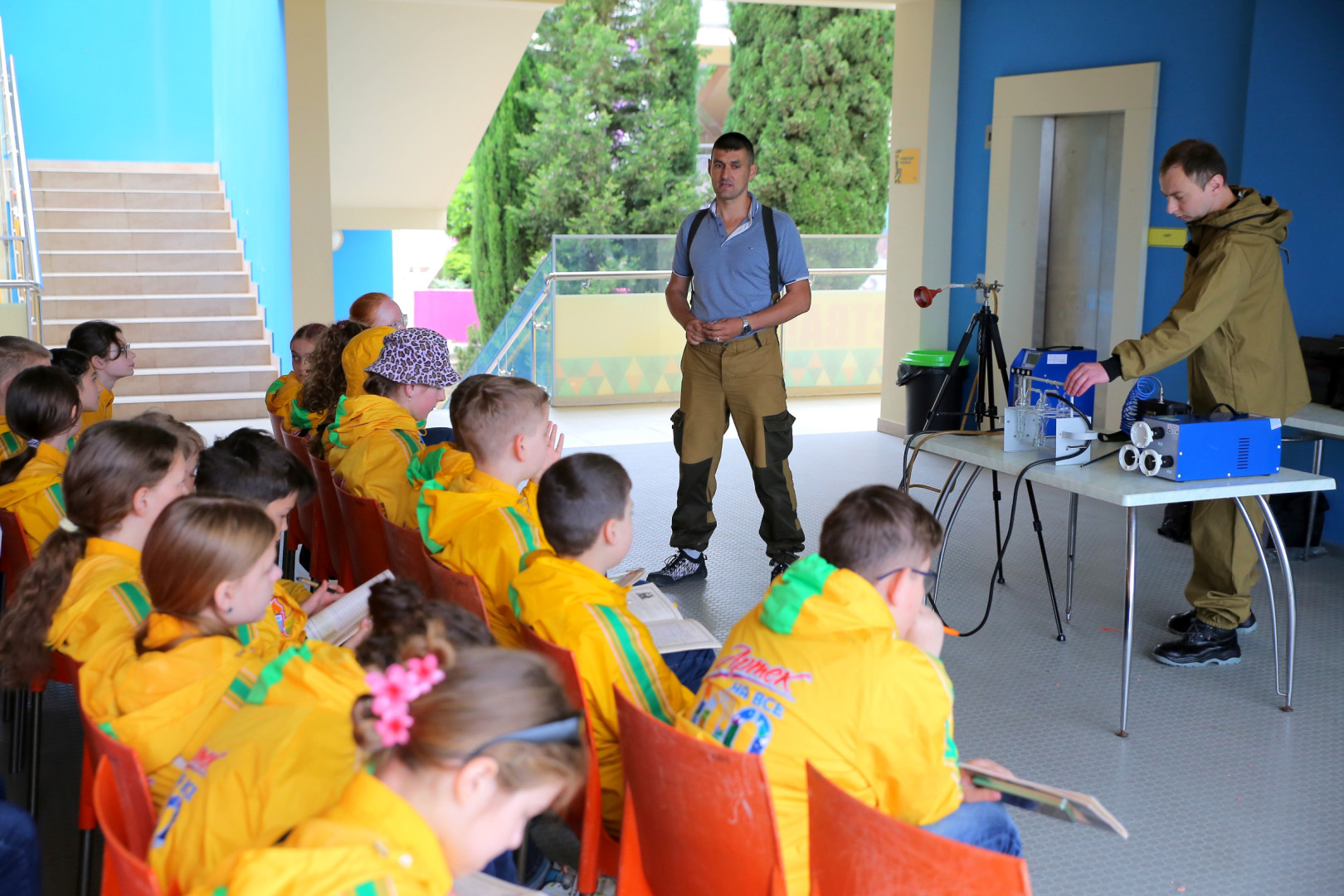
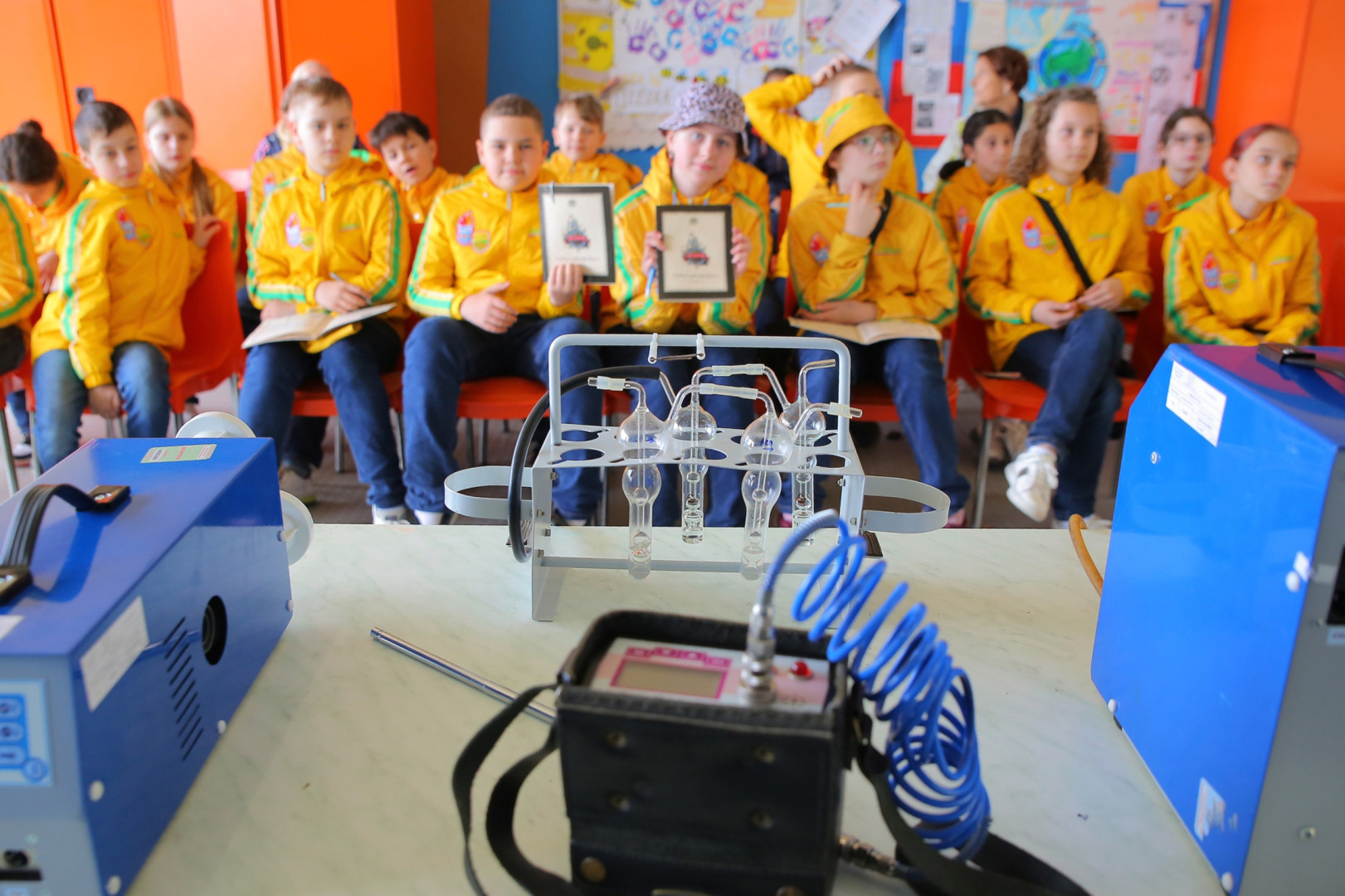
On Black Sea Day, «Artek» attendees met with scientists from the Institute of Biology of the Southern Seas of the RAS. Yana Zhondareva, a junior researcher, spoke about microalgae as the «green factories» of the future. They are capable of purifying water and producing biofuels. Researcher Artyom Paraskiv gave a lecture on marine radioecology and the consequences of accidents at the Chernobyl and Fukushima-1 nuclear power plants. Mikhail Silakov, a member of the 71st Russian Antarctic Expedition, shared stories about the work of polar explorers in the Southern Ocean.
«It was interesting to find out how scientists explore the sea and what technologies they use during expeditions. I especially remember the story about scientific vessels and the collection of marine samples,» said Egor Nazarenko, a participant in the session.
The «Pushkin Geography» festival combined literature and geography. Mikhail Kaidash, a member of the Crimean Branch of the RGS, spoke about the dialects of the Russian language, and Nadezhda Kovalevskaya, a senior researcher at the Alupka Museum, introduced the children to the Crimean period of the poet’s life and presented a «Map of Pushkin’s Places». Ekaterina Samokhina, a member of the Crimean Branch of the RGS, told about the poet’s journey across the peninsula, the places where he visited, and the impressions reflected in the poet’s famous works — the poem «The Fountain of Bakhchisaray» and the novel in verse «Eugene Onegin».
The Festival of the Peoples of the World turned «Artek» into a workshop of cultural traditions. In the «Children-to-Children» format, schoolchildren mastered Mezen and Gorodets painting, wove Evenki charms, and created likhoradka dolls of Volga region.
«We had a real celebration of friendship. We told each other about our traditions, costumes, and even learned national words. It unites us very much,» Victoria Oreshina shared.
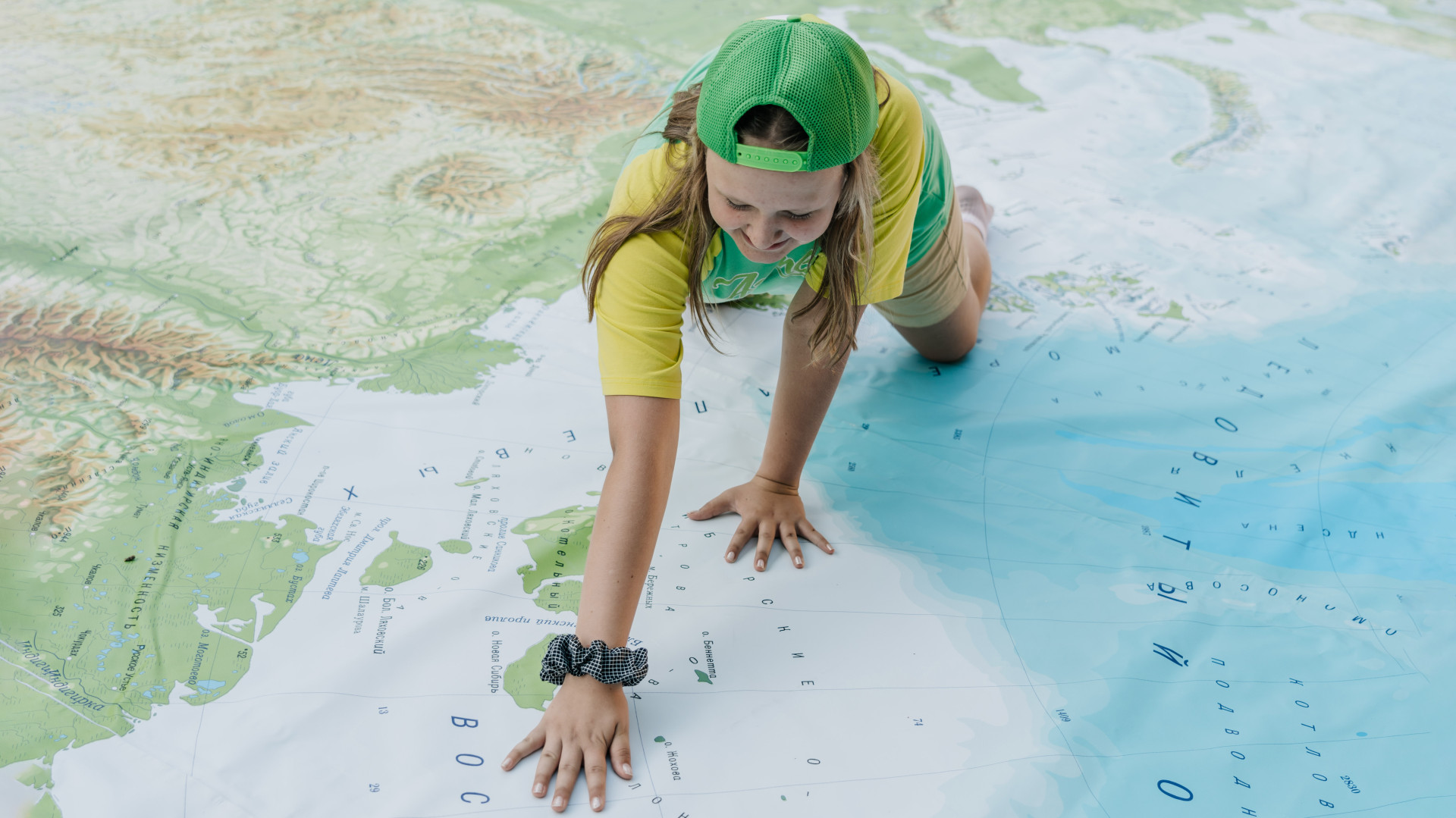
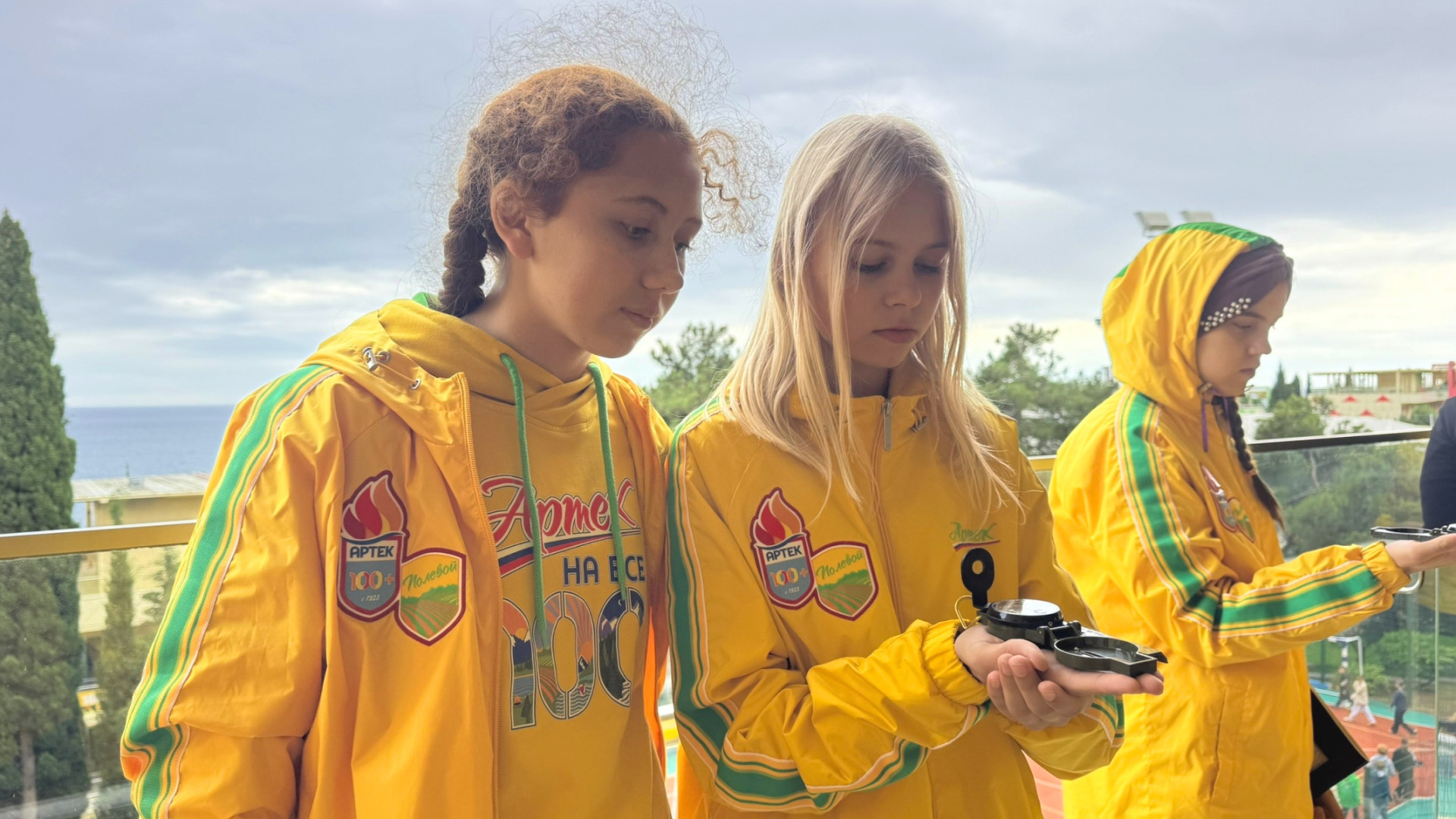
On Motherland Day, young geographers introduced their peers to folk crafts; and a laboratory with compasses and air measuring devices worked at the RGS venue. The center of attraction was the map of the country, where the kids found their regions and remembered the geographical records of Russia. Each master class on this day was accompanied by stories about the native land, family traditions, and cultural peculiarities of the regions of Russia.
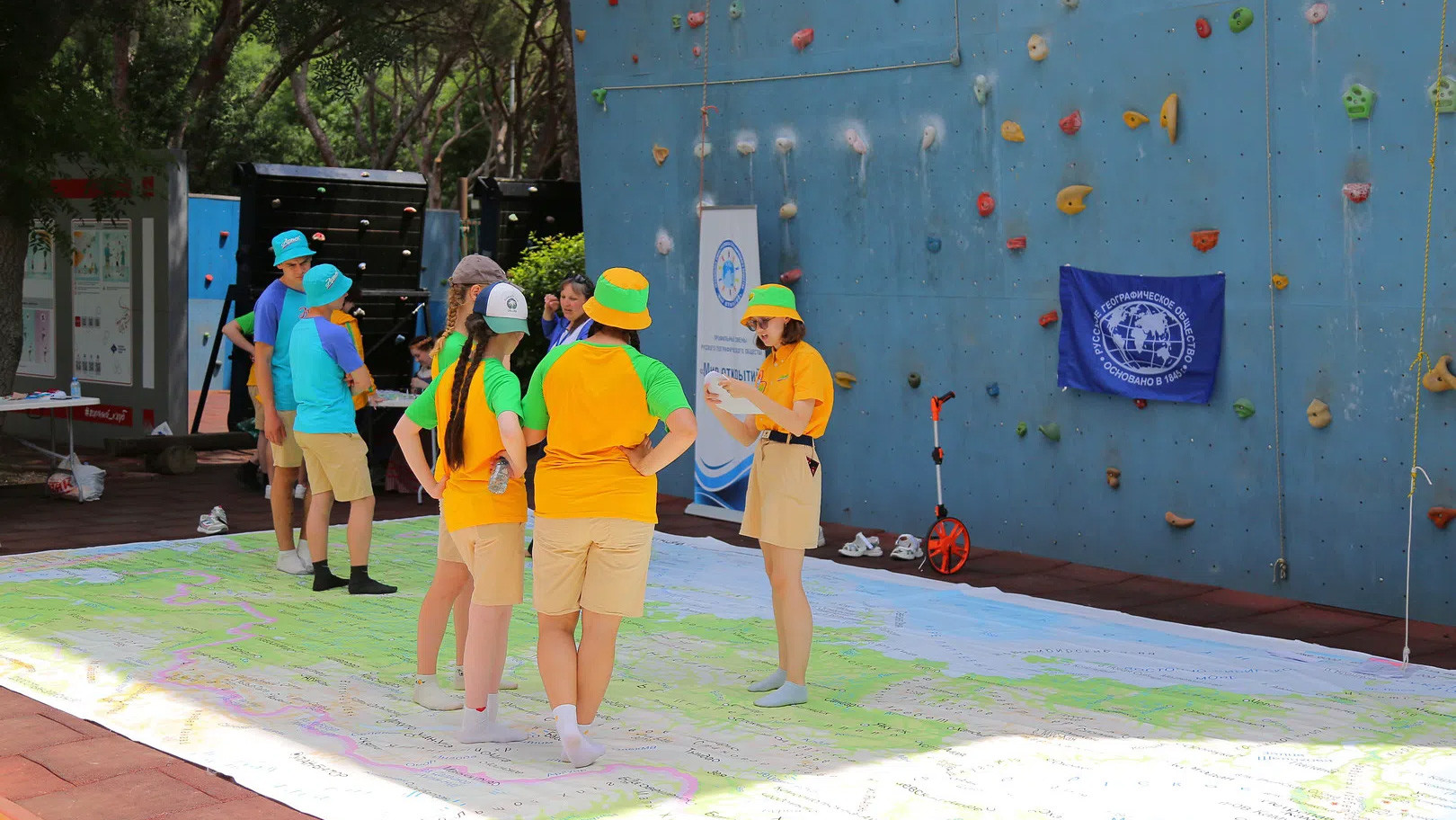
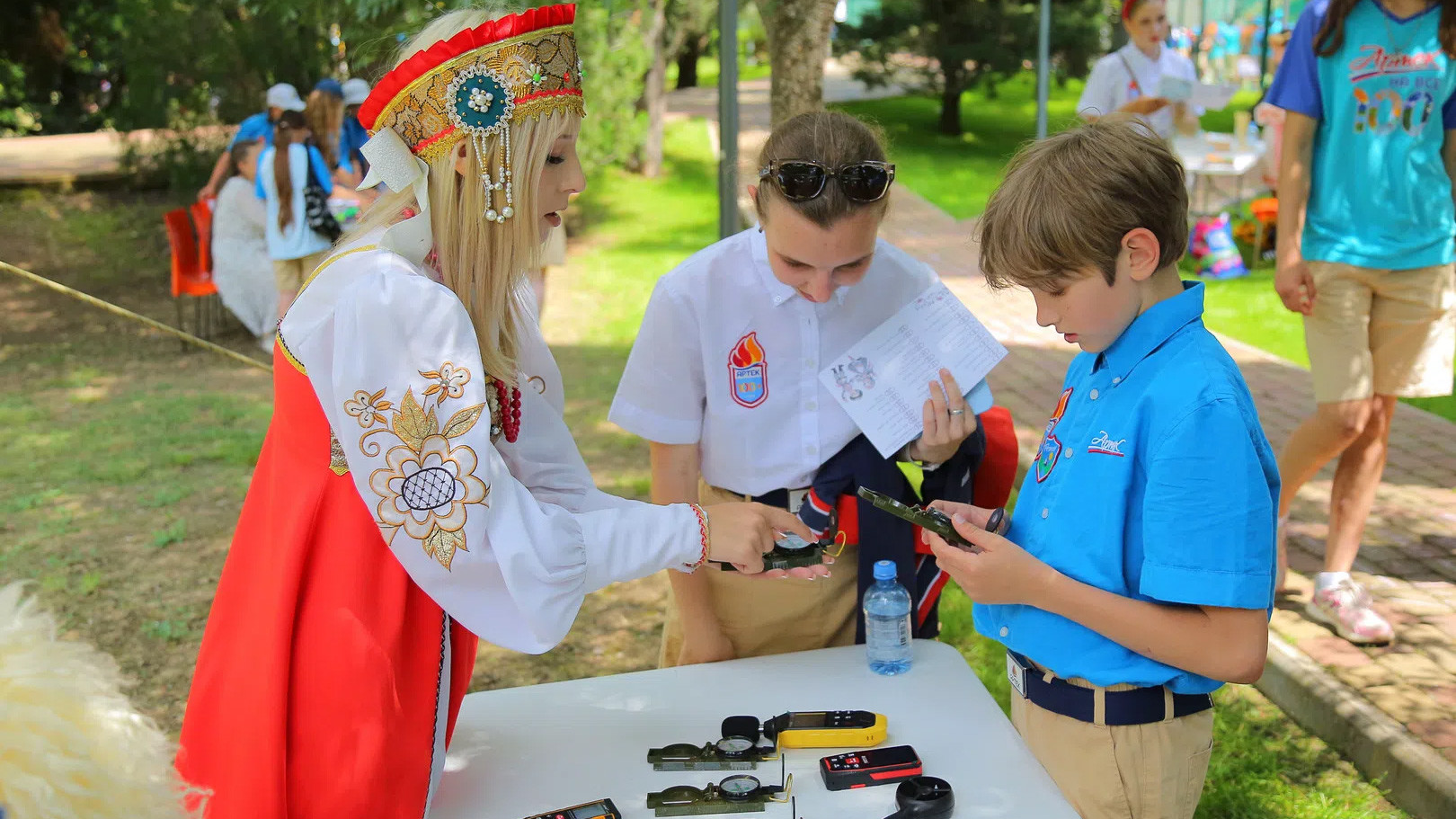
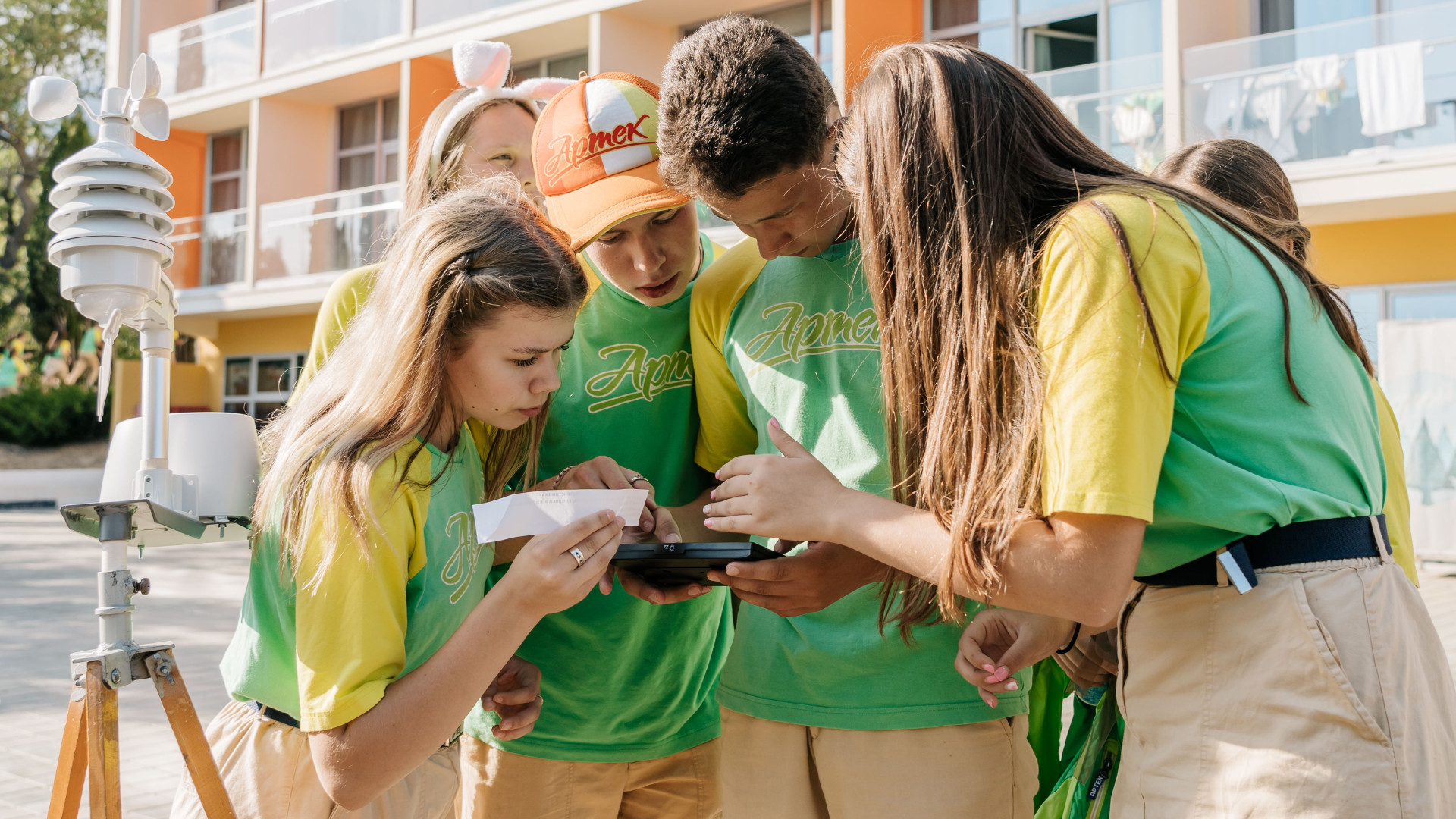
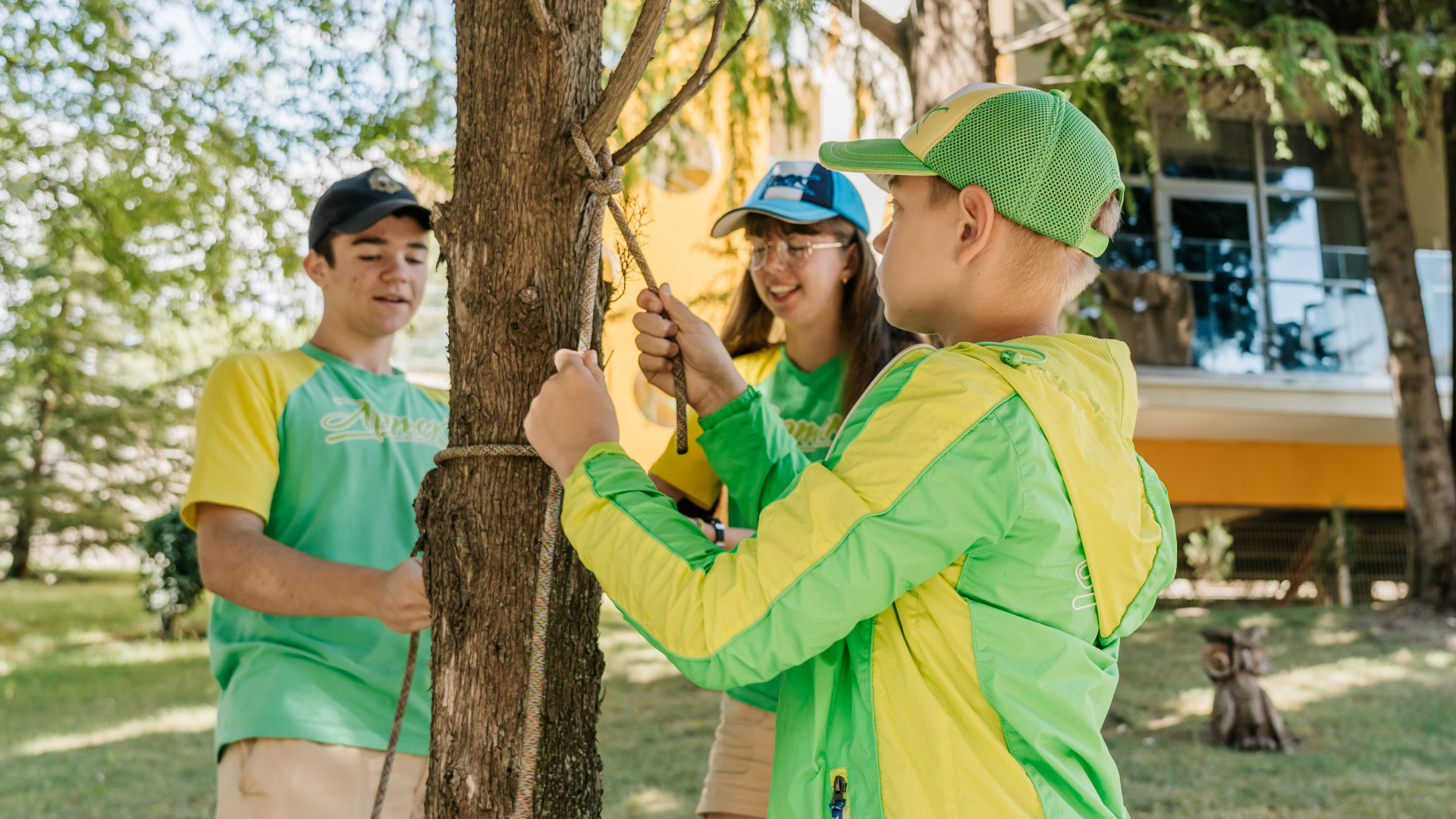
There were real expeditions during the session. The young geographers climbed Ayu-Dag Mountain, then passed the tourist relay «Turgrad», during which they learned how to tie knots and pack a backpack. In a practical lesson with geographical devices, the participants were divided into groups: some made a noise map of the territory, others measured wind speed with an anemometer and soil acidity with a pH meter, and others created maps using a curvimeter.
Natalya Strachkova, Dean of the Faculty of Geography of the Crimean Federal University; Irina Prygunova, associate professor at Moscow State University, who spoke about marine geourbanistics; and Gennady Samokhin, a speleologist, who introduced the children to the underground world of Crimean caves, shared their knowledge.
«After meeting with experts, I realized that geography can be connected not only with travel, but also with modern technologies, data analysis, and scientific research, » Kirill Moskal shared his impressions.
On one of the session days, Ivan Chaika, Chairman of the Krasnodar Regional Branch of the RGS, who was once an «Artek» member himself, became a guest of «Artek». He spoke about the Crystal Compass National Award and the documentary projects of the Society. Another interesting meeting was with the traveler Konstantin Merzhoev, who told about his expeditions. The children were particularly interested in the story of the expedition «RussIa», whose participants covered more than 34,000 km along the borders of our country, using a variety of means of transportation — from bicycles and cars to an icebreaker.
At the initiative of Yuri Maksimov, a member of the Board of Trustees of the RGS, co-founder of the Cyberus Foundation and IT company «Positive Technologies, a series of interactive classes on modern digital tools was held for young geographers. The geographer of the 21st century works not only with a map, route, or terrain description, but also with data, digital platforms, analytical tools, and services that allow you to find patterns faster and make more accurate decisions.
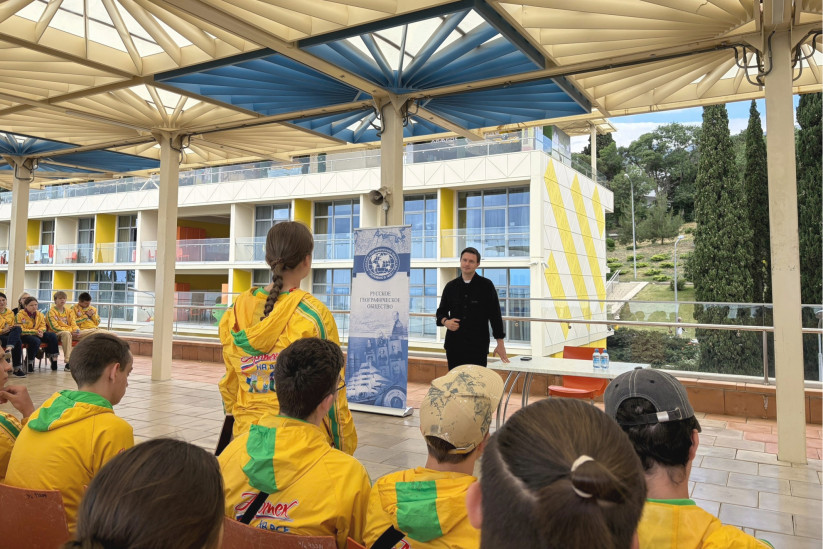
Ivan Chaika answered the questions of the kids. Photo: World of Discoveries
«I used to think of a map as an ordinary plan of the area. During the classes, it became clear that this is a whole data system. We especially enjoyed plotting the route to find the treasure — we literally felt like the developers of a real quest,» said Ivan Voloshin, a participant in the session.
To feel like real researchers, the children conducted their own «population census» within a group of 32 people. And in classes dedicated to natural processes and emergencies, the students used specialized simulators to simulate earthquakes and tsunamis, observing how various parameters affect the development of natural phenomena.
Speaking of modern digital technologies, it was impossible to ignore the current topic of artificial intelligence. The «Artek» attendees used neural networks to find and develop possible solutions to climate problems, discussed the prospects for using AI in scientific research, and analyzed the advantages of modern digital assistants.
«Today, geography and technology are no longer different worlds, but one common environment for research. A modern geographer should not only love nature and understand the map, but also work with data, digital services, AI, and analytical tools. Our task is to show that even in traditional sciences it is possible and necessary to master IT competencies. Moreover, it’s not just about using ready-made solutions, but understanding how they work, and knowing the tasks of your field, gradually create new digital solutions that help move science forward,» commented Yulia Ayrapetova, organizer of interactive classes from Positive Technologies.
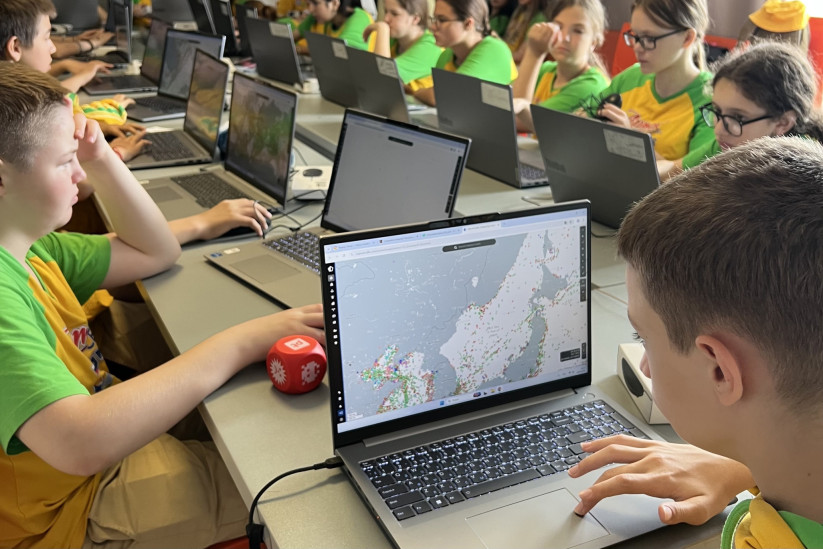
Geography and technology. Photo: World of Discoveries
On Emergency Rescuer’s Day, volunteers from the Crimean Resource Center and the All-Russian Student Rescue Corps trained children in first aid: from wound treatment to recognizing allergic reactions and actions in case of animal bites.
Throughout the session, film screenings of documentaries by the Russian Geographical Society became an important part of the educational program. After days full of lectures, master classes, and practical exercises, the children gathered in the cinema hall to make new discoveries, now together with the heroes of the documentaries «Journey through the Golden Ring of the Bosporan Kingdom», «Russian Himalayas: Walking in the Clouds», «My Personal Plan for the Transformation of the Planet».
On the day of the 101st anniversary of «Artek», a celebratory closing ceremony of the specialized session «World of Discoveries» took place. All 300 participants gathered on the main stage of the camp to sum up the results of three weeks. Session coordinator Elena Lubashevskaya and guest of honor Konstantin Merzhoev presented diplomas and souvenirs in several categories. The participants of the puzzle map championship received the title of «Geography Expert». The winners of the Geographical Dictation were awarded diplomas for excellent results. In the «Best Pioneer’s Diary» category, the awards were given to the most creative children who shared their impressions about each day of the session. Young journalists and photographers who filmed reports and conducted interviews received commendations for a real-life look at the events.
The main part of the evening was the presentation of special prizes to the winners of the session — leaders who proved themselves in all activities and became the true soul of their teams.
«You have not just learned new things — you have learned to be friends, work in a team and take responsibility, » Elena Lubashevskaya told the children.
Over the years, the «World of Discoveries» program has developed into an entire ecosystem where the personality of a young citizen is formed through research, play, and practice.
«We see a deep, conscious interest in native country, its natural and cultural heritage awakening in children. It’s more than knowledge. This is the education of character, responsibility for your land, and willingness to actively participate in its development. Our common goal is for every child to discover Russia and find their vocation, their role in the common cause of preserving and increasing the wealth of our Motherland,» said Konstantin Fedorenko, Director of the international children’s center «Artek».
The specialized sessions project «World of Discoveries» has been implemented since 2015 by the Russian Geographical Society in cooperation with the Ministry of Education of the Russian Federation on the initiative of the Chairman of the Board of Trustees of the RGS, president of Russia Vladimir Putin. The Krasnodar Regional Branch of the RGS organizes and conducts thematic sessions with the grant support of the RGS. The main goal of the large-scale project is to preserve and enhance Russia’s intellectual potential. In 2025, Vladimir Putin noted «World of Discoveries» as one of the most successful projects of the RGS. More than 8,000 children from 15 countries have already become participants of «World of Discoveries» in the All-Russian and international children’s centers «Orlyonok», «Ocean», «Smena», «Artek», and «Alye Parusa».