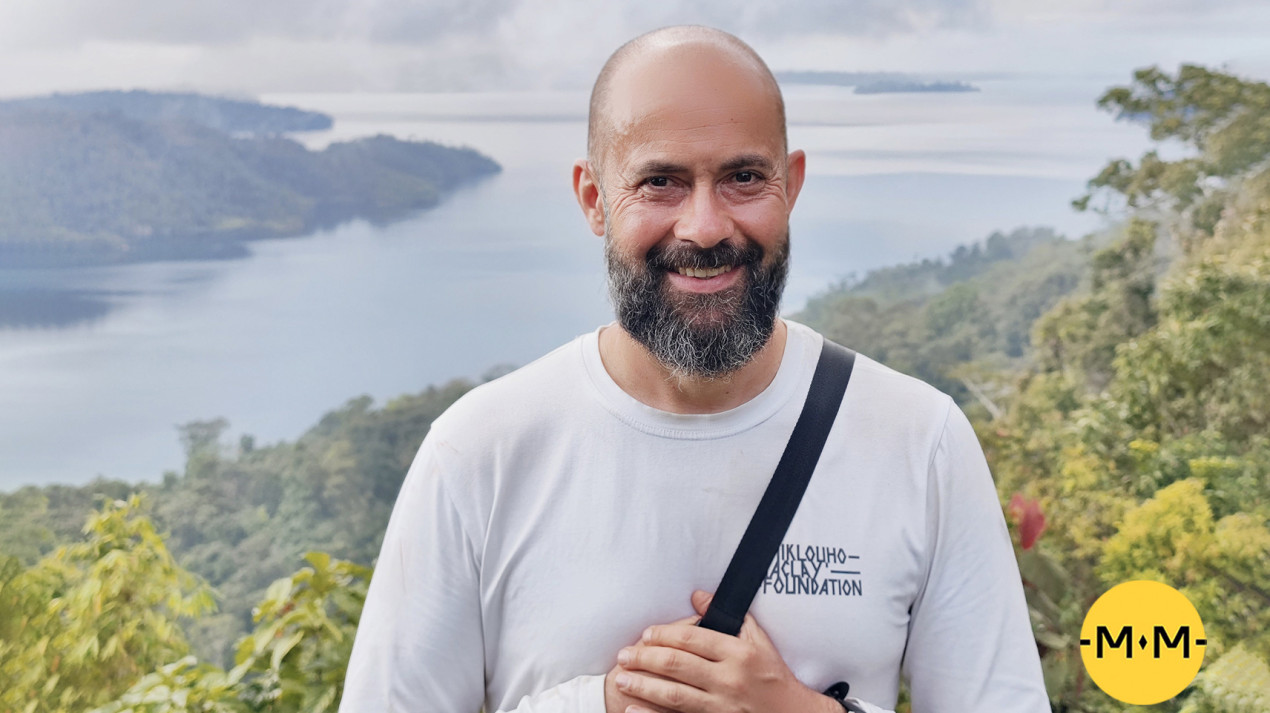
Nikolai Miklukho-Maklai Jr. in Papua New Guinea. Photo provided by the Miklukho-Maklai Foundation mikluho-maclay.org
July 17 marked the 180th anniversary of the birth of the outstanding scientist, traveler, and public figure Nikolai Miklukho-Maklai. His scientific research revealed to us the wonderful world of Papuans. His diaries read like adventure novels. You can make blockbusters with the material from his biography, and his ideas were far ahead of their time, giving an impulse to humanity to become more humane and enlightened. Leo Tolstoy wrote to him: «You were the first to undoubtedly prove by experience that man is man everywhere, that is, a kind, sociable being, with whom one can and should communicate only with goodness and truth, and not with guns and vodka.» He became the ideal goodwill ambassador, through whose personality a multi-million country on the other side of the planet, a century and a half later, perceives Russia as positively as himself. Nowadays, Nikolai Nikolaevich Miklukho-Maklai’s work is continued by his great-great-grandson and full namesake, Nikolai Nikolaevich Miklukho-Maklai, a researcher at the Center for Southeast Asia, Australia and Oceania at the Institute of Oriental Studies of the Russian Academy of Sciences, Candidate of Historical Sciences, member of the Russian Geographical Society. On the eve of the anniversary of his famous ancestor, we talked about what Papua New Guinea is today, how more than 800 tribes and as many languages get along in one country, what a traditional society is like, and what they write about Miklukho-Maklai Sr. in modern textbooks of a distant country.
"I was where he was"
— Nikolai, let me address you this way, so that readers can distinguish you from the Nikolai Nikolaevich Miklukho-Maklai. Reading your work, it seems that you have some kind of special connection with your famous ancestor.
— To be honest, I don’t think so, because I am very lucky: no one in my family has ever admitted that I was named Nikolai Nikolaevich in honor of a great ancestor. And I am very grateful to my parents for that.
— Why?
— They never compared me to Nikolai Nikolaevich, seeing in me as an independent person who has the right to choose his own path in life. If we talk about some vibrations that resonated in me, it became possible largely thanks to the work of Russian and Soviet scientists who preserved the legacy of Nikolai Nikolaevich. And the Russian Geographical Society, of course, plays a big role here. If it weren’t for this contribution to preserving Miklukho-Maklai’s legacy and promoting his ideas, I probably wouldn’t have been able to work so effectively and develop my field now. So my connection with Nikolai Nikolaevich is more professional. And for me, he is more our great compatriot than my relative. That’s how I perceive it. Nevertheless, I interact with him all the time.
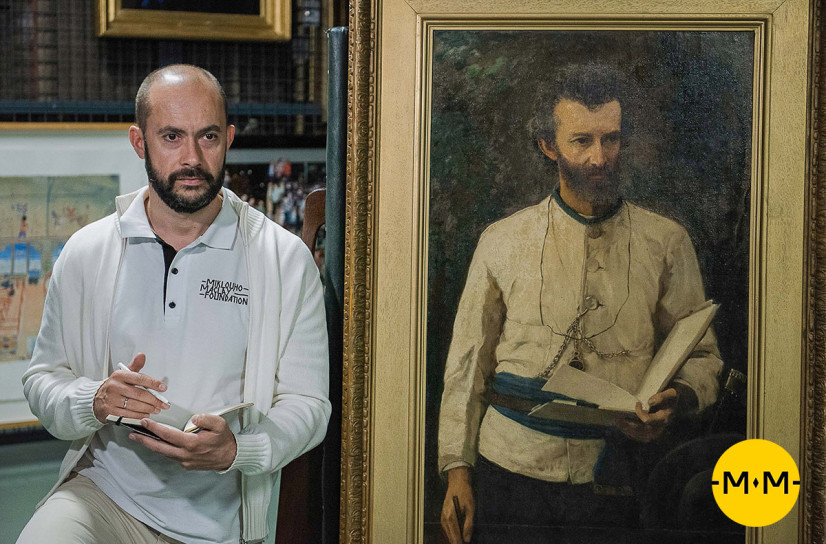
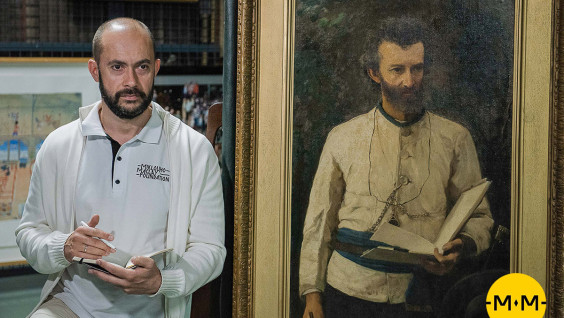
Nikolai Miklukho-Maklai next to the portrait of his famous ancestor by A. I. Korzukhin. Photo provided by the Miklukho-Maklai Foundation / mikluho-maclay.org
— In what way?
— Behind me on the bookshelf is a six-volume collection of works published by the Miklukho-Maklai Foundation. And above that, there are a number of books published by the USSR Academy of Sciences and the Russian Academy of Sciences. There are a lot of his diaries and letters there. Interaction and the process of cognition take place through these materials. I don’t travel through his travels, I travel through both his travels and my own. I have something to compare, and this is probably the essence of our long-distance dialogue. I was in the same place where he was, and I communicated with the descendants of those people with whom he communicated 150 years ago. I’m doing the same thing, and I have professional questions for him, and he has the answers to them. So the connection happens because I’m very passionate about what I do, and it just so happens that I do what Nikolai Nikolaevich did.
— And when did you feel this connection?
— I fully realized it during my first expedition to Papua New Guinea in 2017. It was entirely a personal initiative. No one could give us complete and up-to-date information about the country. The training, including the search for the right contacts in Papua New Guinea itself, lasted two years. It was not easy to get a visa. The journey with several transfers took six days. We didn’t know how or who would greet us. But I felt that I had to continue the great work that Nikolai Nikolaevich started and which stopped due to the fact that after the collapse of the USSR, projects related to the study of the South Pacific region were terminated.
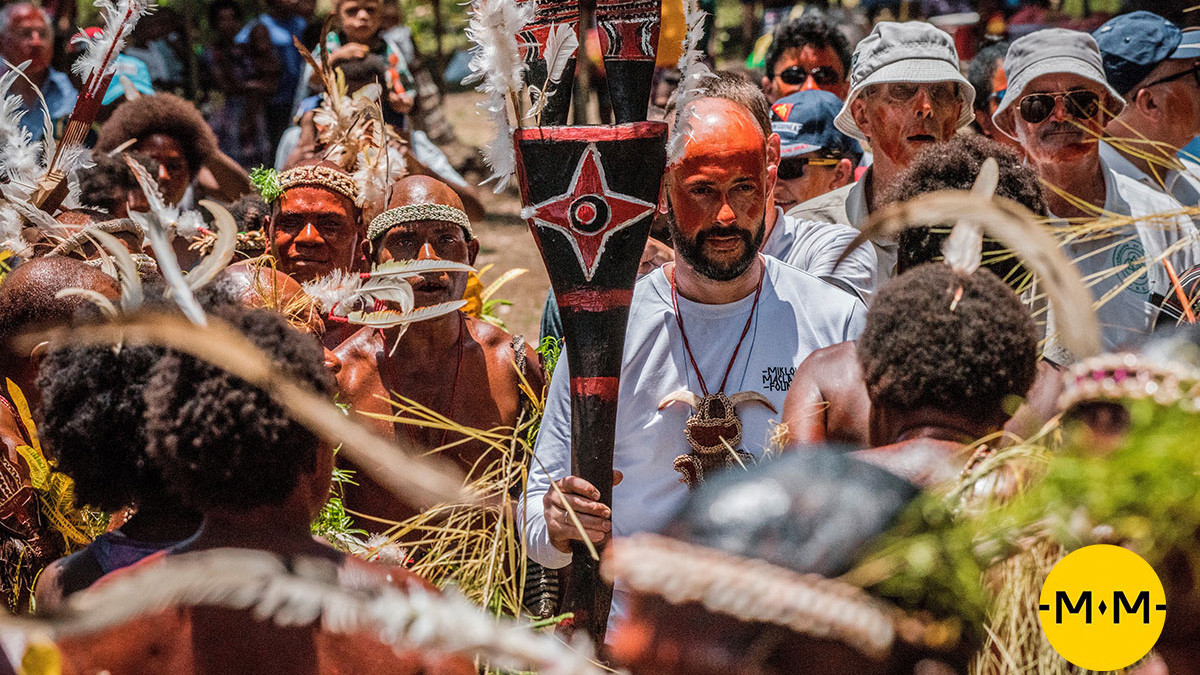
During the festive procession dedicated to the 146th anniversary of the landing of N. N. Miklukho-Maklai on the island of New Guinea. Photo provided by the Miklukho-Maklai Foundation / mikluho-maclay.org
— How did the Coast of Maklai greet you?
— First impression: a green island that looks like a garden of Eden. An incredible sight, and surprisingly similar to the drawings of Nikolai Nikolaevich. But the three thousand people who gathered on the shore were even more amazed when they learned that the Russian expedition and Miklukho-Maklai were coming. Interestingly, I was accompanied by two people, descendants of the very same Tui, the first local resident who met Nikolai Nikolaevich on the island. They said, «There’s going to be a pantomime, you’re being welcomed.» And then I remembered the testament of Nikolai Nikolaevich: «You need to see everything with your own eyes.» It was amazing! It felt like time had stopped. I take a boat to the shore, and I am greeted by a belligerent Papuan who points a combat bow and arrow in my direction, just as it was 150 years ago with Nikolai Nikolaevich. There are thousands of people around me. And I can imagine firsthand how it was under Miklukho-Maklai, what he could feel. I, in turn, hand the salt to the native and thus symbolically demonstrate my intentions. Then there were hugs and ritual dances. At some point, I turn around and see two flags side by side high above the roofs: Papua New Guinea and Russia. I was deeply impressed.
Living between two worlds
— By the way, is there a Russian embassy in Papua New Guinea?
— Not since 1992. Your humble servant and our foundation are engaged in scientific and diplomatic activities, communication with top officials and public diplomacy. The ambassador in neighboring Indonesia serves concurrently as the ambassador to Papua New Guinea. But you need to understand that, being five hours away by plane from there, it is difficult to carry out any regular work in one of the largest island states of Oceania, which occupies 30% of its land, where 12 million people live and where gold and natural gas are mined.
— So it’s not just a miracle island, like in Shainsky’s song: «Munch on coconuts, eat bananas.»
— Well, there are bananas there too. But, obviously, very little is known about Papua New Guinea in Russia. An illustrative case. In 2019, we are going on a second expedition. The cameraman who is supposed to shoot the documentary comes to me and says he refuses to go. I’m wondering what’s the matter. «There’s no good news from there.» We began to look for sources of information together. It turned out that he uses the data of Nikolai Nikolaevich Miklukho-Maklai, which is 150 years old! This case has become an indicator of two things for me. Firstly, there is the huge body of literature devoted to Miklukho-Maklai and his travels, which was published during the Soviet era. And secondly, that people raised on these books are, so to speak, a little stuck in the past. More precisely, life in Papua New Guinea has moved forward. Therefore, the Miklukho-Maklai Foundation has published a number of books about the current state of this country and our travels to the Coast of Maklai.
— And what is the society of Papua New Guinea like today?
— In a sense, it’s a life between two worlds. 85% of the country’s population lives in villages, preserving traditional culture and values, but they have advanced technologies and the same fast Internet just like ours. There are 820 languages in Papua New Guinea.
— Excuse me, are these languages or dialects?
— These are languages, because the tribes live in complete isolation. I recall an illustrative case. I am in the village during the holiday. The elders are speaking. One of them comes out and starts speaking. The principal of one of the local schools is sitting next to me, and I ask him to tell me what he’s talking about. He answers: " I do not know!» How? You’re sitting, listening, smiling, applauding, and you don’t understand? «No, ” he says. "It happens a lot here." But in general, a simple Papua New Guinean knows at least four languages: English (used in education), Tok Pisin (the language of interethnic communication), the language of their tribe, and the language of a neighboring tribe. Yes, they are polyglots. By the way, our foundation opened a Russian classroom where we taught Russian language courses. So, the local kids sang the Russian national anthem with almost no accent. The language that Nikolai Nikolaevich knew is Bongu, which is spoken by residents of four villages. He wrote down 350 common words, which made it possible to communicate more or less clearly.
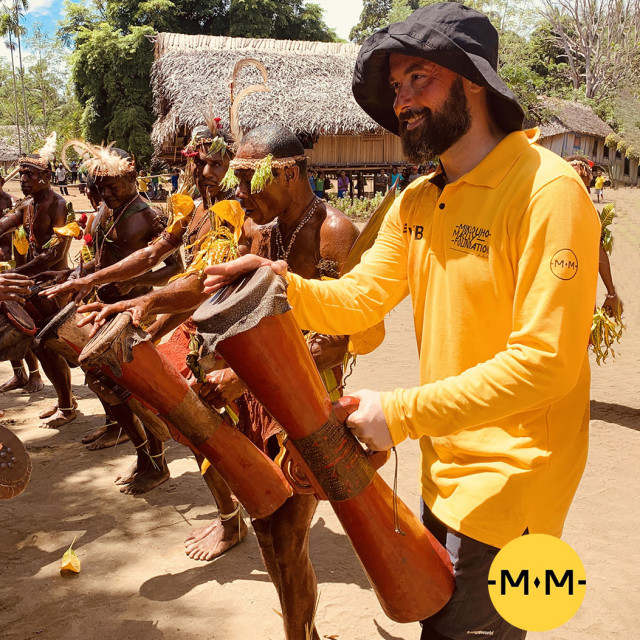
Traditional sing-sing dance with tambourines. Photo provided by the Miklukho-Maklai Foundation/ mikluho-maclay.org
How many women will the guilty tribe give up?
— If there are more than 800 languages, it means that there are as many tribes with their own culture, peculiarities, maybe even mentality.
— It really is. In Papua New Guinea, 860 languages were once identified, but over time, languages are disappearing. There are tribes with 3,000 or more people, and there are tribes with only 300.
— And how do these hundreds of tribes get along with each other? Are there really no disputes or conflicts between them?
— Of course there are. Conflicts are inherent in human nature, and this is the engine of progress, as we know. Through conflicts and overcoming these conflicts, a person begins to get to know themself and find out how not to get into these conflicts later. The Papua New Guineans have a secret. The fact is that the tribal leader does not inherit power there. They choose them. And it must necessarily be a person who knows how to negotiate for the benefit of their tribe.
Suppose that a representative of one tribe killed a person from another or, for example, stole cattle. And the tribe will definitely respond, and most likely it will be a harsh response. The two tribes will be fighting for a while. But the task of the leader of the tribe, both of them, is not to win, but to negotiate. And the ability to come to a compromise speaks about the level of leadership. Agree on what? It’s not about raising your flag in another tribe’s territory. They will agree on how many of their women the guilty tribe will give up for the fact that its representatives, for example, killed someone. Or how many pigs it will give for the damage caused. That’s all. After an amicable agreement is concluded, a real lasting peace ensues.
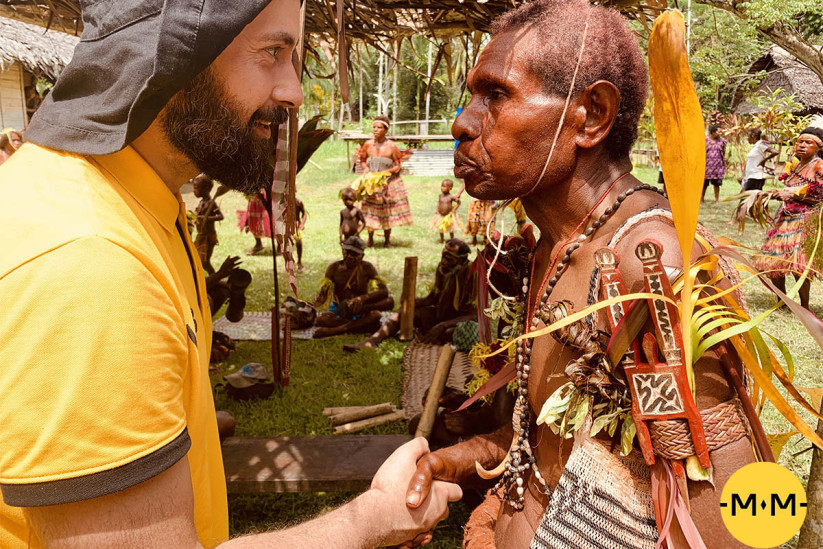
Meeting with the elder of Gumbu Village. Photo provided by the Miklukho-Maklai Foundation/ mikluho-maclay.org
— The war turns out to be quite humane. But are these practices involving the transfer of women in the form of indemnity still common?
— Not always and not everywhere. Although for the tribe it is a way not only to make peace, but also to refresh the blood. But modern women in Papua New Guinea, despite the fact that the tribes preserve the traditional way of life, are still not a thing. In a family, a man and a woman have separate responsibilities. A young man can marry a girl if he has certain opportunities. The wedding process is consolidated by the bride price, which is a kind of seal that the wedding took place.
— There is a pragmatic interest hidden behind this fixation in traditional societies, since workers are also given to another family.
— By the way, a few words about the traditional family. Its main goal and purpose in Papua New Guinea is to ensure own safety. What does that mean? To have two boys and two girls in the family. And why? Because Dad needs helpers when he builds a house and runs his household. Mom, in turn, needs helpers. When parents get old, they need someone to support them. There is an interesting moment in Papuan culture. If the wife does not give birth to children after the wedding, does not take care of her husband, does not respect the members of the new family, then she can be returned.
— So one can just say: «Excuse me, please give me the money back»?
— And it sounds shocking, like a manifestation of a man’s ego, if you don’t know the nuances. But there is another side. If you, dear man, do not build a house, do not take care of your spouse, do not provide for her properly, then her father can take her back. Therefore, it would be wrong to consider a woman and people in general in Papuan society only as a labor force or as a thing.
Civilization advances and retreats
— If 85% of the population of Papua New Guinea live in villages, does this mean that the way of life has remained the same as it was under Nikolai Nikolaevich?
— Of course not. Of course, a lot has been preserved. But the period of colonization left a noticeable mark, for example, in the structure of the economy. The production of copra and mining appeared. And the cultivation of cocoa beans and coffee has become one of the main sources of income for the local population. We won’t find any plantations in Miklukho-Maklai’s drawings. But in the photographs taken by Soviet scientists during expeditions in the 1970s, we see plantations, machinery, some kind of stall where various small things are sold. And it seems that the civilization we are used to is coming. But here’s the interesting thing: when we arrived, we didn’t see any plantations or machinery. I’m asking: «What happened? ,» the locals say, «You know, the Australians left, and we built our villages on the land where the plantations were.» It is very important for them to have their own place on earth, even to the detriment of business. At least for the moment, we have recorded such a situation.
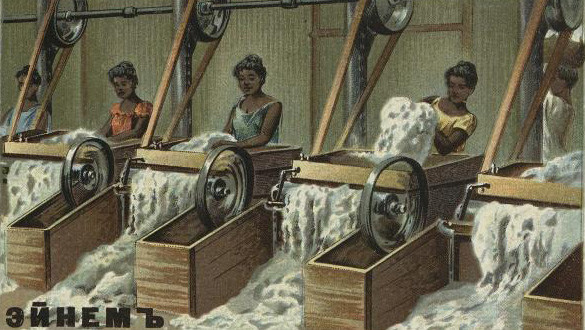
The cotton industry in New Guinea. Photo: rusneb.ru
— In many countries that have experienced colonialism, there is such a rollback to the past. But this creates a certain problem for people, even in the everyday sense.
— I don’t see any problem. We are often talking about excesses that we perceive as the benefits of civilization. When a person, pardon, idly amuses themself by pressing the buttons of their smartphone and ordering 10 pairs of shoes on a marketplace, this does not mean that they are more civilized.
— It’s hard to disagree with this, but, alas, we live in a world where the rules are dictated by a permanent technological race.
— To clarify: we do. And we draw ourselves a certain picture of the world. The same thing happened in the time of Miklukho-Maklai. Do you remember how they told him: «Well, listen, these Papuans have tufted hair and rough skin — what kind of people are they? And why go to these cannibals!»
Or here is a modern example, by the way, confirming the principle of Nikolai Nikolaevich that you need to see everything with your own eyes. Today, the Internet has become ingrained in our lives. Information from the Web has a tremendous impact on us, changing not only relationships, but also, probably, people themselves. We can’t imagine life without a smartphone. In 2020, a cable was provided from Australia to Papua New Guinea. The Internet speed has increased exactly 20,000 times! The Internet has become ten times cheaper. I was wondering how the lives of my Papuans would change. Analysts have made a report on how many people use the Internet, how many gadgets they have in their hands, and how this all has a positive effect on the gross national product. A story was shown on television that the Internet is available in the most remote settlements of the country. In 2023, I went to the villages on the Coast of Maklai to catch the changes that could happen. During the trip, our team managed to visit 10 villages where the Internet worked great and conducted a survey.
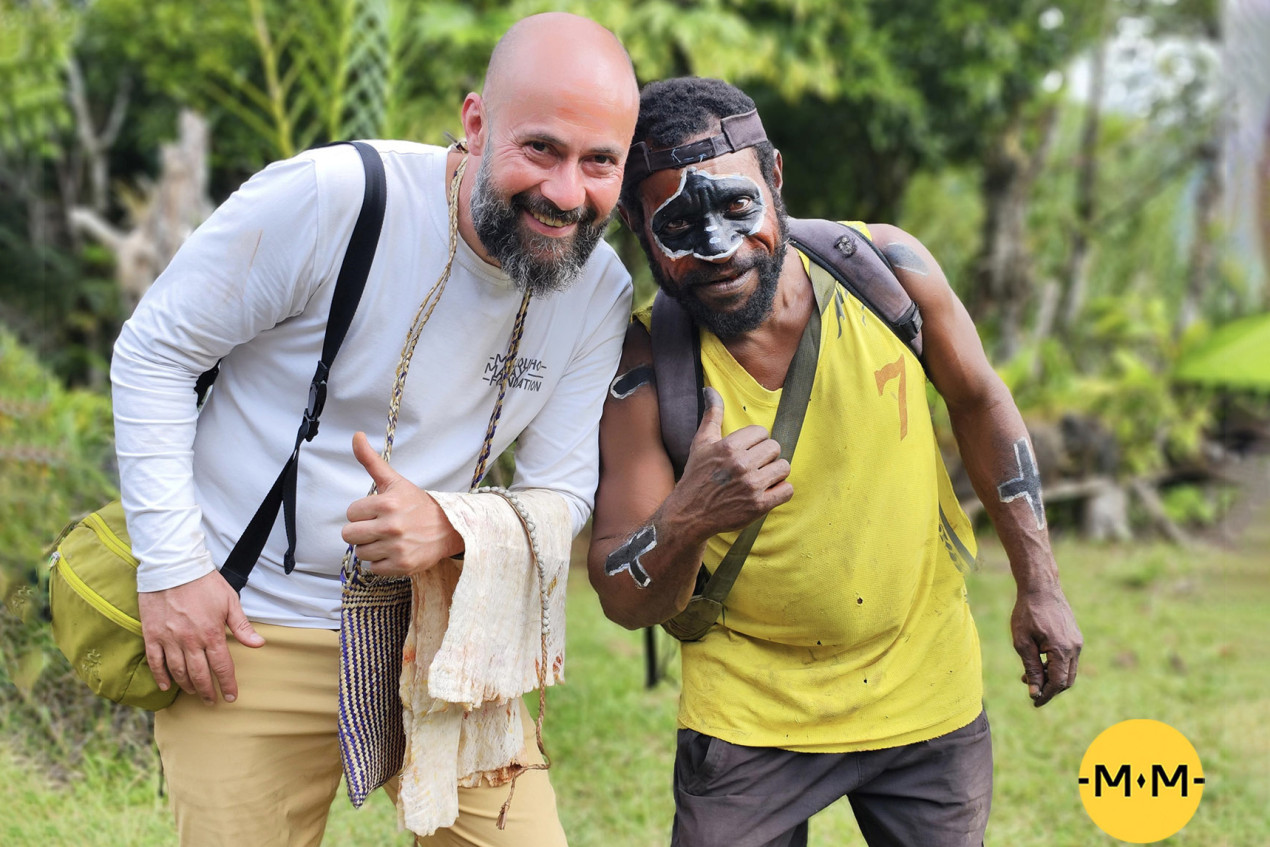
Almost brothers. Photo provided by the Miklukho-Maklai Foundation / mikluho-maclay.org
— And what did you find out?
— There were only about 200 mobile phones per 3,500 people, about two dozen laptops, and about 50 people actively used the Internet. The answer of those who do not use the Internet to the question «What will be your first search query?» was interesting. Most of the time they answered me: «I’ll be looking for a job.» What conclusion can we draw? There is no money, they live poorly. Absolutely wrong conclusion. Work is the only opportunity in a traditional society to leave the countryside and separate from your family. It is the opportunity to earn money on your own and help your parents and clan that determines this option. And compare how it is with us. The young person is traveling from St. Petersburg to study in Moscow, and their parents are trying to provide them with everything, including an apartment and food. The perception of the family by traditional society and modern society is completely different.
— Nikolai, can we say that the Papua New Guineans are representatives of a special civilization?
— I think they are part of a unique society, largely forgotten by modern civilization, but which is trying (and quite successfully) to be a part of it. And since the process of this integration has not been completed, we have an amazing opportunity to look at ourselves in the past and understand that much of what we think we cannot do without, what we have become addicted to, is actually an illusion.
When I tell them: listen, you have fertile land, fruits, seafood, and so on, you can do business, you can store products in refrigerators, and then sell them, they smile. It’s very exhausting, you need to travel somewhere, do sales, and industrial refrigerators need a lot of electricity. What for? If we need fish, we go and catch it. If a coconut has not fallen down on its own, it is enough to shake the tree. There is no need to live by stocking up. Of course, such a lifestyle and psychology are associated with certain climatic conditions, and this is not suitable for us with our harsh climate. But this is one of the colors of our big world.
Was Miklukho-Maklai a Don Quixote?
— Some consider the idea of your ancestor to create the Papuan Union a utopia, and Nikolai Nikolaevich himself almost an opportunist. How correct is this?
— This idea was not utopian, and Miklukho-Maklai was not an opportunist. But Aleksandr Sergeevich Pushkin wrote wonderfully about slanderers in his time. Let’s remember that the middle of the 19th century was the heyday of colonialism. Miklukho-Maklai’s active scientific and political activity did not go unnoticed. German newspapers broadcast discontent on the part of the German authorities, concerned about his active activities to protect the indigenous population of the northeastern island of New Guinea, where Germany had its own interests. Slanderous rumors were spreading that Miklukho-Maklai had found gold and was planning to seize it without unnecessary witnesses. Some Russian publications picked up on this gossip. In particular, the newspaper «Novoe Vremya» launched an entire campaign against the scientist, accusing him of treason against Russia. He was sarcastically called the Papuan king, it was claimed that he was planning to establish a republic on the Pacific Islands and act in his own interests. It came to direct denunciations: allegedly, Miklukho-Maklai was hosting future subjects from among the unreliable people. Despite the rumors and slander, Nikolai Nikolaevich’s reputation in academic circles did not suffer.
— It is clear with Germany, but why was the project of creating a protectorate of Russia on the Coast of Maklai not supported at home?
— The fact that Nikolai Nikolaevich’s idea was received with interest is indicated by the fact that he obtained an audience with Emperor Aleksandr III, who instructed his officials to comprehensively consider the idea. But they did not come to a decision to support this project. Perhaps the reason was other geopolitical priorities of Russia at that time. Or maybe it’s just the officials' unwillingness to deal with this matter, to embody «someone else’s» idea, which would require them to make some efforts. We must understand that this happened 100 years ago, 200 years ago, and now in all countries of the world.
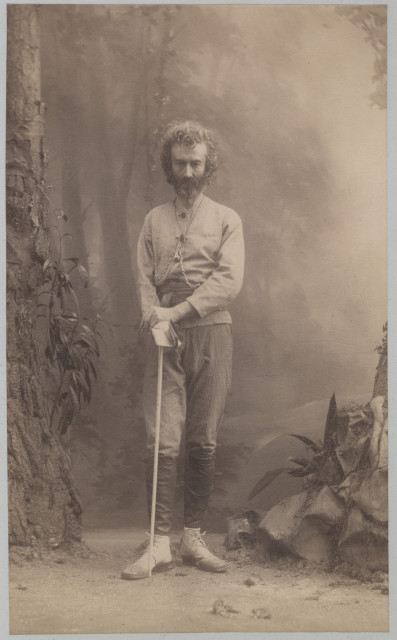
N. N. Miklukho-Maklai in expedition clothes. New Guinea, 1871. Photo: V. I. Klassen / Scientific Archive of the RGS
In any case, I would not call Miklukho-Maklai an idealist, a kind of Don Quixote, as this bright scientist and public figure is sometimes described in books. I have devoted a series of works «Between Science and Diplomacy» to this issue, where, based on facts, the real influence of Nikolai Nikolaevich on the agenda is emphasized. And if his foreign policy activities had been based only on dreams, he would not have been taken so seriously in Europe, Russia, and Papua New Guinea then and now. It’s just that Miklukho-Maklai’s ideas were not implemented at that time for a number of reasons. We have many different reasons why Hawaii did not become Russian and why Alaska was sold to the United States.
Once again about the role of personality in history
— How is Nikolai Nikolaevich Miklukho-Maklai perceived in Papua New Guinea today?
— I have an address from the Prime Minister, who wrote a few years ago that Nikolai Nikolaevich was in top five outstanding people of the country. The 5th grade social studies textbook, released, if I’m not mistaken, in 2021, says something like this. We should know that the Europeans treated us differently. Baron Maklai, who lived in what is now Madang Province (where the Coast of Maklai is located), established good ties with the local population and left a good memory of himself. The authors of the textbook call it an example of the respectful attitude of Europeans towards the indigenous people of the country.
— Why do you think it is important for us to develop relations with Papua New Guinea today?
— Russia is a great power with a great historical heritage and its own interests in many parts of the world. Therefore, any international contacts are important and natural for our country. Russia, and then the USSR, have always set an example of benevolence towards other nations, opposed the policy of colonialism, and advocated openness and honesty in international politics. Our country retains this foreign policy tradition even now. Papua New Guinea is currently a friendly state to us. The country is potentially very interesting from an economic point of view. How far this branch of cooperation will develop is a matter for politicians, economists, and entrepreneurs. And the Miklukho-Maklai Foundation can become the basis for how to maintain and develop humanitarian ties.
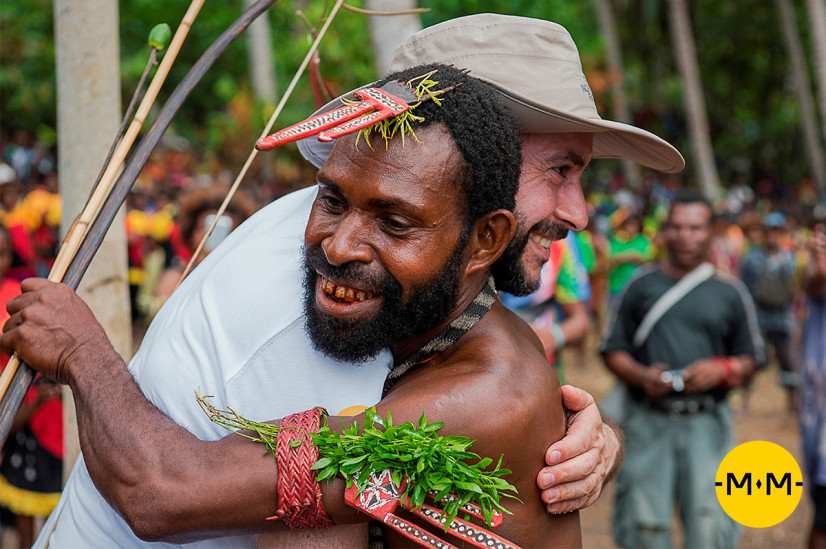
The meeting of Nikolai Miklukho-Maklai Jr. and a descendant of Tui, the first Papuan seen here by N. N. Miklukho-Maklai 150 years ago. Photo provided by the Miklukho-Maklai Foundation/ mikluho-maclay.org
— How would you formulate the main lesson of Nikolai Nikolaevich for our contemporaries?
— Miklukho-Maklai is an example of how a noble personality can influence a positive attitude towards an entire country. After all, through him, people on the other side of the planet perceive Russia as positively as possible. By the way, this doesn’t happen very often. And the history of mankind, alas, knows much more examples of the opposite.
Let’s not forget that Nikolai Nikolaevich came out with proposals for the development of international law in order to protect the indigenous inhabitants of remote territories from slave trading. And in general, he advocated that «wild» people, as they were then considered, should be perceived by the population and the authorities of «enlightened» countries as absolutely equal and having the same human rights. The entire history of international relations shows that this process has been going on for a long time, is not easy, and is not fully completed even today.
P. S. The scientific archive of the RGS contains dozens of autographs and unique drawings by Nikolai Miklukho-Maklai made by him a century and a half ago on the territory of present-day Papua New Guinea. We offer you a look at this amazing corner of the Earth and its inhabitants through the eyes of a great explorer.