
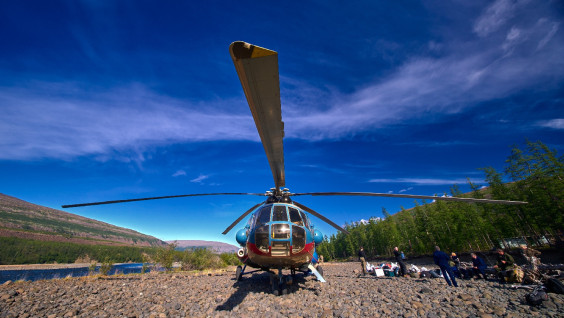
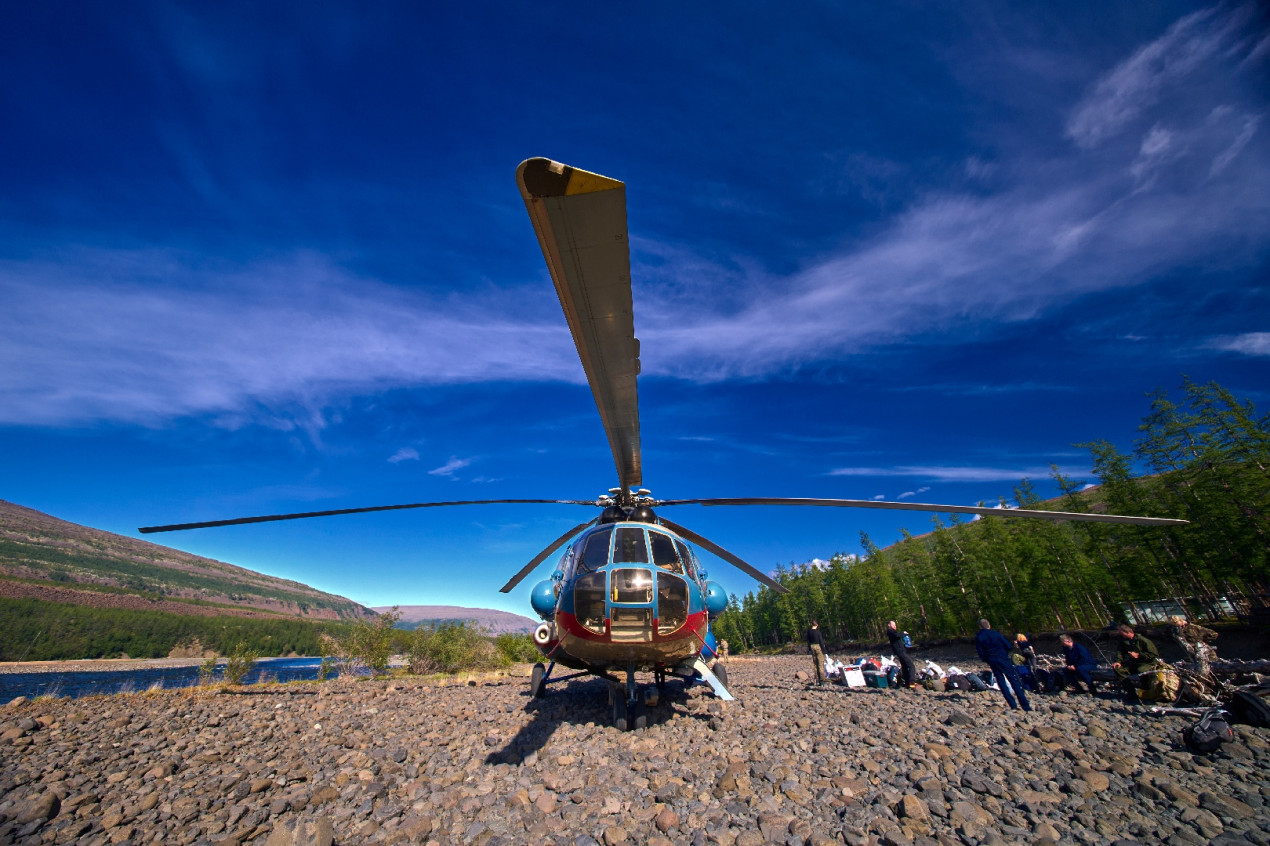
A group of specialists landing in hard-to-reach places. Photo: official Telegram channel "Reserves of Taimyr"
In 2025, the participants of the expedition of the RGS together with the Federal State Budgetary Institution «Reserves of Taimyr» examined the sites of unauthorized landfills on the territory of the Putorana Plateau, a UNESCO World Heritage Site. The environmentalists have compiled waste passports with a detailed description, and in the future these data will be used for eliminating environmental damage.
The Putoransky Nature Reserve is a gigantic basalt massif with an extensive lake-river system. Man-made waste has been accumulating near Ayan Lake located here for years. This is the waste left after the expeditions of Soviet geologists and fishermen: scrap metal and containers with fuels and lubricants. In 2025, during the expedition of the RGS, environmentalists described in detail three waste accumulation locations in the vicinity of Ayan: at the mouths of the Amnundakta and Gulemi Rivers, as well as in the area of the «Southern Ayan» ranger station on the Kapchug River bay. Using high-precision geodetic equipment (RTK modules), the specialists determined the exact coordinates and boundaries of all the sites.
«The main result is a ready-made roadmap for the practical improvement of the territory,» said Vladimir Zvantsev, Director of «Taimyr Nature Reserves». «We have received all the documents that are needed to work with relevant contractors. They will be needed during the implementation of the second stage — the cleaning itself. The results obtained are important for the development of environmental protection strategies in the Arctic region and can be used in planning environmental protection measures in other protected areas.»
During the 2025 season, experts found out that the bulk of the waste in such landfills is old ferrous scrap: metal barrels (more than 700), structures, buckets, wire. Environmentalists also found waste from wood, glass, textiles, rubber, and petroleum products. The most difficult situation was recorded at the mouth of the Gulemi River, where 16 sealed barrels with petroleum products were found.
Experts have confirmed that such landfills provoke environmental risks primarily for water bodies — Lake Ayan and the watercourses flowing into it. There is a threat of contamination of soils and surface waters with petroleum products, metal corrosion products, and mechanical waste removal during floods. All landfills found are old, new waste does not arrive at them. Experts found no signs of active decomposition, burning, or smoldering processes, while the condition of the metal indicates a prolonged stay of the waste in Arctic conditions.
In September and October, the selected samples underwent a full cycle of laboratory tests.
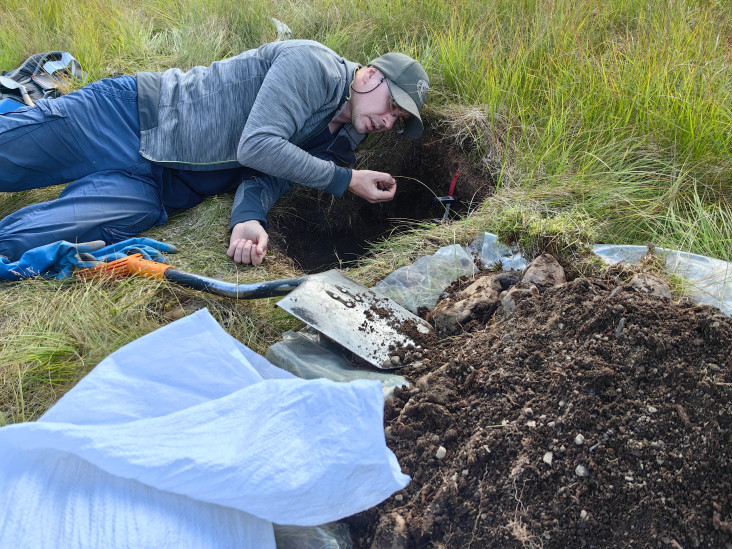
Scientists taking samples. Photo: Norilsk Branch of the RGS
The specialists conducted a chemical analysis, classified the waste, and prepared a complete package of design estimates for the future disposal of landfills. It includes waste passports, safety certificates, and a recovery plan.
In parallel with environmental research, scientists were engaged in historical and search work: they studied the routes of the Evenks (an indigenous people of the North, Siberia, and the Far East), found and described preserved objects and equipment from Soviet expeditions, and also recorded infrastructure facilities left over from previous years. As part of the expedition’s educational program, an online seminar «Features and Structure of Pollution in the Arctic zone» was held, which brought together venues in Moscow, Norilsk, Krasnoyarsk, and Veliky Novgorod. Students and scientists from RUDN University, the Polar State University, Krasnoyarsk Pedagogical University, and the Space Research Institute of the Russian Academy of Sciences presented reports on tourism, remote sensing, and hydrology of the Arctic, discussing complex threats to its ecosystems.
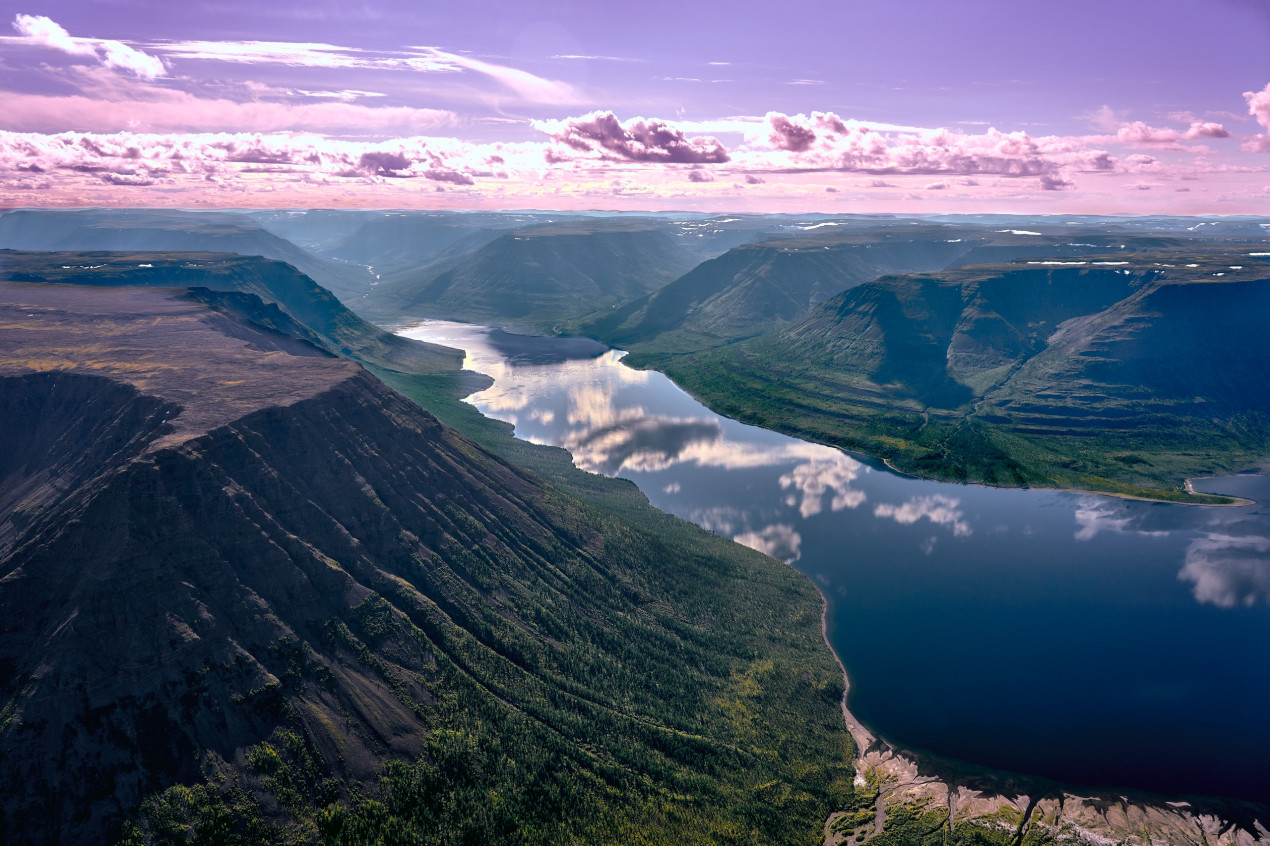
The Putorana Plateau. Photo: Norilsk Branch of the RGS
«In accordance with the Strategy for the Development of the Arctic Zone of the Russian Federation and Ensuring National Security for the Period up to 2035, the work of the RGS for the coming years is defined by ambitious goals: eliminating the consequences of human economic activity over the past centuries, creating a system for monitoring Arctic ecosystems, and conducting comprehensive scientific research,» said Natalya Belyakova, Director of the Expeditionary Activities and Tourism Development Department of the RGS. «Back in 2010, the RGS drew attention to the scale of pollution of the Arctic islands and coast, determining the total amount of accumulated man-made waste in the Arctic archipelagos at about 90,000 tons. In 2022, in response to these challenges, we launched a project 'Arctic: Spring Cleaning’. Its results confirm the need not only to clean up, but also to create a unified monitoring system for the territories, as well as to involve new generations in projects that help the development of the northern territories.»
The data obtained will form the basis for the development of a project to eliminate accumulated environmental damage in the specially protected natural area. This will be a step towards the complete cleaning of the Putoransky Reserve from traces of economic activity of previous years and the restoration of the natural state of ecosystems in the area of Lake Ayan.
The project is being implemented with the support of «Norilsk Nickel», «Center for Environmental Industrial Policy», «Norilsk Development Agency», the «Rus Derzhavnaya» center for support and implementation of civil initiatives, the administration of the Taimyr Dolgano-Nenetsky District of the Krasnoyarsk Territory, the administration of the city of Norilsk, the N. M. Fedorovsky Polar State University, the Norilsk Branch of the RGS.
Maria Buldakova