
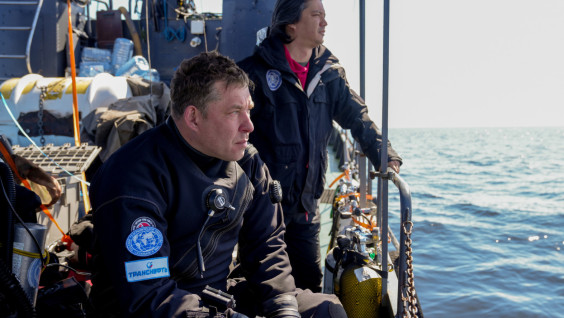

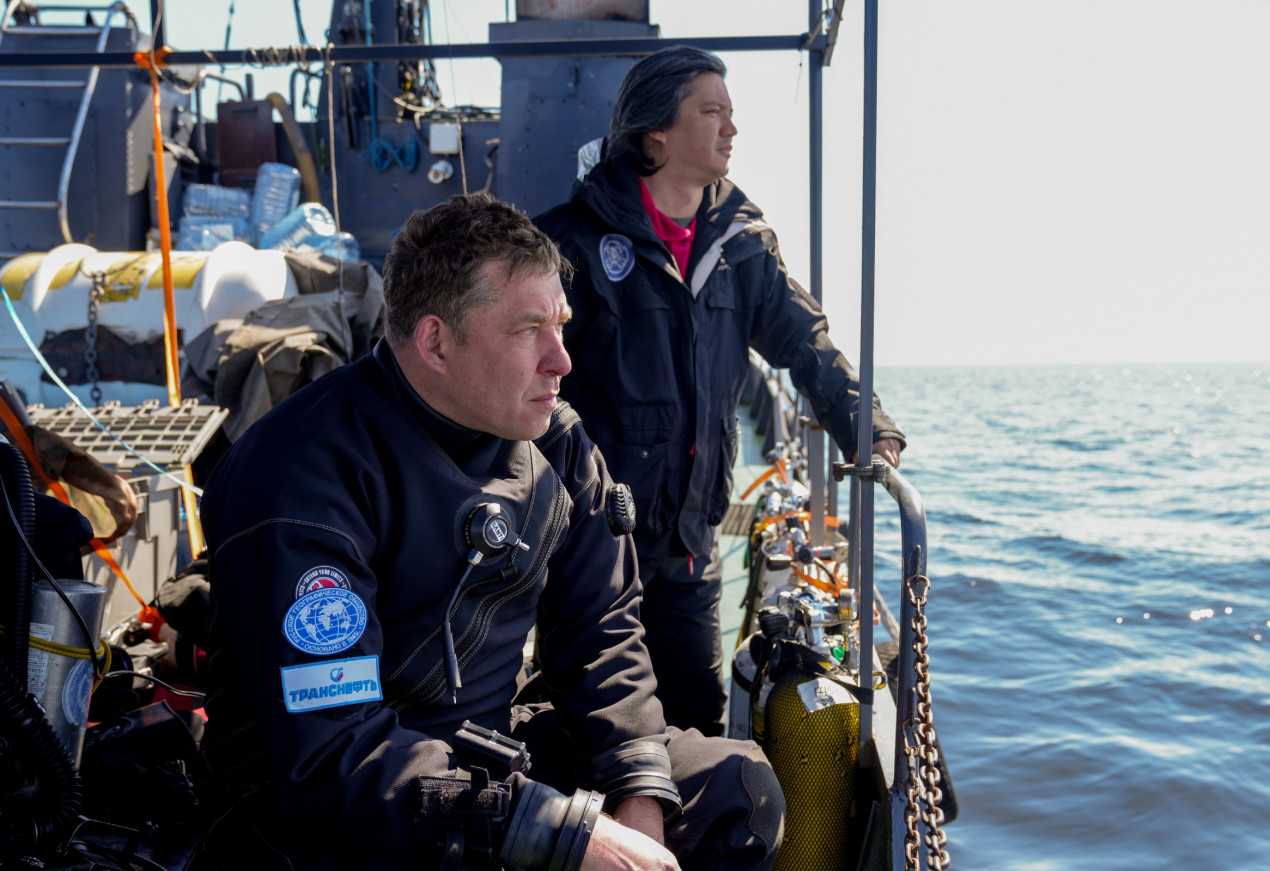
The expedition leader Konstantin Bogdanov. Photo: Underwater Exploration Team
Traditionally, in mid-May, the Russian Geographical Society and the Konstantin Bogdanov’s Underwater Exploration Team, with the support of the Presidential Grants Fund, open a new season of the underwater search expedition «Voices of Lost Ships». The project is aimed at searching for submarines, vessels, and ships sunk in different historical periods and perpetuating the memory of their crews. On the 81st anniversary of the Victory, we recall the significant stages of the expedition and tell you about the plans for this year.
The Baltic Sea is one of the most complex maritime theaters of military operations. The water area has been the scene of fierce battles in different historical periods. For example, during the First World War, the Russian navy defended the approaches to Petrograd in these waters and resisted German mine blockades. During the Great Patriotic War, the Baltic Fleet conducted heavy defensive and then offensive battles here. One of the places of large-scale tragedies was the Gulf of Finland. Here, in 1941, the Tallinn Breakout took place.
The emergency relocation of the ships of the Red Banner Baltic Fleet from surrounded Tallinn to Kronstadt was carried out on a mined channel under continuous air strikes and artillery of the Germans. From August 27 to August 29, 1941, more than 60 military and transport vessels and over 15,000 Soviet citizens died in the waters of the Gulf of Finland. The refusal to redeploy threatened the complete loss of the Baltic Fleet, which, in turn, would have left Leningrad without naval protection.
Valuable Archive
Since 2012, Konstantin Bogdanov’s team and representatives of the RGS, with the support of the Baltic Fleet, have been searching for lost ships and submarines in the Baltic. The death sites of more than 12,000 sailors and submariners and 16 submarines and more than 20 ships had been found and identified in the Gulf of Finland by 2022. Among them are the patrol ship «Burya» and the base minesweeper «Fugas», which sank during an attack on enemy positions on Bolshoy Tyuters Island. Both were blown up by mines literally two hours apart, resulting in the death of 104 sailors.
«The project has been in existence since 2005, » says Konstantin Bogdanov, head of the expedition. «On the eve of May 9, we dove to the ships that sank during the Great Patriotic War on the Black Sea, and then on the Baltic, and perpetuated the memory of the crews. Over time, the memorial expedition transformed into a large-scale search expedition.»
In 2023, the expedition members conducted a survey of the German floating battery «West», which was one of the largest targets of the Soviet naval aviation in the Baltic. And in 2024, a team of divers discovered the «Vyborg» motor ship. It sank after being attacked by a Finnish submarine. The entire crew was saved, with the exception of the boatswain who died from the explosion. The minesweeper «Raduga» was discovered near the island of Seskar. Each discovery of the explorers was accompanied by memorial events. For example, the ship’s bell, which once accompanied the crew’s service, was lifted from the side of the minesweeper. Commemorative plaques were installed on all Soviet ships, vessels and submarines under water.
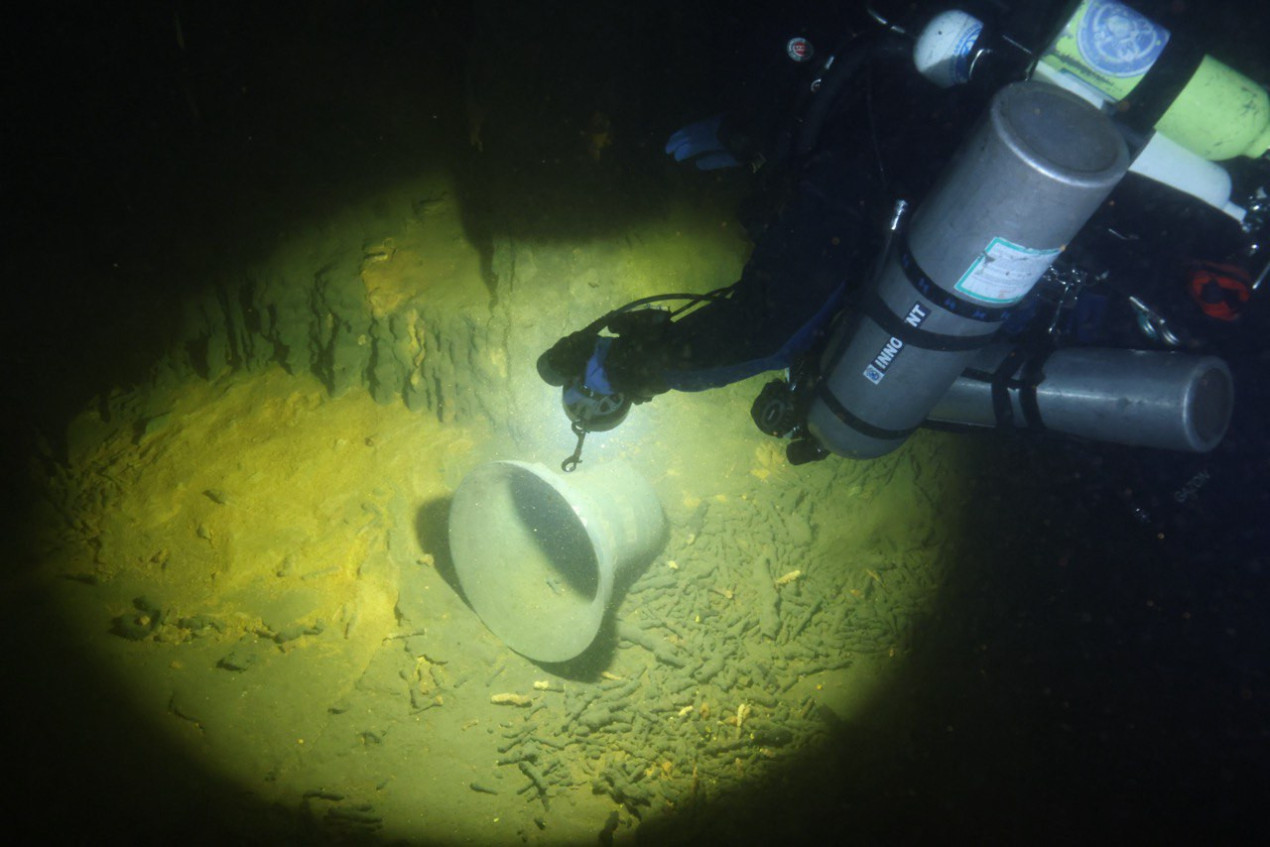
The search for the “Vyborg” motor ship. Photo: Underwater Exploration Team
«One of the most important tasks for underwater researchers is continuous photo and video recording of a sunken object,» says Konstantin Bogdanov. «With the help of the obtained surveys, virtual 3D models of ships and vessels are being created, which allow scientists and anyone who wants to study the maritime history of Russia from anywhere on the Internet, and the descendants of the deceased sailors to virtually touch the grave of their relative who died more than 80 years ago at sea. 3D models are available on the Underwater Exploration Team website and on the geographic information platform of the Ludi Morya Foundation.
Bench Land of Vigrund
A new season of the project will start in 2026. The Underwater Exploration Team plans to search and identify torpedo boats and sea hunters in the Gulf of Finland, including in ship fairway area. Such work became possible only in 2025 thanks to the support of the RGS and the Baltic Fleet. The fairway line is closed to ships during the explorers’ dive. This year, divers plan to explore several ships, also presenting their 3D models on the website.
The first stage of the expedition will take place in mid-May. A group of explorers will go out in the direction of the bench land of Vigrund. It is a rocky piece of land located 1.5 km from the coast of the Kurgalsky Peninsula. In 1943, the Germans created a dense defense system here, including minefields and network barriers. They also took place between the islands of Bolshoy Tyuters and Vigrund. The expeditionary group plans to search for the place of wreckage of the TK-95 boat.
«TK-95 was sunk when a group of Soviet torpedo boats attacked German ships from a shell hit by naval guns,» says Konstantin Bogdanov. «We have three tasks ahead of us. The most important thing is to find the wreckage location and the object at the bottom. Then, we will film the object and a memorial event will take place, within which, according to a long-standing tradition, divers plan to attach a commemorative plaque on the hull of the ship, take samples of the bottom soil from the wreckage location. Capsules with this soil will be handed over to relatives as a memorial from the site of their grandfathers' last battle.
The Island of Moshchny
After that, the expedition group will go to the island of Moshchny. During the Great Patriotic War, it was home to the largest island naval base in the Baltic and the westernmost defense point on the entire Soviet-German front, controlled by the Baltic Fleet. The heaviest air and sea battles were constantly taking place here. Torpedo boat units, sea hunters, and a gunboat were based in Okolnaya and Rybachya Bays, which controlled the nearby fairway, ship route to Kronstadt. Here, at the military cemetery, the participants will honor the memory of the crew of the «sea hunter» MO-177.
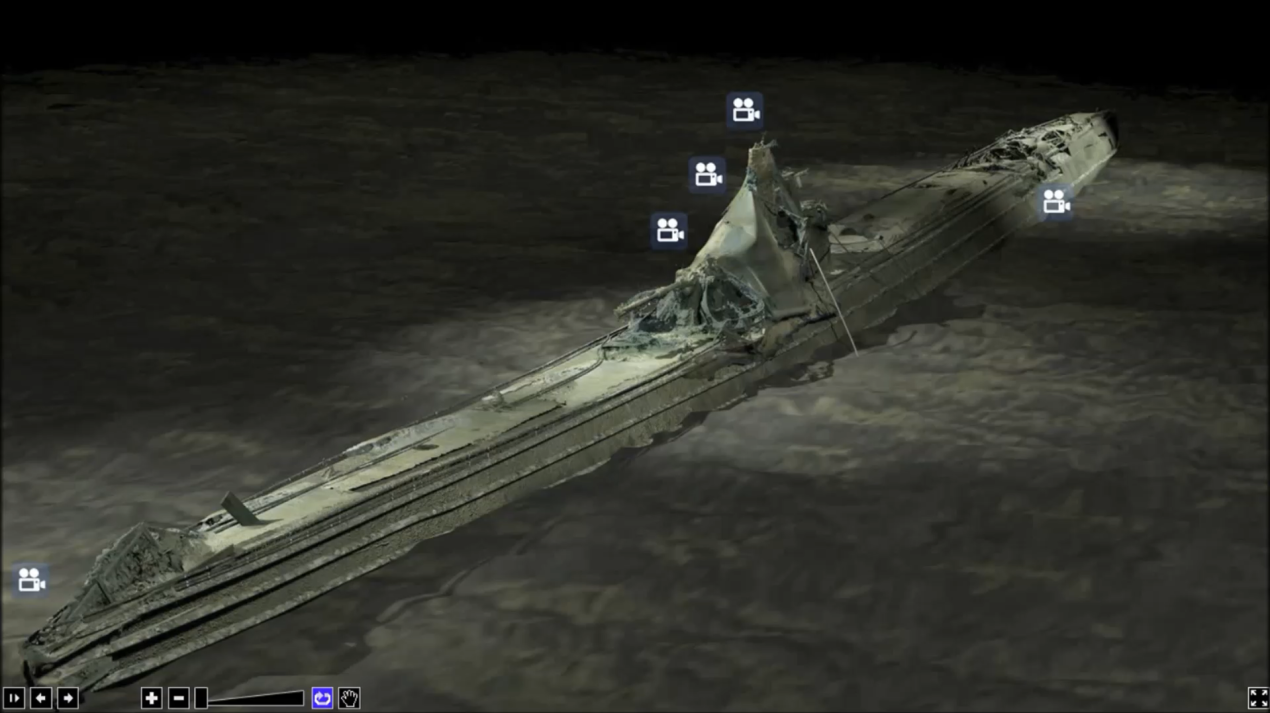
This is what the 3D model of the C-9 submarine looks like. Photo courtesy of Konstantin Bogdanov
The search and 3D modeling of sunken ships in the Baltic make it possible to record the wreckage locations and explore them without lifting objects, reconstruct the circumstances of the disasters of the Great Patriotic War. Digital copies of ships and vessels serve as an archival resource for scientific work, allowing us to preserve data on Russia’s underwater heritage for future generations.