
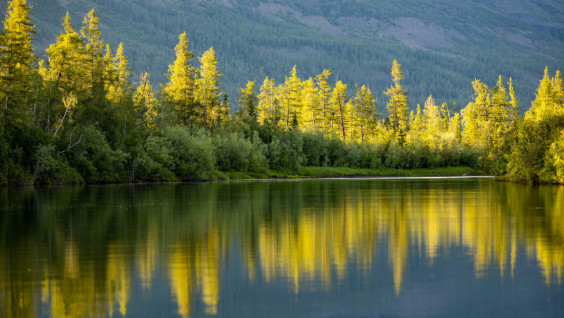

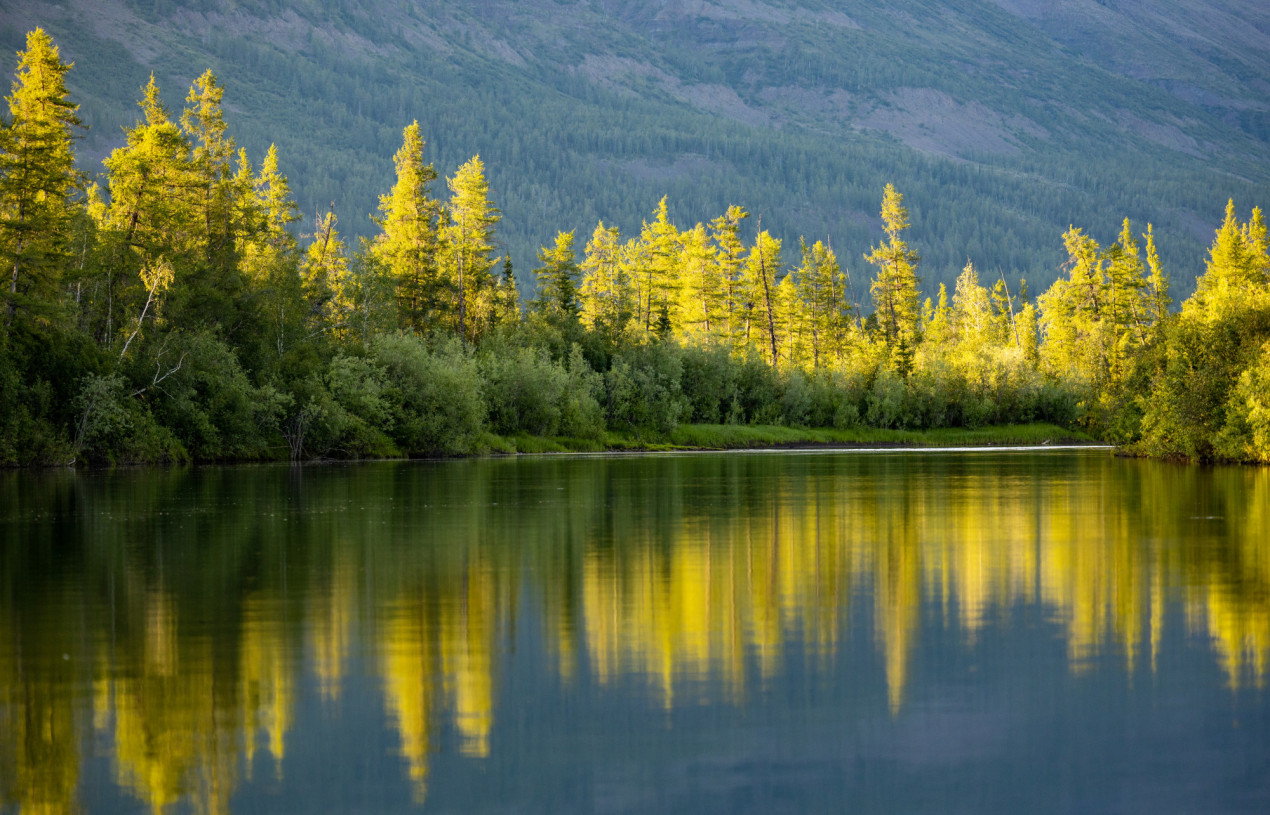
The Putorana Plateau. Photo: Yulia Shakhray, participant of the contest of the RGS "The Most Beautiful Country"
The expedition of the RGS «Arctic: Spring Cleaning» started in the area of Lake Ayan in the central part of the Putorana Plateau. Specialists will remove the man-made waste accumulated here over decades and deploy a geocryological monitoring network for the first time.
In the fall of 2025, the expedition participants and the staff of the Putorana Reserve assessed the scale of pollution of the plateau territory. On an area of about 200 m², experts found scrap metal and other man-made waste left here from the 1950s and 1960s. These are iron barrels, 16 of them were hermetically sealed and contain remnants of diesel fuel and oil. Containers are scattered in the mouths of rivers, including the Amnundakta, as well as at the «Southern Ayan» ranger station.
«By cleaning the territory, we will prevent further possible pollution of the habitat of animals such as wild reindeer, moose, and wolverine,» said Vladimir Zvantsev, director of the Federal State Budgetary Institution «Reserves of Taimyr». «Lake Ayan has preserved a population of the Putorana snow sheep, whose continued well-being may be affected by the presence of man-made waste. We are doing work, the results of which we will be able to evaluate for many years with the help of further research.»
During the current stage, with the technical support of «Nornickel», specialists will cut and pack large-sized garbage for removal from the reserve. It is planned to clear at least 100 m² of the territory.
«’Nornickel’ systematically cleans up the hard-to-reach territories of Taimyr from accumulated garbage,» said Evgenia Alkova, head of the company’s department for interaction with relevant authorities. «Lake Ayan is one of the most inaccessible places on the planet. Getting there is difficult and expensive. Starting in 2021, we are helping 'Reserves of Taimyr’ to clean the reservoir and other vulnerable locations. This work directly affects the development of the ecosystem of protected areas. In addition, supporting the snow sheep is one of the flagship projects of our long-term biodiversity conservation program, and maintaining cleanliness in its habitats is a critical factor for the well-being of the entire population.»

The Putorana snow sheep. Photo: Andrey Podkorytov, participant of the contest of the RGS "The Most Beautiful Country"
Putorana is a giant basalt plateau in the center of Siberia beyond the Arctic Circle, formed about 250 million years ago as a result of a colossal outpouring of magma. Today it is a mountain system with flat peaks, deep canyons, and thousands of transparent glacial lakes. During the expedition, the staff of the Permafrost Institute of the Siberian Branch of the Russian Academy of Sciences will install permanent thermometric sensors here for the first time. They will allow year-round recording of soil temperature and the depth of its seasonal thawing.
«All monitoring stations are linked to developed territories, and no one studies the interior of the plateau,» explained Gennady Paslavsky, scientific director of the expedition. «This is the first time we will receive accurate data. It is especially important that these are pristinely clean places, untouched by industry. We will be able to compare the plateau’s territory with the developed areas of Norilsk and understand the real scale of anthropogenic impact.»
To analyze the soil condition, scientists will sink pits, take samples, and survey the area to create detailed terrain maps. The result of the expedition will be the first scientific map of the permafrost landscapes of Lake Ayan. The generated database on soil properties will be transferred to the Russian Ministry of Natural Resources and relevant scientific institutes. In the future, these materials will serve as a benchmark for assessing climate change in the entire region.
«Traditionally, the work of the RGS on cleaning up Arctic territories is combined with scientific research of these vulnerable locations. Professional scientists and volunteers are involved in the work,» said Natalya Belyakova, Director of the Expeditionary Activities and Research Department of the RGS. «Back in 2010, the RGS identified about 90,000 tons of waste in the Arctic archipelagos. The expedition 'Arctic: Spring Cleaning’ has been underway since 2022. Its results showed the need not only for cleaning, but also for unified monitoring, as well as the involvement of young people in the development of the northern territories.»
A total of eight specialists, including two volunteers, are involved in the work. The project is being implemented jointly with the Joint Directorate of Taimyr Nature Reserves on the territory of the Putorana Nature Reserve.