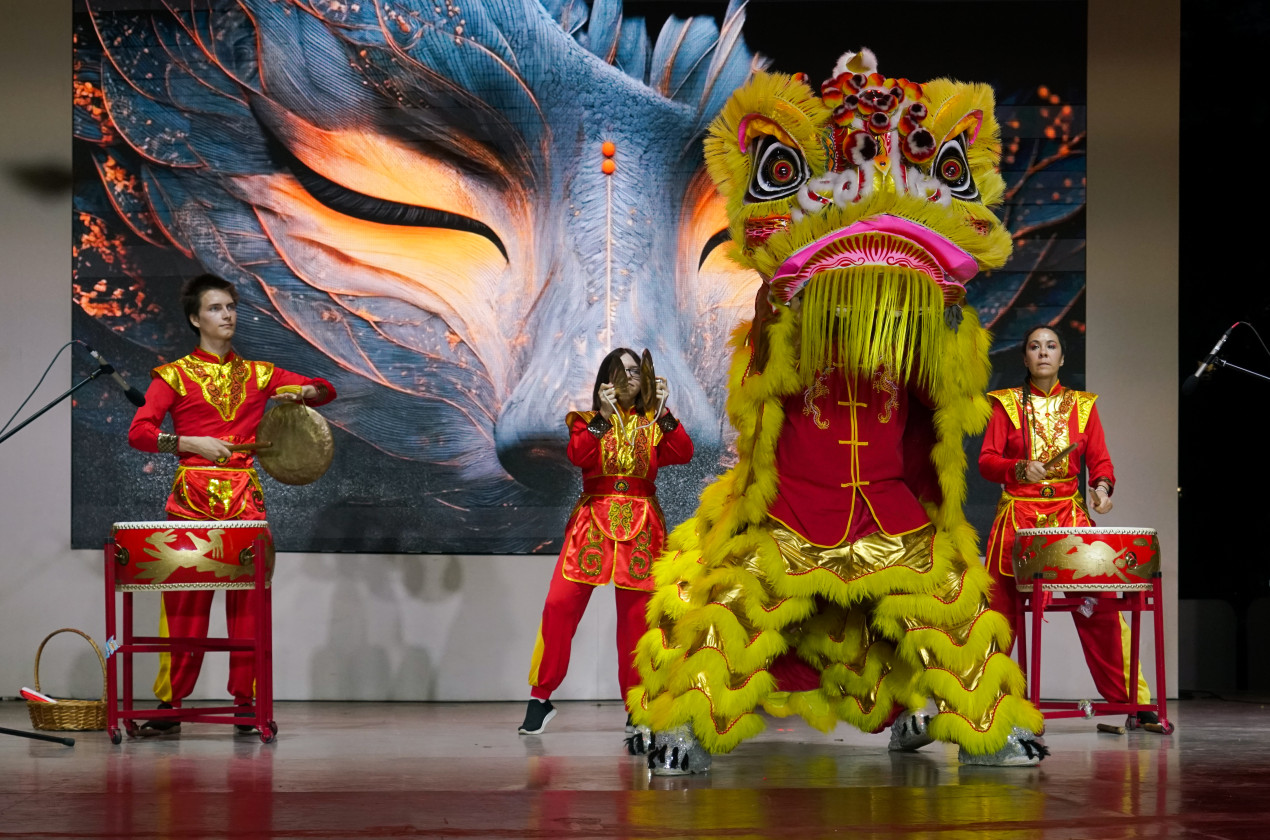
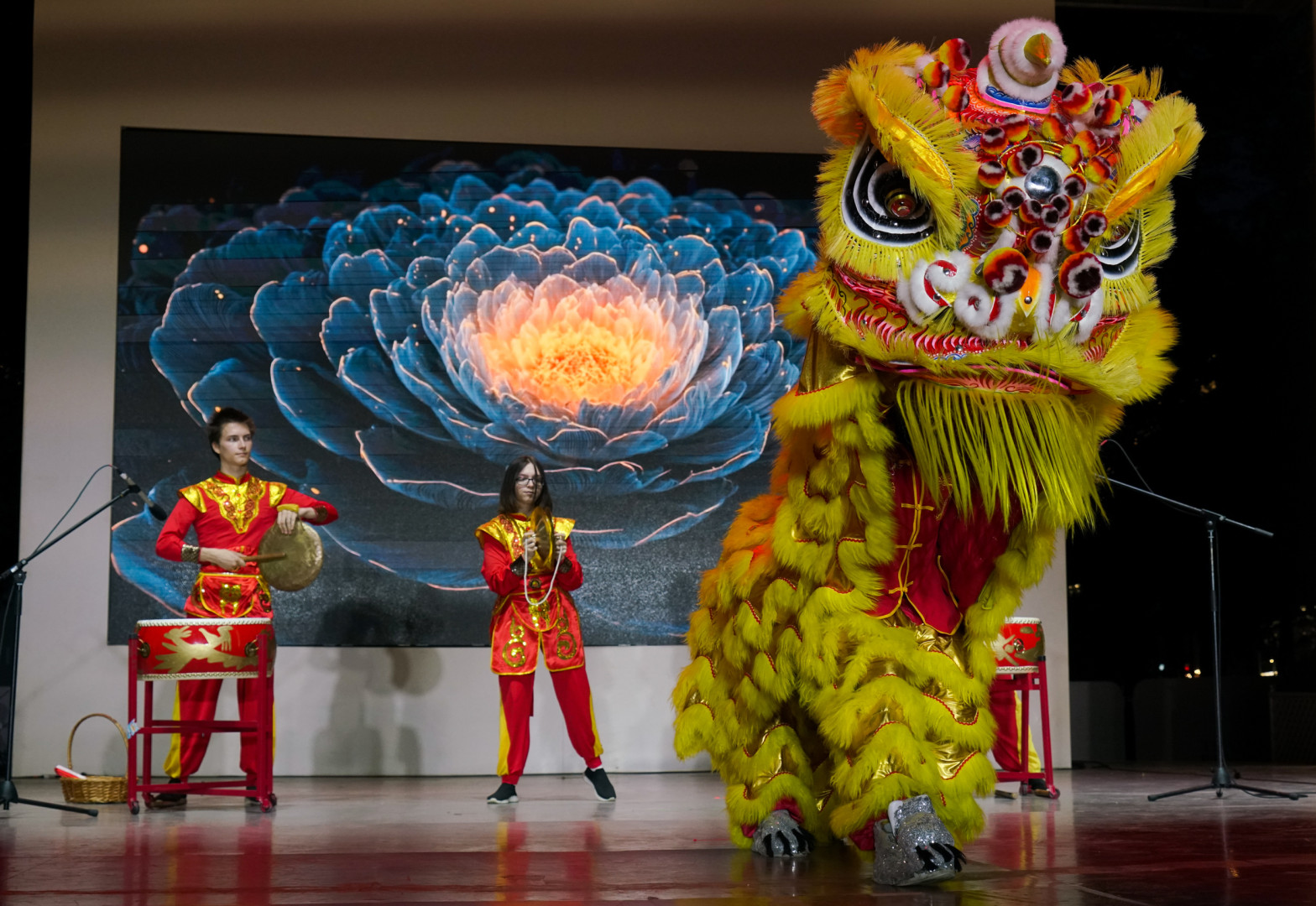
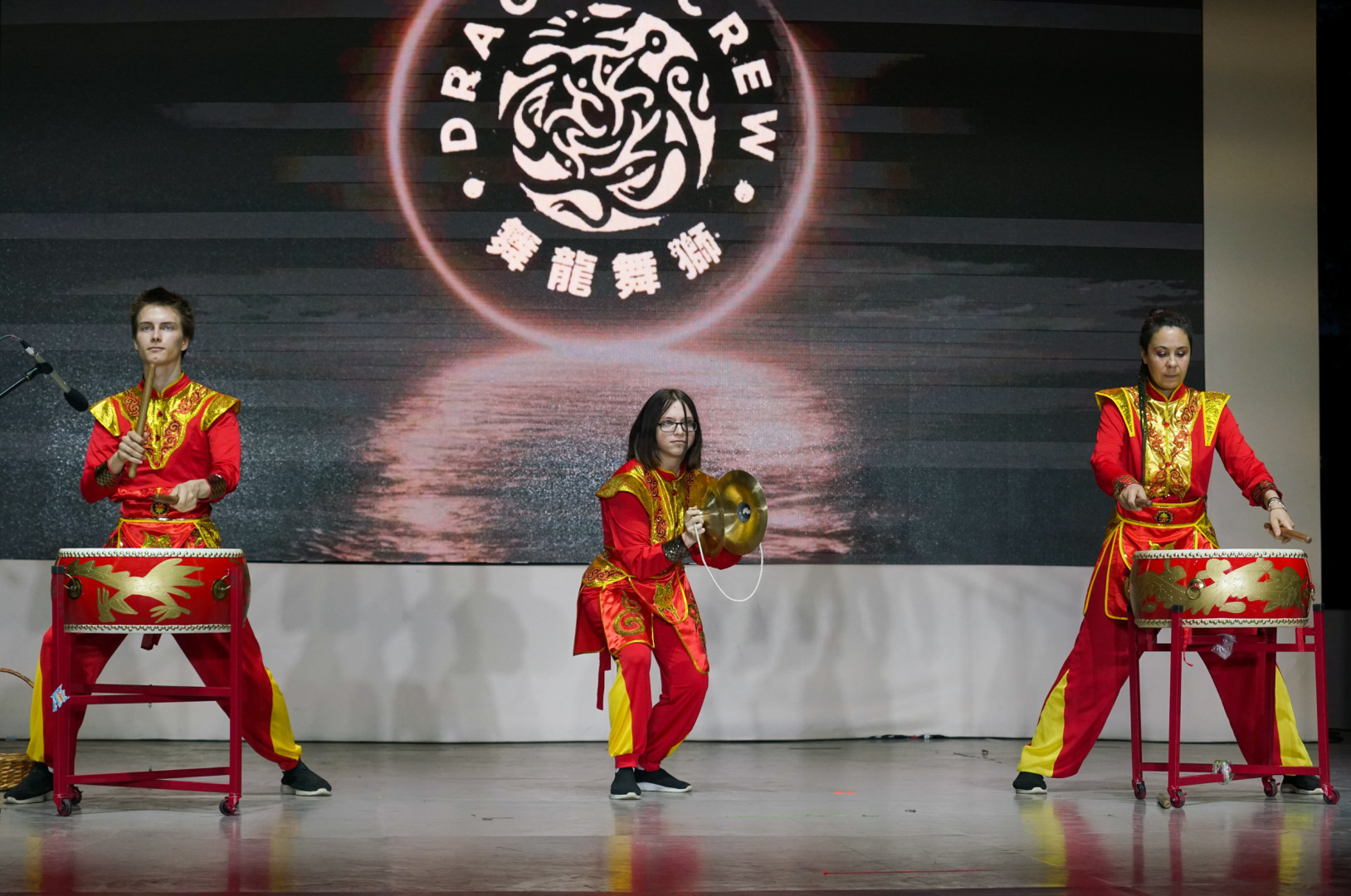
Chinese drum show Dragon Crew. Photo: Anna Yurgenson / press-service of the RGS
On August 18, BRICS Geographer’s Day was celebrated in Moscow. The event was held for the third time; it first took place in 2024. And every year, more and more countries take part in it, and the events themselves become larger and more diverse. Some of these events took place as part of the «Theatrical Boulevard» festival, allowing everyone to immerse themselves in the cultural traditions of different peoples.
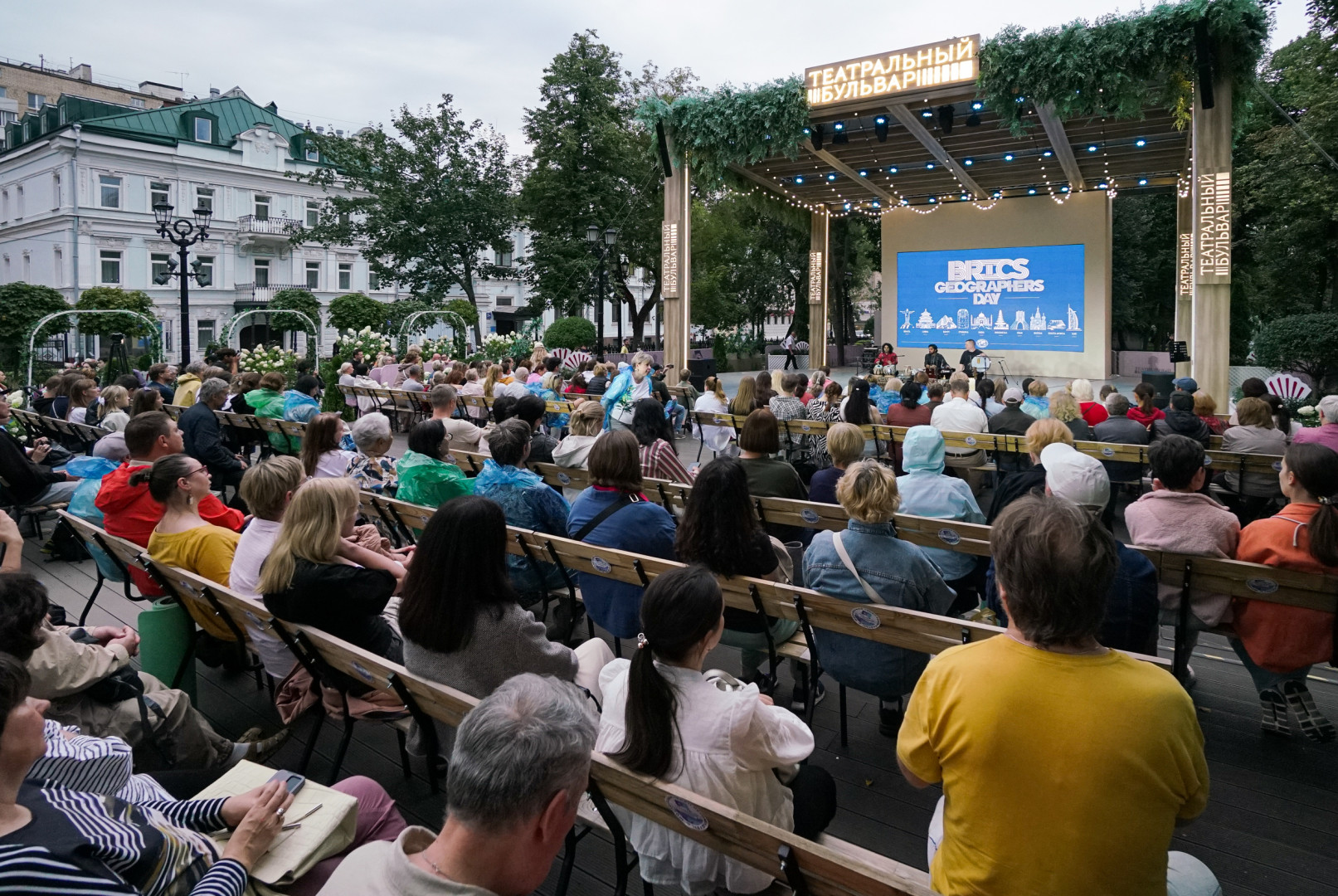
Despite it being a weekday, Chistoprudny Boulevard was quite lively. The grand opening of the BRICS Countries Culture Festival, timed to BRICS Geographer’s Day, took place on the «Krug» stage.
«We are very glad that it is on Geographer’s Day, on the anniversary of the founding of the RGS, that we are celebrating the first common holiday for all the countries in this association, » Ilya Gurov, First Deputy Executive Director of the RGS, noted in his speech.
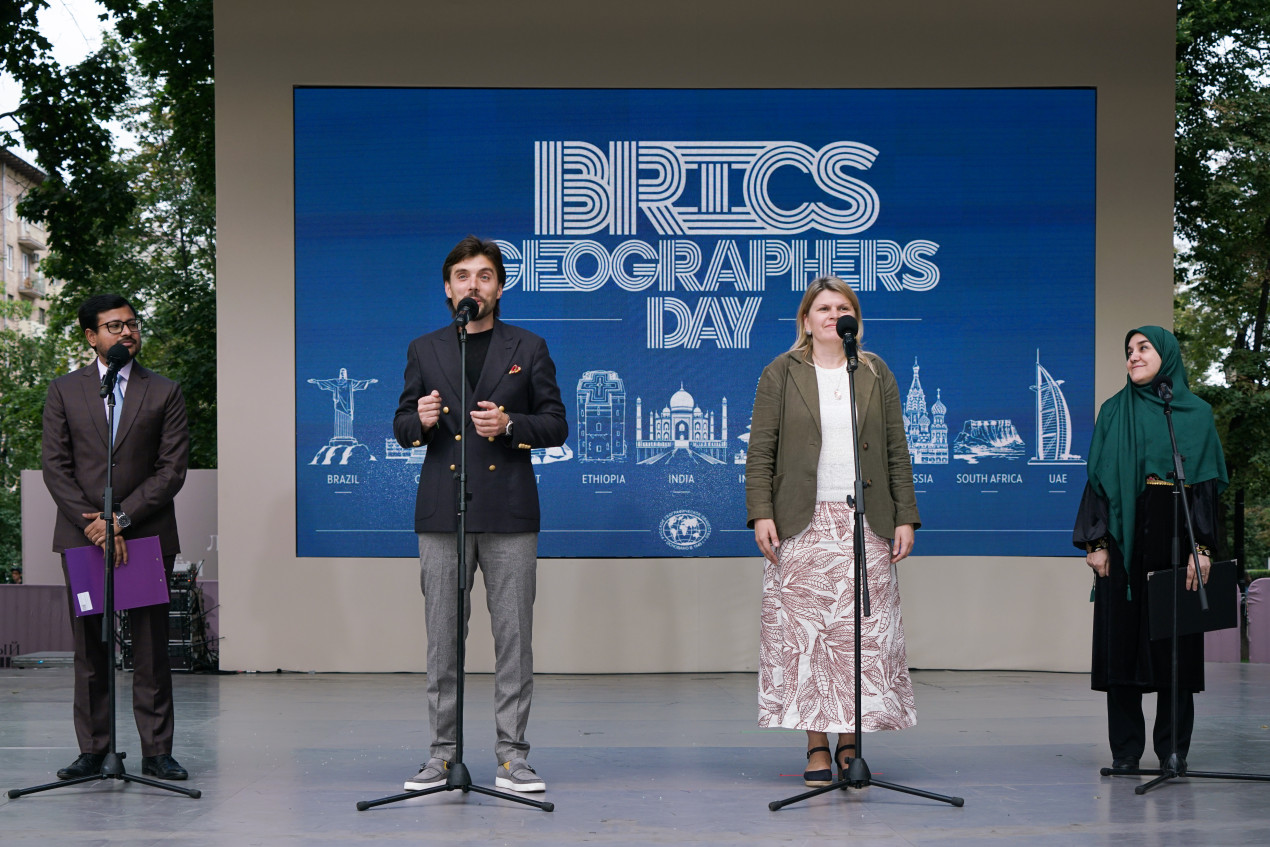
Grand Opening. Photo: Anna Yurgenson/press-service of the RGS
The cultural program of the event harmoniously fit into the schedule of the «Theatrical Boulevard» festival and turned out to be impressively diverse. In one of the workshops, lectures were held that attracted an audience inclined towards serious discussion. They talked about the Sarmatian style in the art of Nesvizh in the 18th century and the traditions of Indonesia, about the origins of the Brazilian carnival and the intricacies of the design of Eastern handwritten books, as well as about how essentially theatrical the ancient Persian epic is.
Next door, there were fascinating masterclasses in a «table» format, such as the ancient Chinese game of mahjong. The teachers from the Chinese language school «Wokei» taught its basics to everyone who was interested.
«Mahjong is a kind of Chinese poker, » said school administrator Ekaterina Mikhailova. «It requires observation, a good memory, and the ability to think quickly. And it’s also an opportunity to get to know Chinese culture better.»
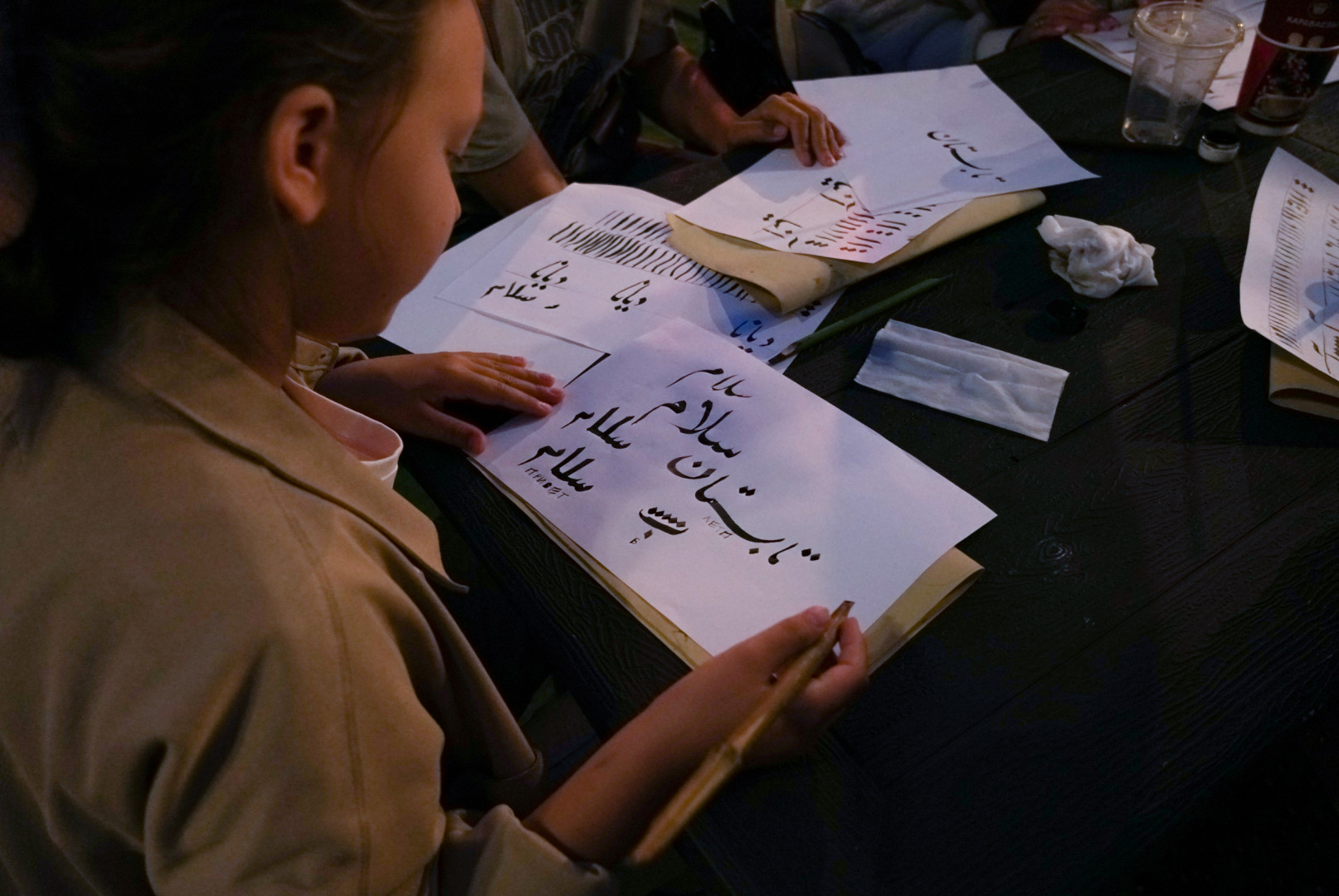
After playing mahjong, the workshop participants drew images of theatrical Russia, studied the basics of the Chinese language, and then bent over rough, yellowish sheets, immersing themselves in the principles of Persian calligraphy.
«The Persian language is one of the oldest in the world, and we have our own calligraphic technique, » explained Peyman Shakiba, an employee at the Cultural Center of the Iranian Embassy. «We write using a bamboo qalam and use an ancient method of preparing ink. We hope that this will be interesting for the people of Russia.»
Judging by the fact that there isn’t a single free seat at the tables, people are really interested.
«Calligraphy defines consciousness, » says Munir Peykan, a calligrapher at the Cultural Office of the Iranian Embassy, and he is convinced of it.
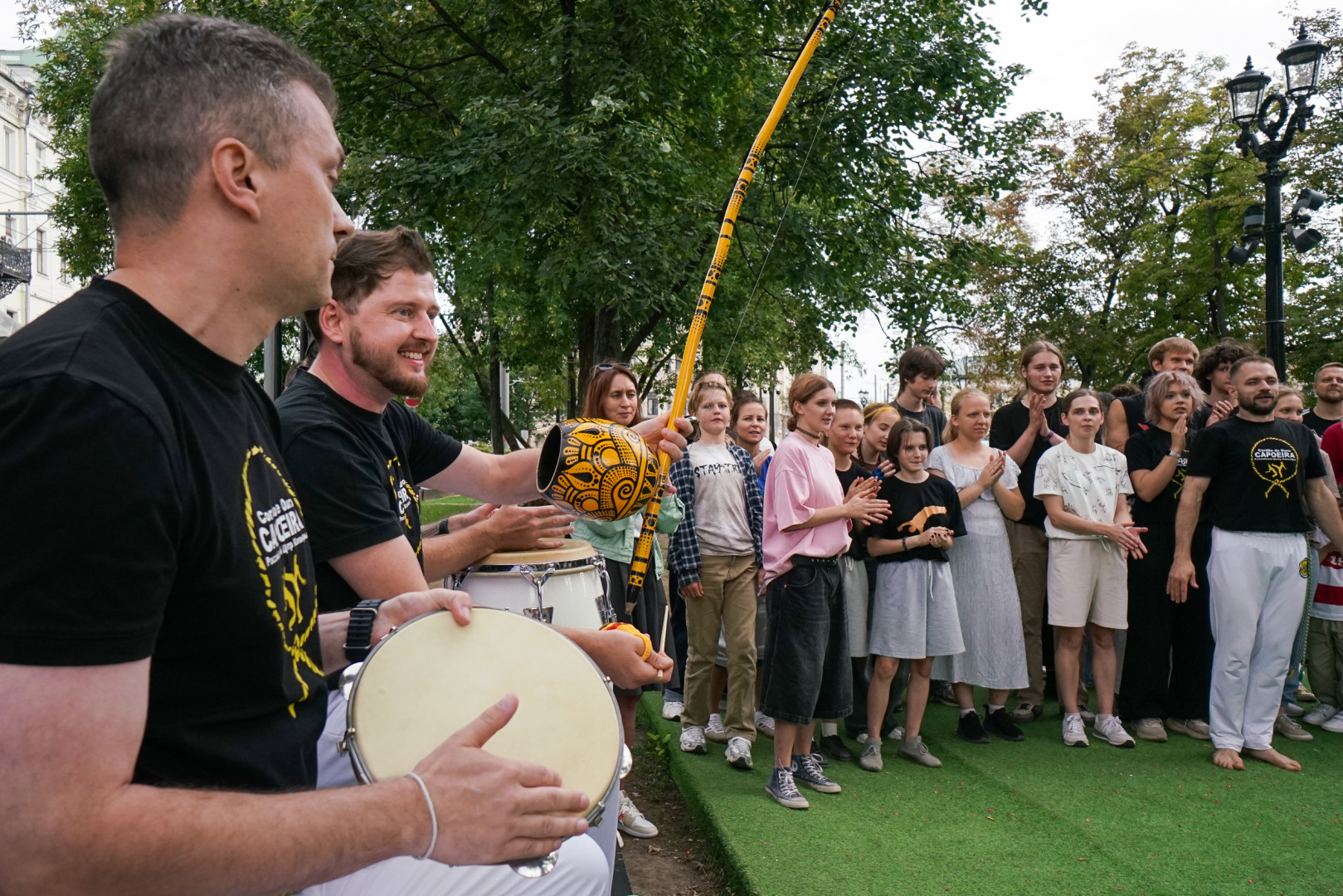
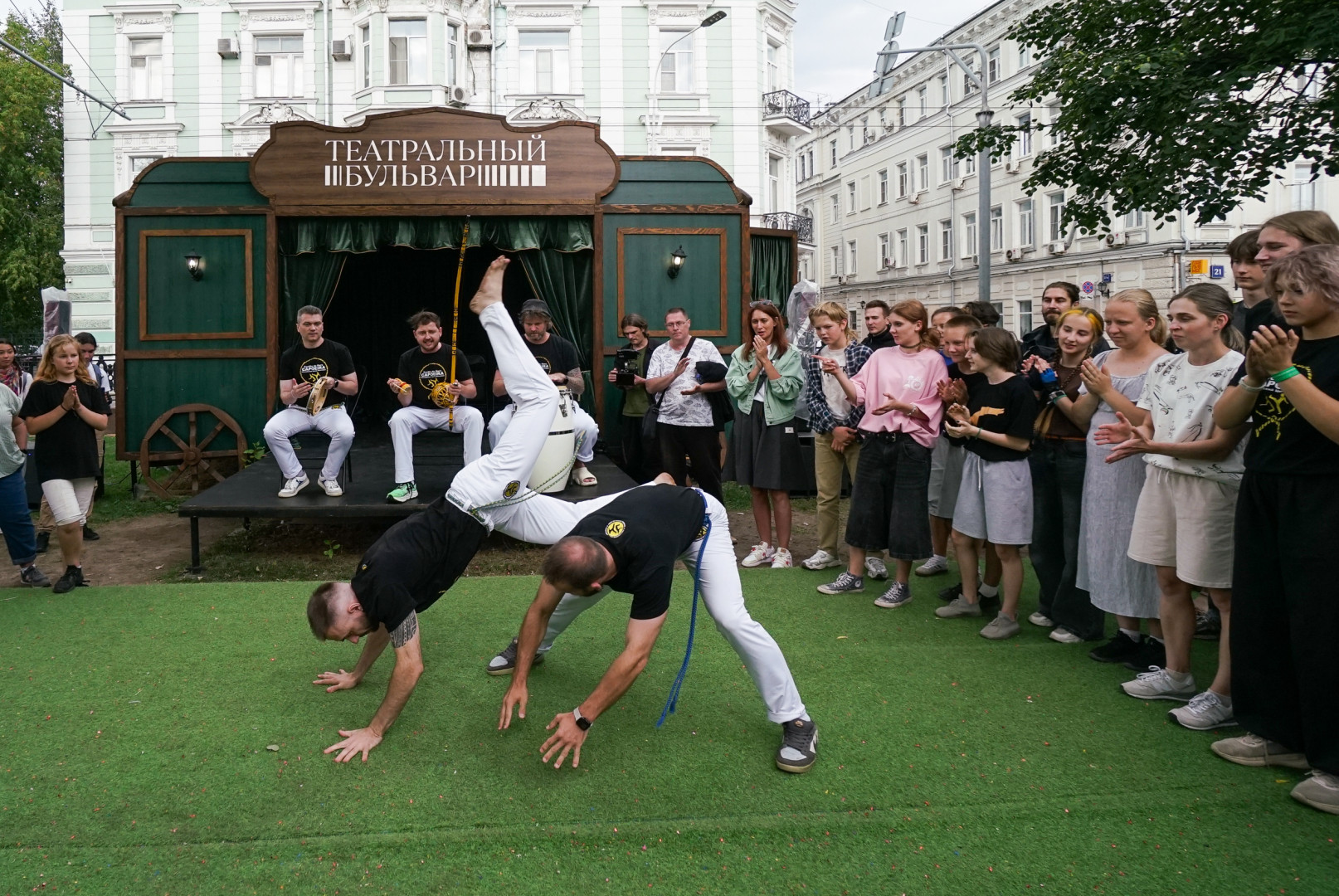
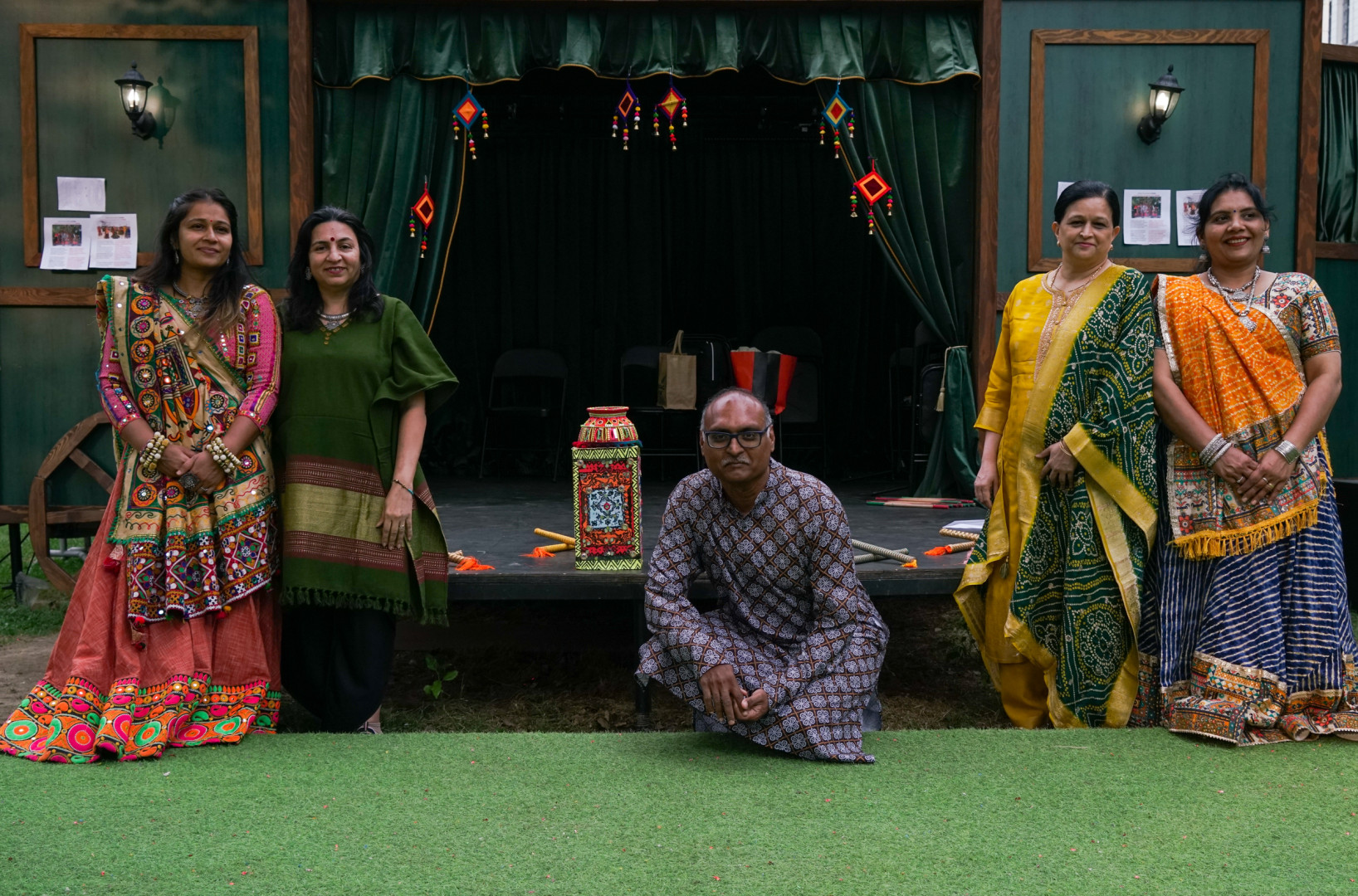
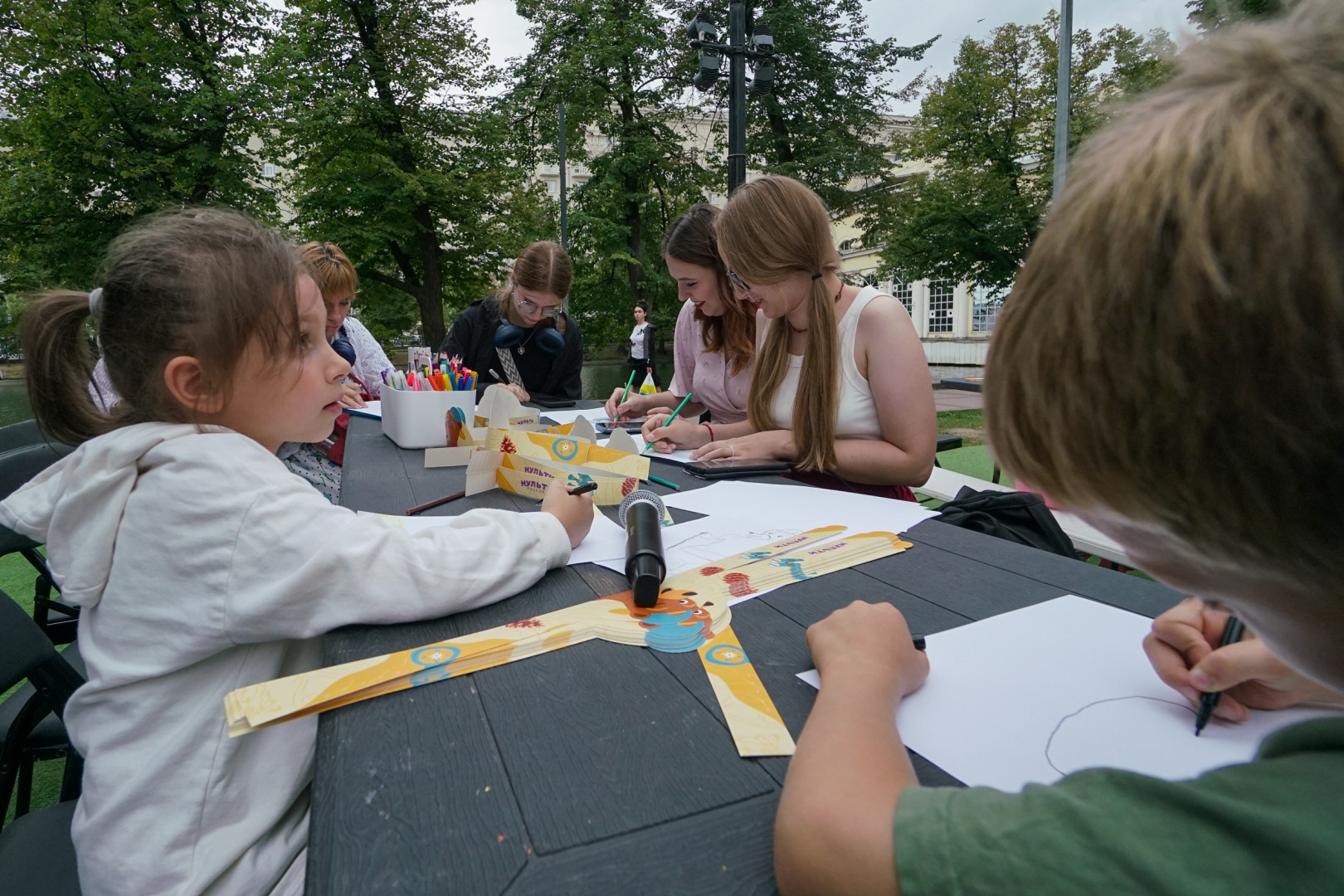
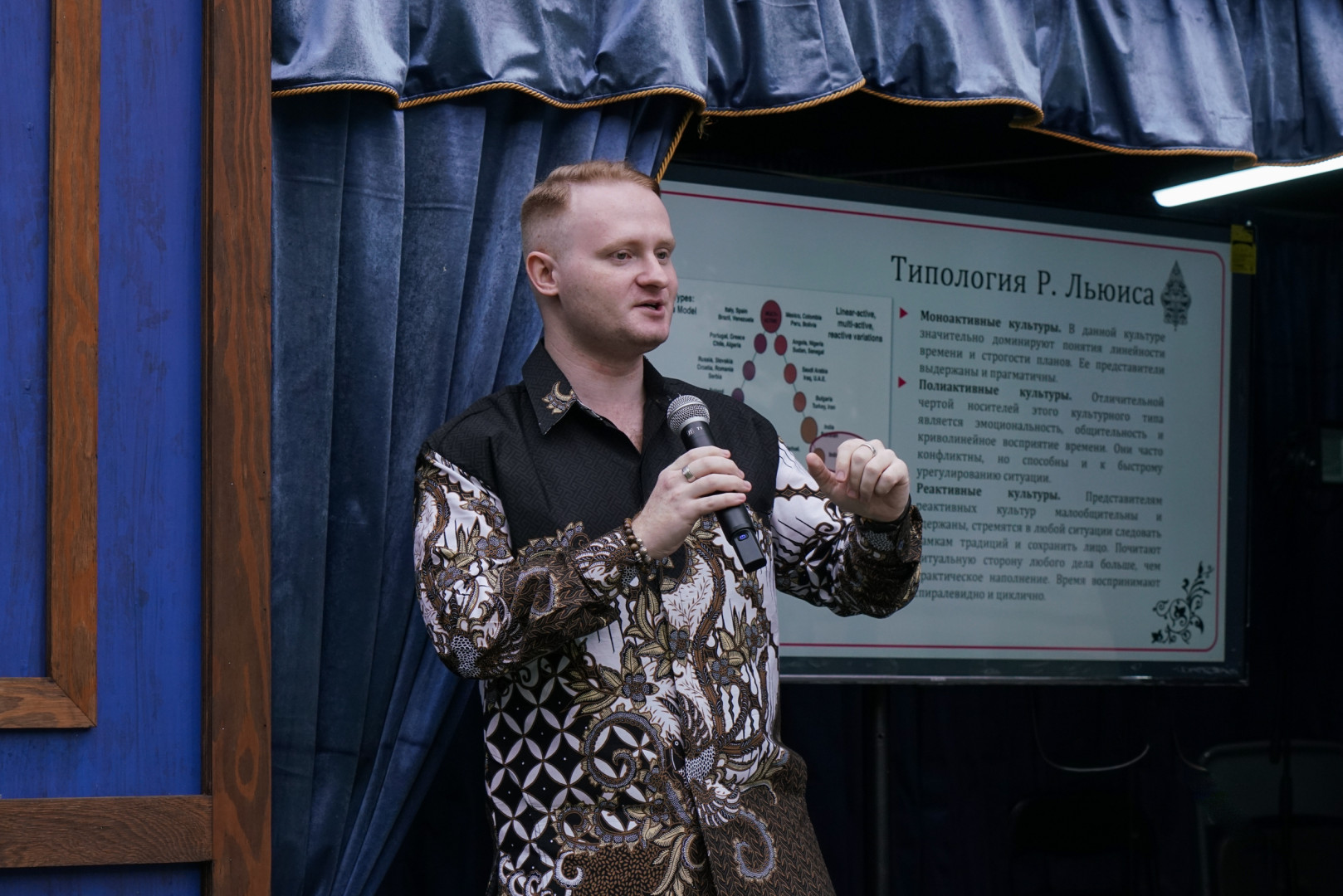
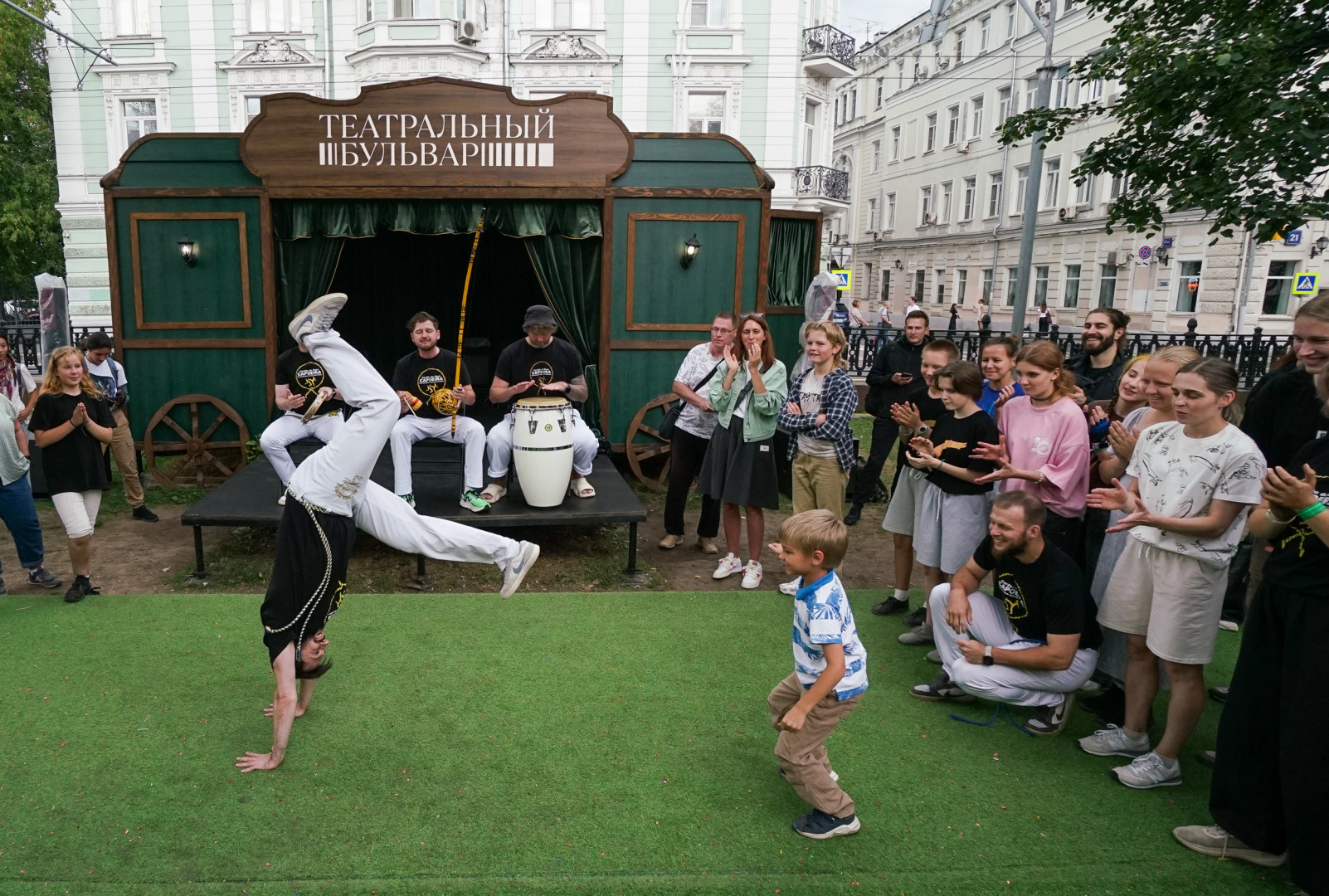
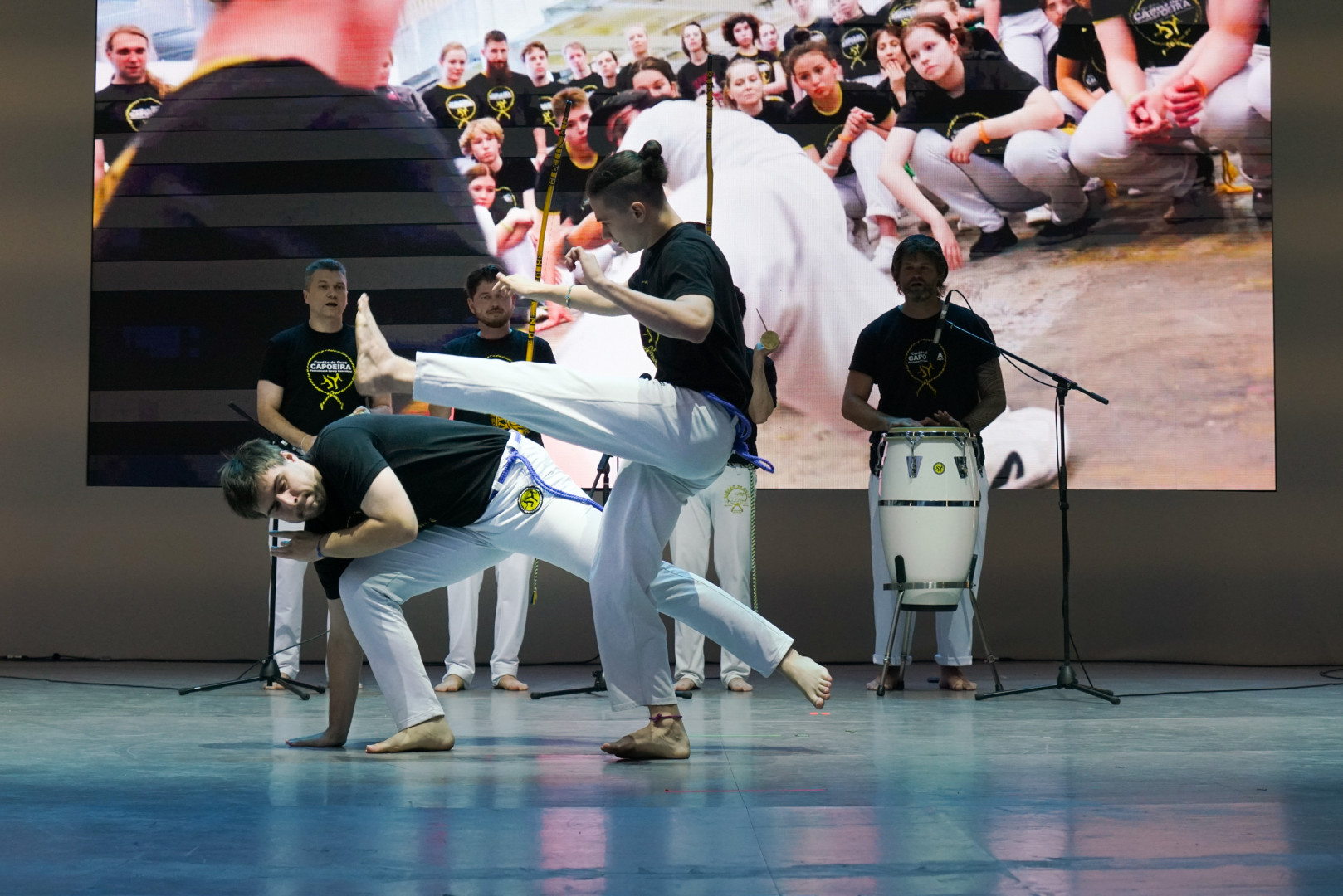
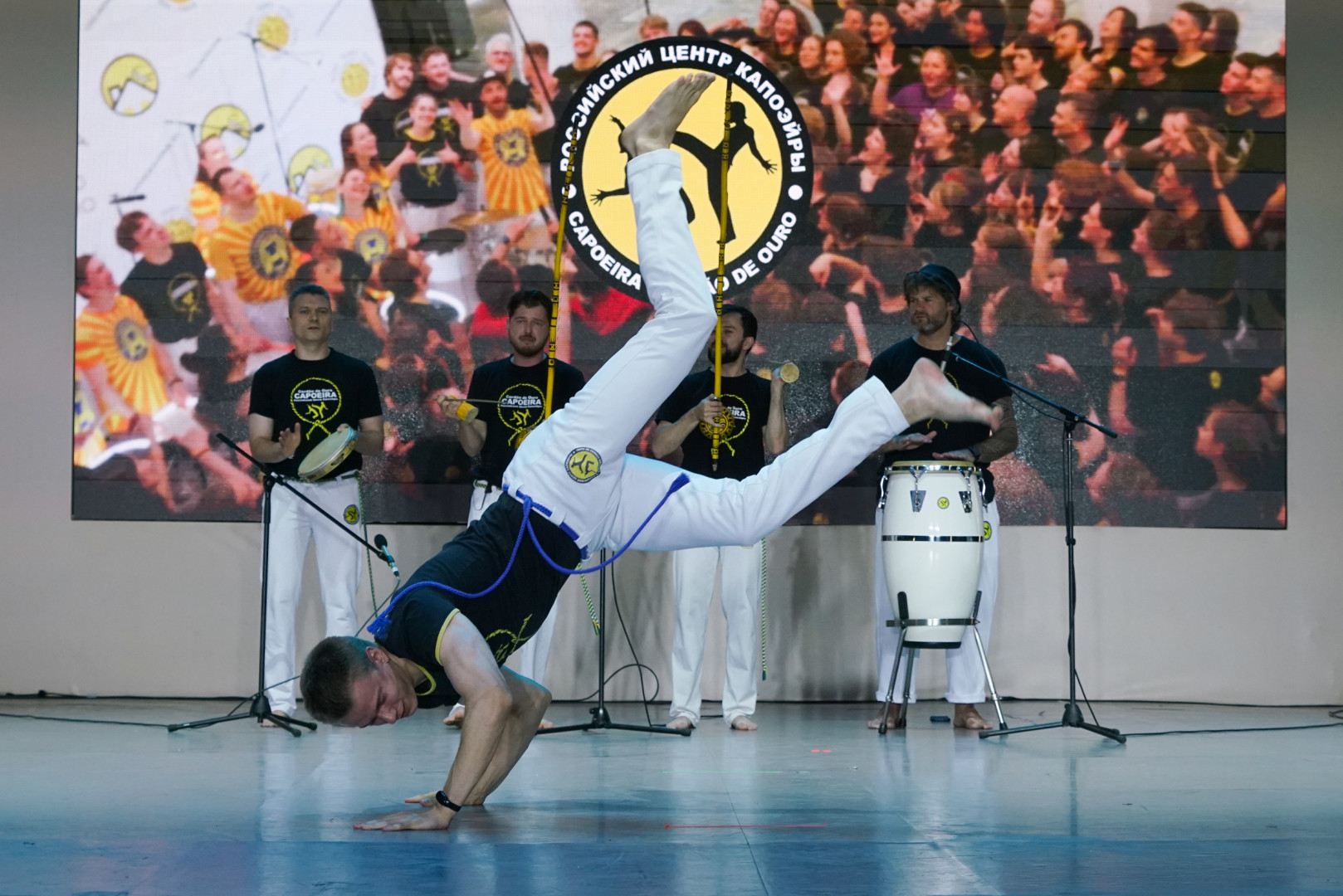
Another workshop attracted those who wanted to spend their time more actively. On the green area, athletes from the Russian Capoeira Center were jumping, hovering in the air, doing handstands, and swinging their legs to the lively Brazilian rhythms and cheerful singing, actively involving the enthusiastic onlookers in the action — they sang along with them as if they had rehearsed many times.
«I like this martial art; it gives you the feeling that you can fly, because capoeira involves a lot of acrobatics and positive energy, ” said Nikolai Batishchev, who has been training at the center for over 15 years. "It allows you to develop physically, communicate with like-minded people, and travel around the country and abroad. For example, we actively exchange experience with Brazil: we go to them and invite their masters to us."
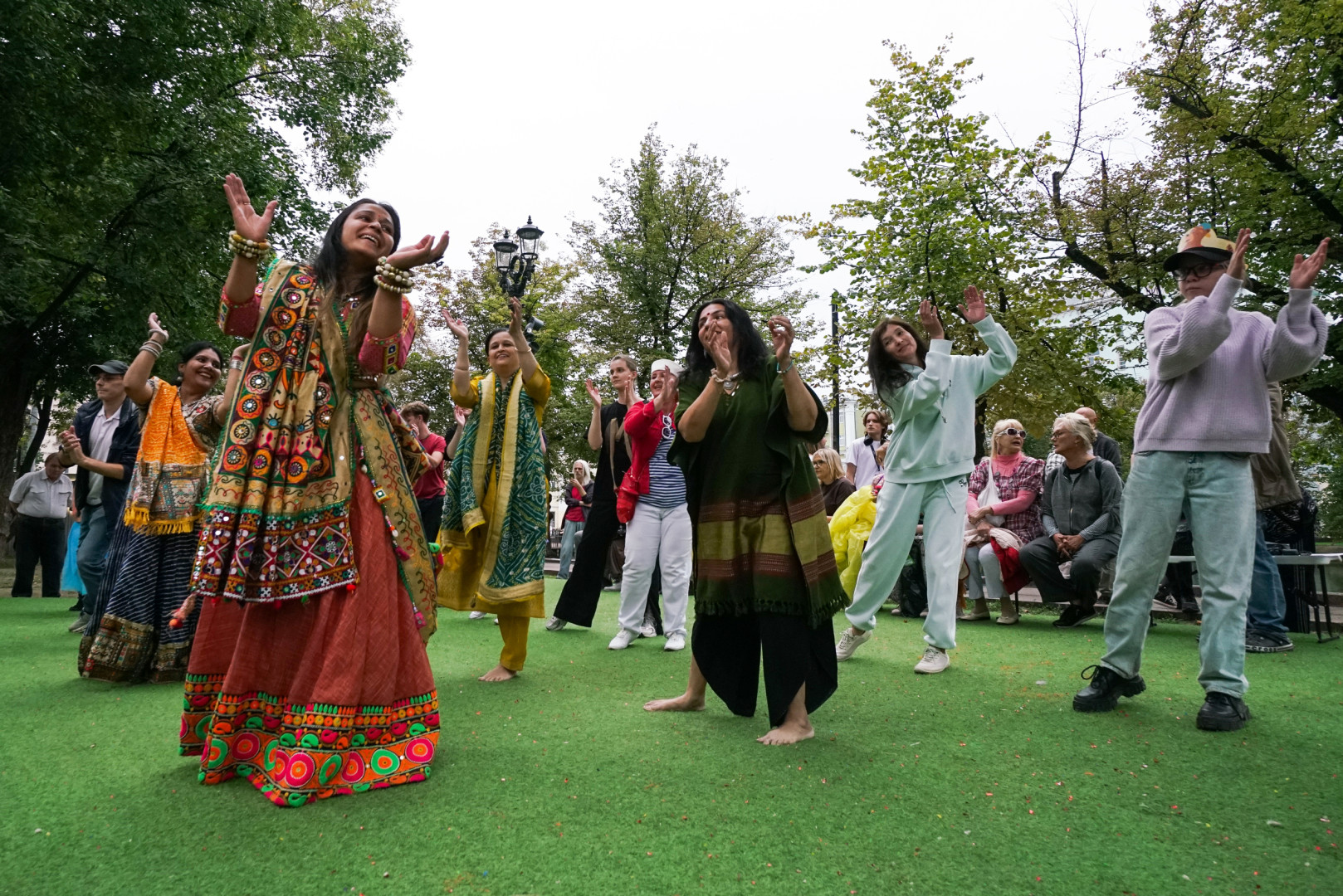
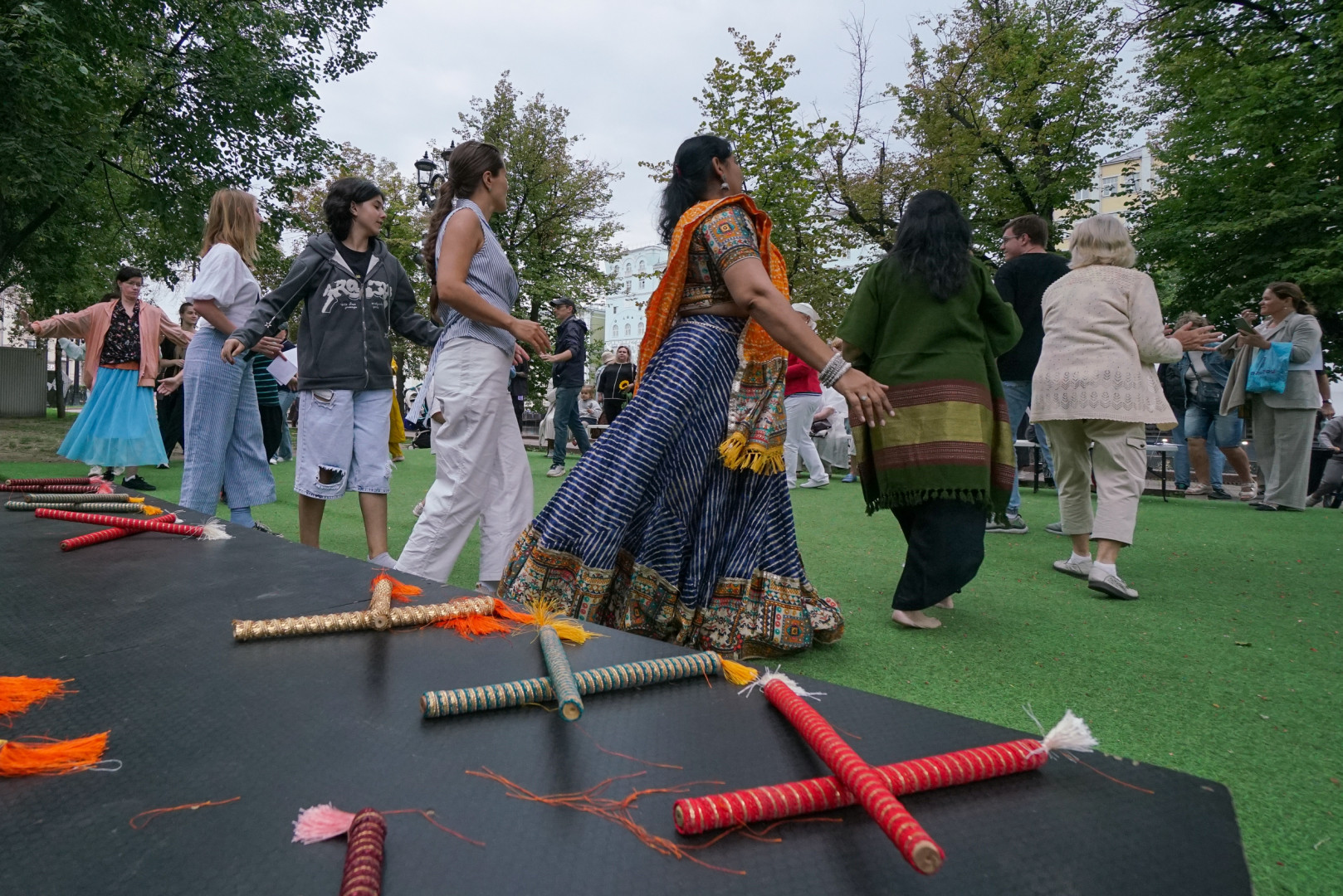
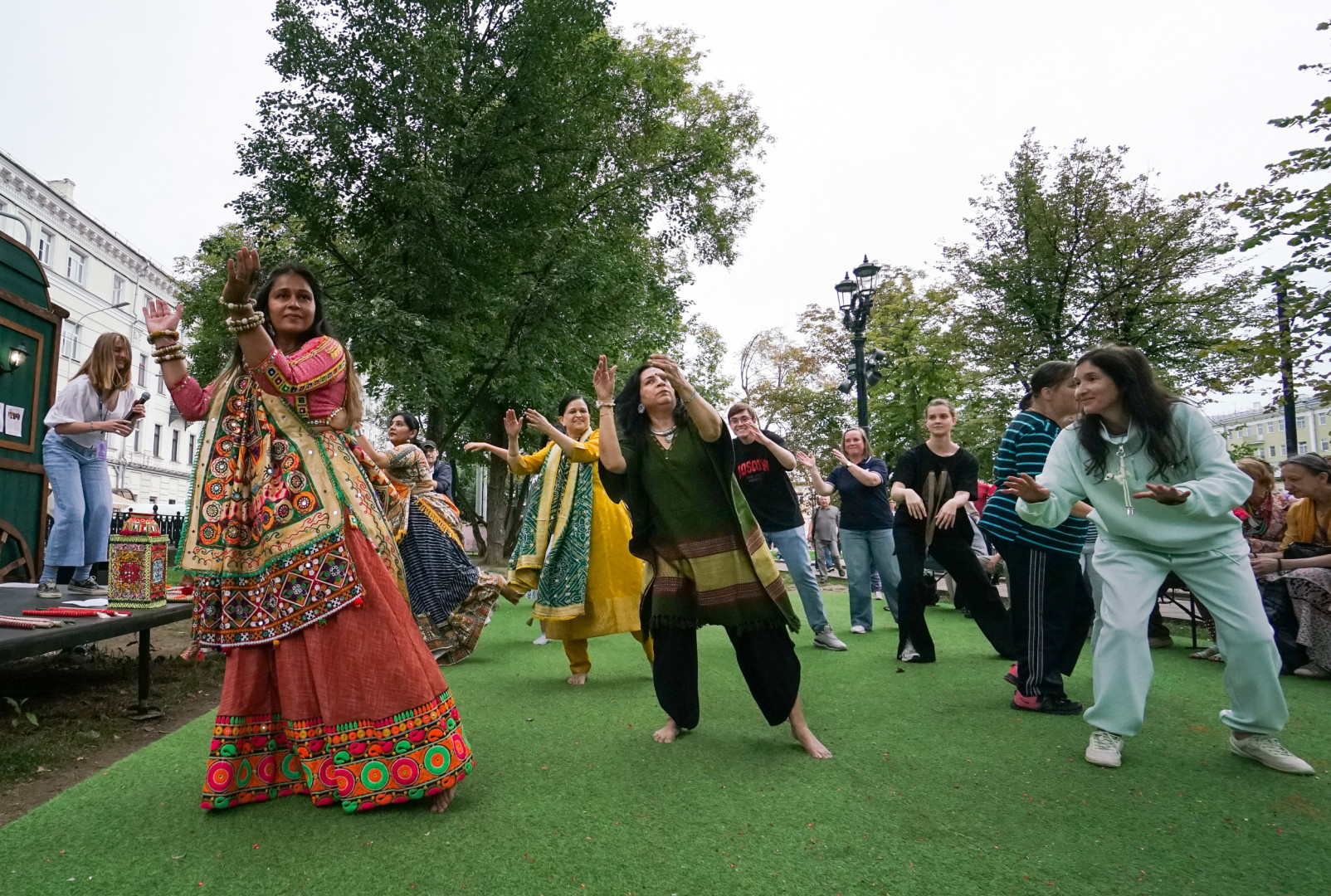
After the martial arts, it was time for dancing. The creative association «Gujarati Parivar» of the Jawaharlal Nehru Cultural Center (JNCC) of the Indian Embassy held a master class on the Garba folk dance. The dancers demonstrated simple steps and hand movements, drawing more and more participants into the circle: children, elderly people, and teenagers.
«Traditional dance brings the family together, allows you to communicate, to turn to God and thank Him, and simply to enjoy life, » explained the dancer Samhita. «Dance is for happiness.»
After the cheerful Indian folk dance, it was the turn of the mystical Sufi art. Composer Amir Khatai performed music on the ancient 72-string santur, and Asieh Khoshkavandani Saedi, the Sama dancer, spun rapidly in flowing white robes, captivating the audience with her movements.
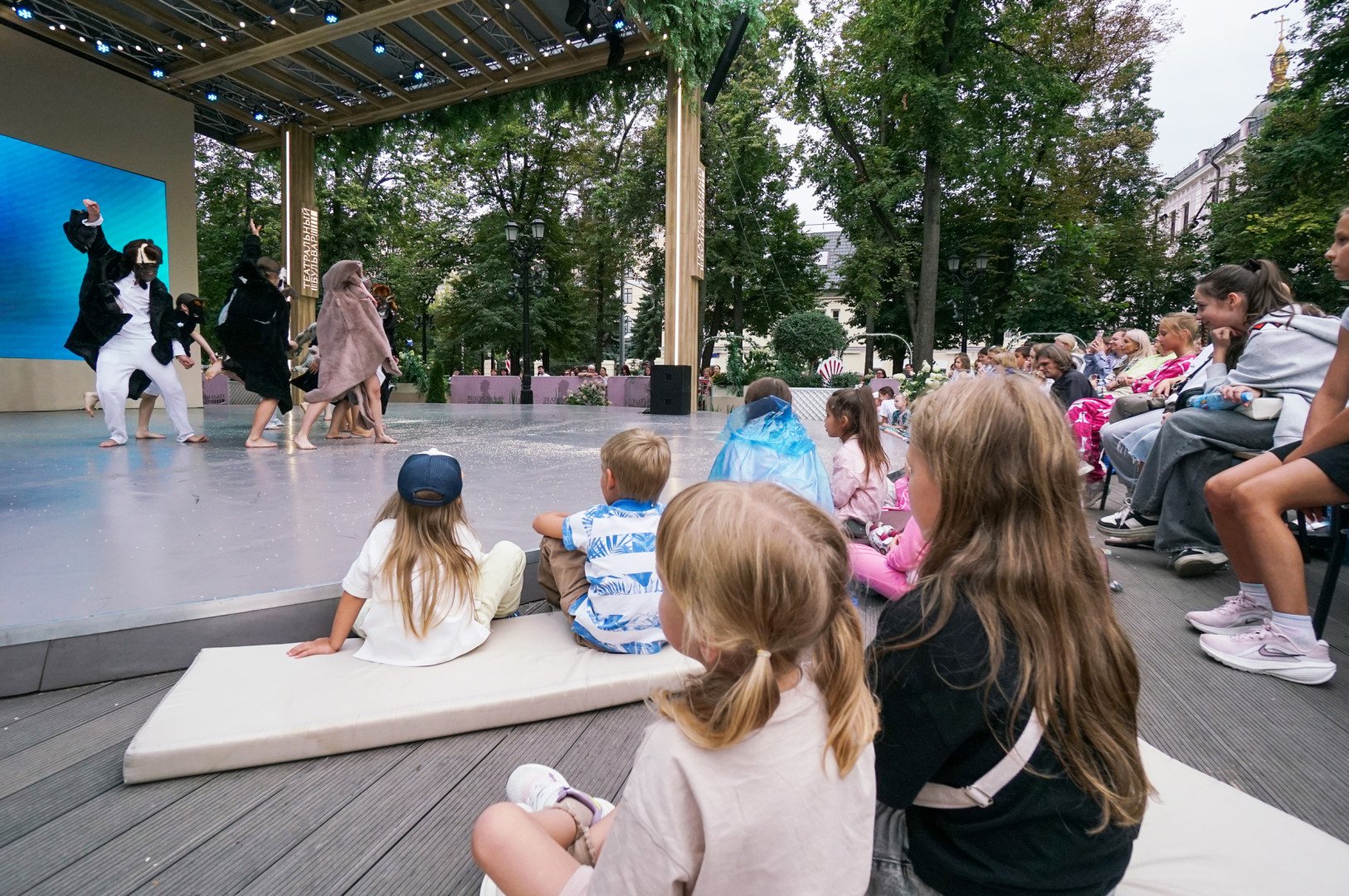
On the «Krug» stage, one performance followed another. Cartoons from the «Multi-Russia» series introduced the audience to the history and geography of our country in a lively and cheerful way. The Moscow studio of creative development «Pokolenie Operenie» of the Russian movement «Operenie», created by Konstantin Khabensky, revived the ancient traditions of the Slavs right before the audience’s eyes as part of the fantasy play «Gardarika» — that’s what the ancient Scandinavians called Rus’. To the sound of folk melodies, barefoot young men and women dressed in white lived on stage — they laughed, danced, fell in love, and even settled disputes, immersing the audience in the mythological stories and rituals of our ancestors.
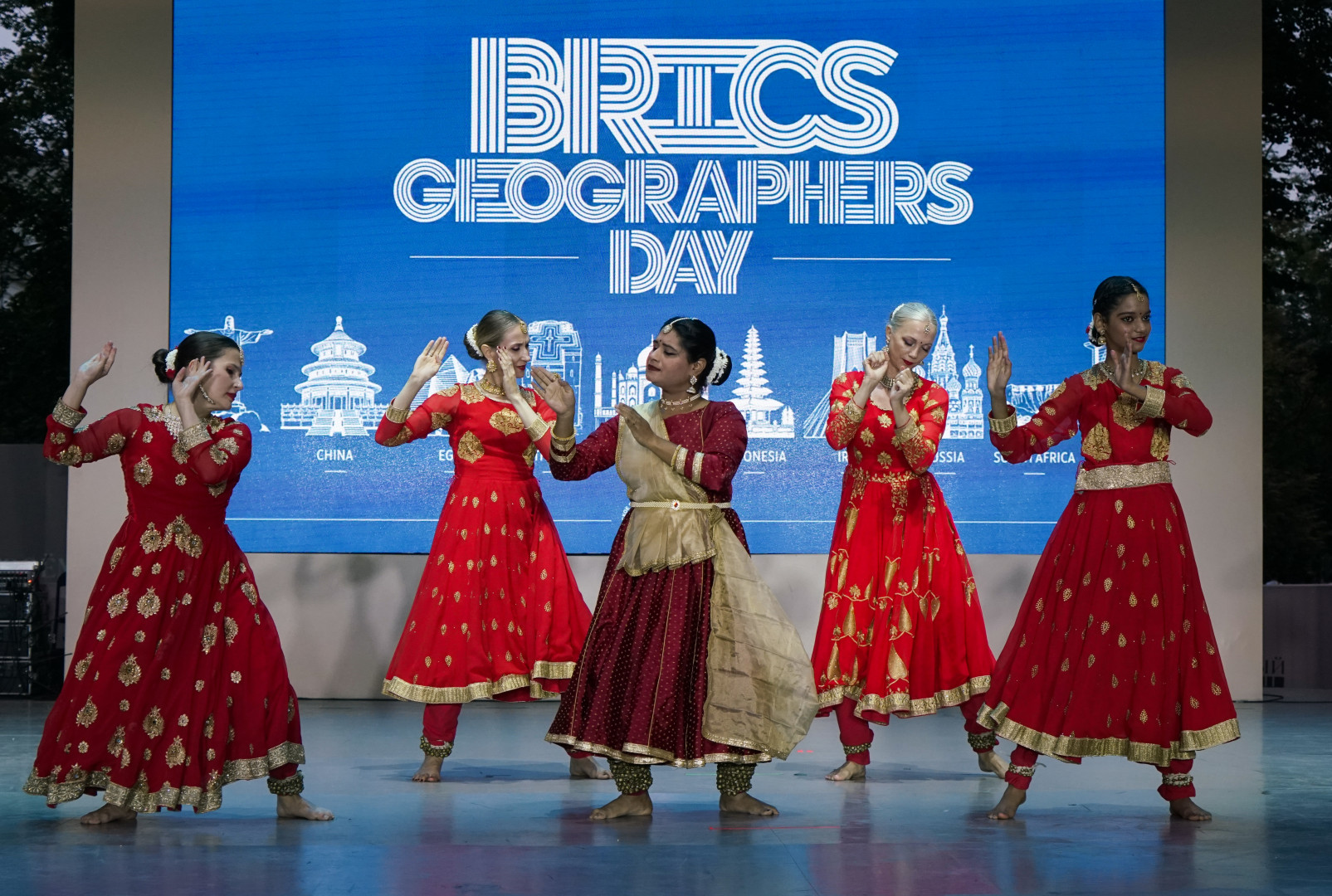
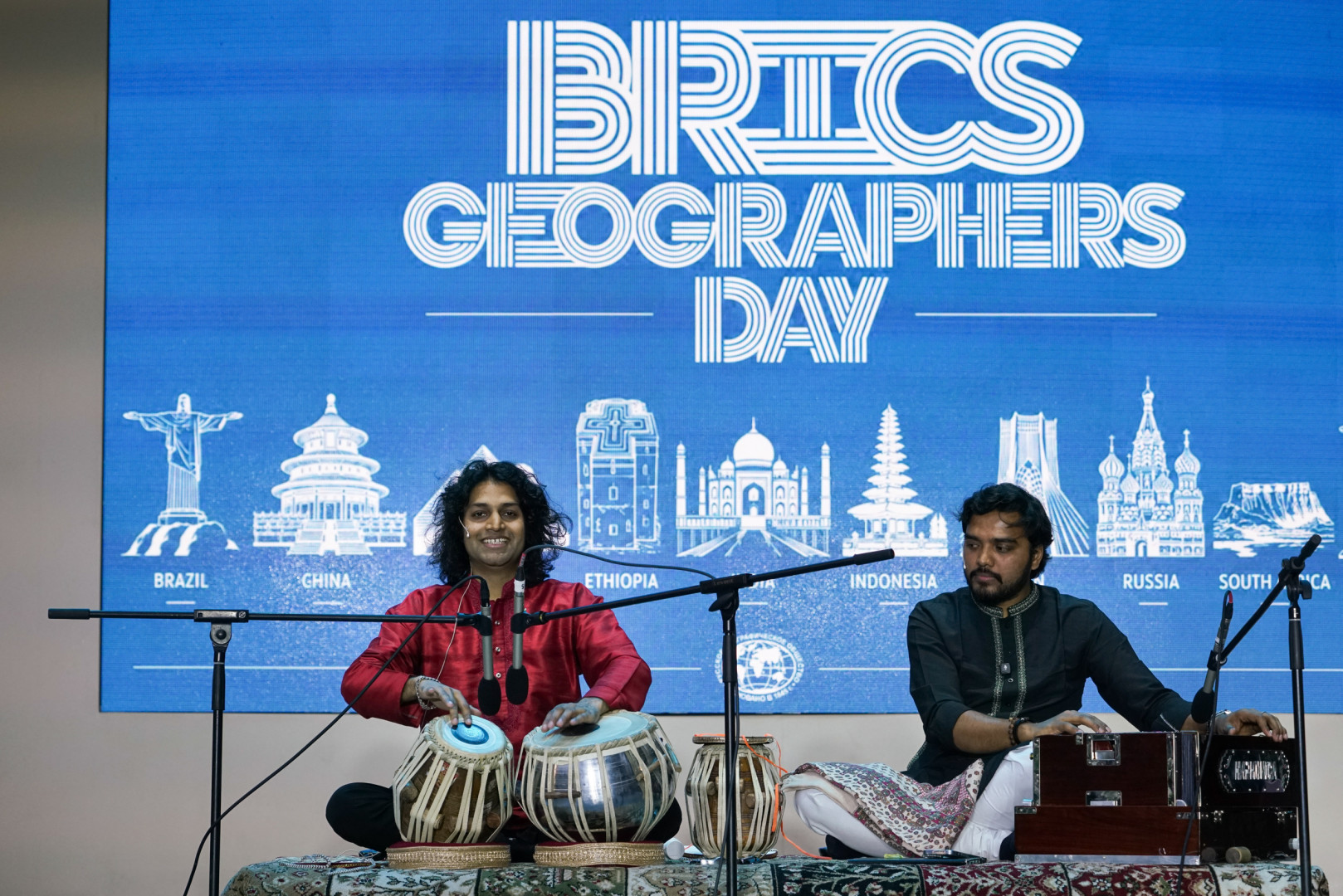
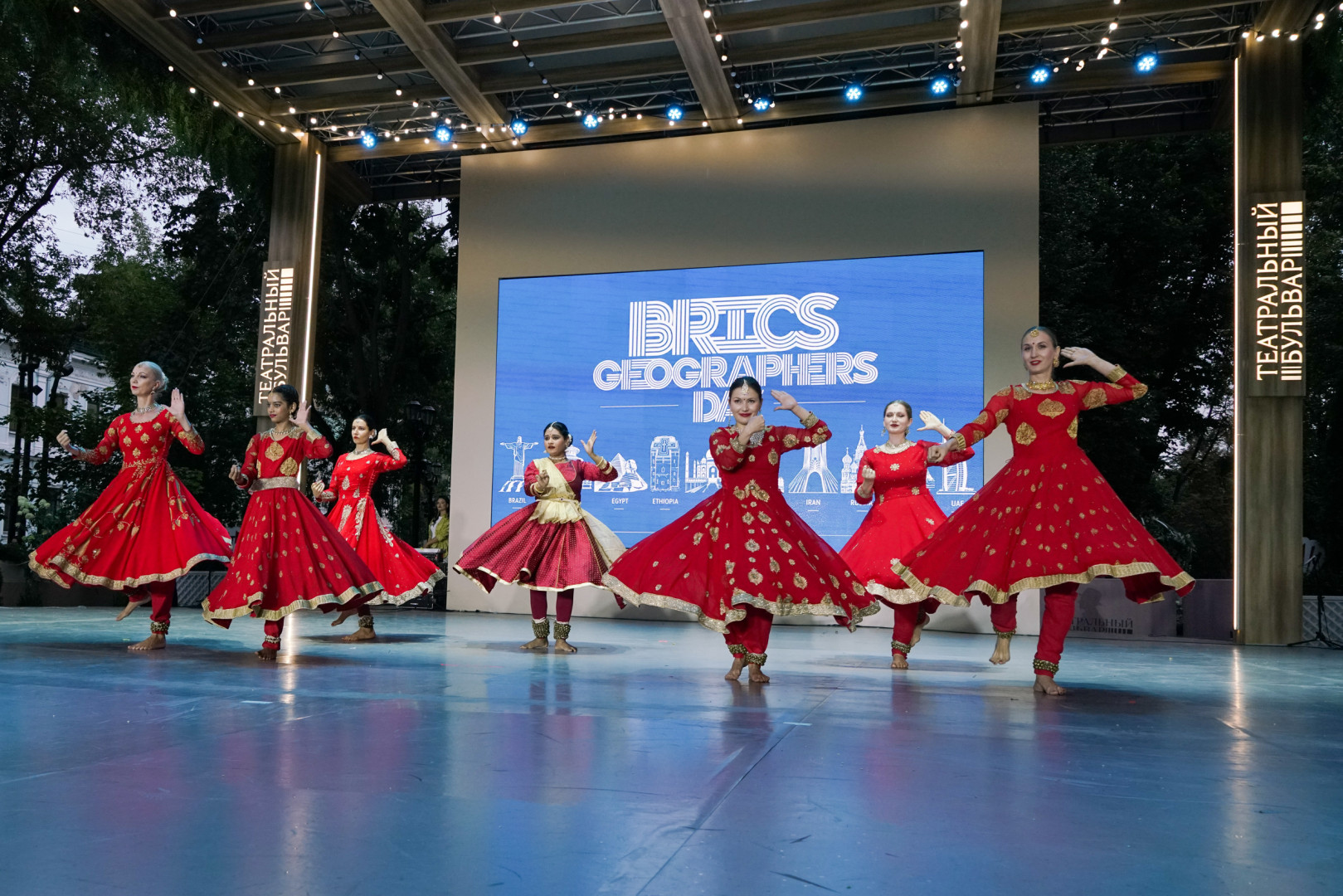
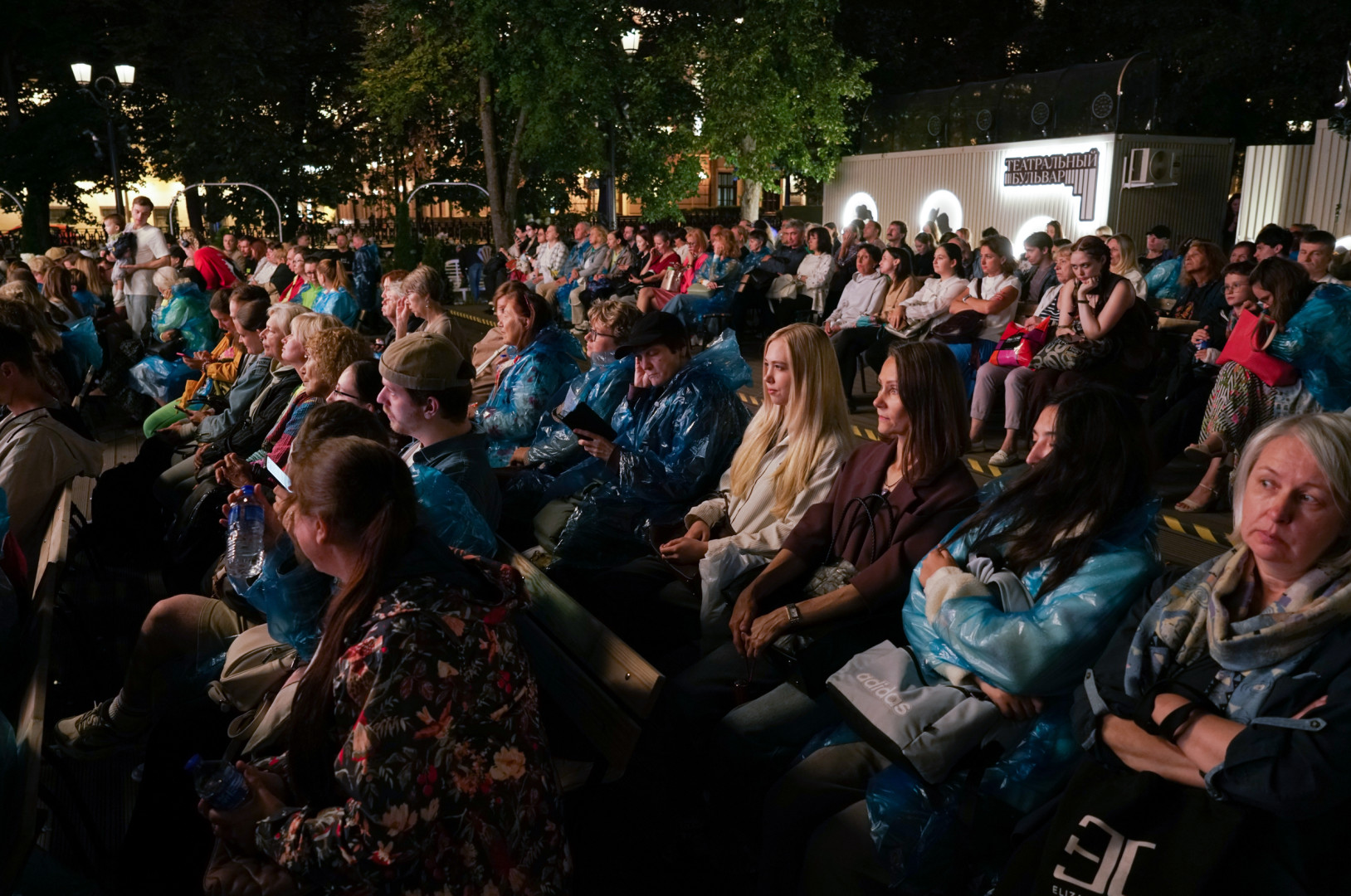
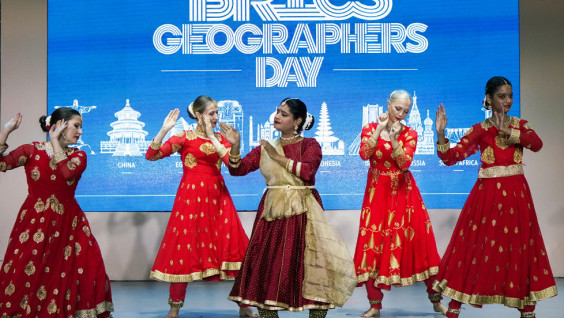
The following performances took us to India. Musicians from the Jawaharlal Nehru Cultural Center performed ghazals — this genre of lyrical poetry originated in Arabia back in the 7th century. Rhyming couplets with a repeating line (radif) floated over the hall to the sound of music. When the musical performance ended, children poured out onto the stage one by one, asking for autographs from the performers, who, apparently, made a great impression on them. Meanwhile, the dancers from the Jawaharlal Nehru Cultural Center appeared on the stage in bright red, white, and gold outfits. They performed the kathak dance, one of the oldest in India. Essentially, the performers used their bodies, gestures, and facial expressions to tell whole stories. Among their numbers, one was dedicated to the rainy season and, apparently, responding to the ritual performed by the dancers, it began to drip from the sky. However, the gradually intensifying rain did not frighten the audience, and there was no free space near the entrance to the hall.
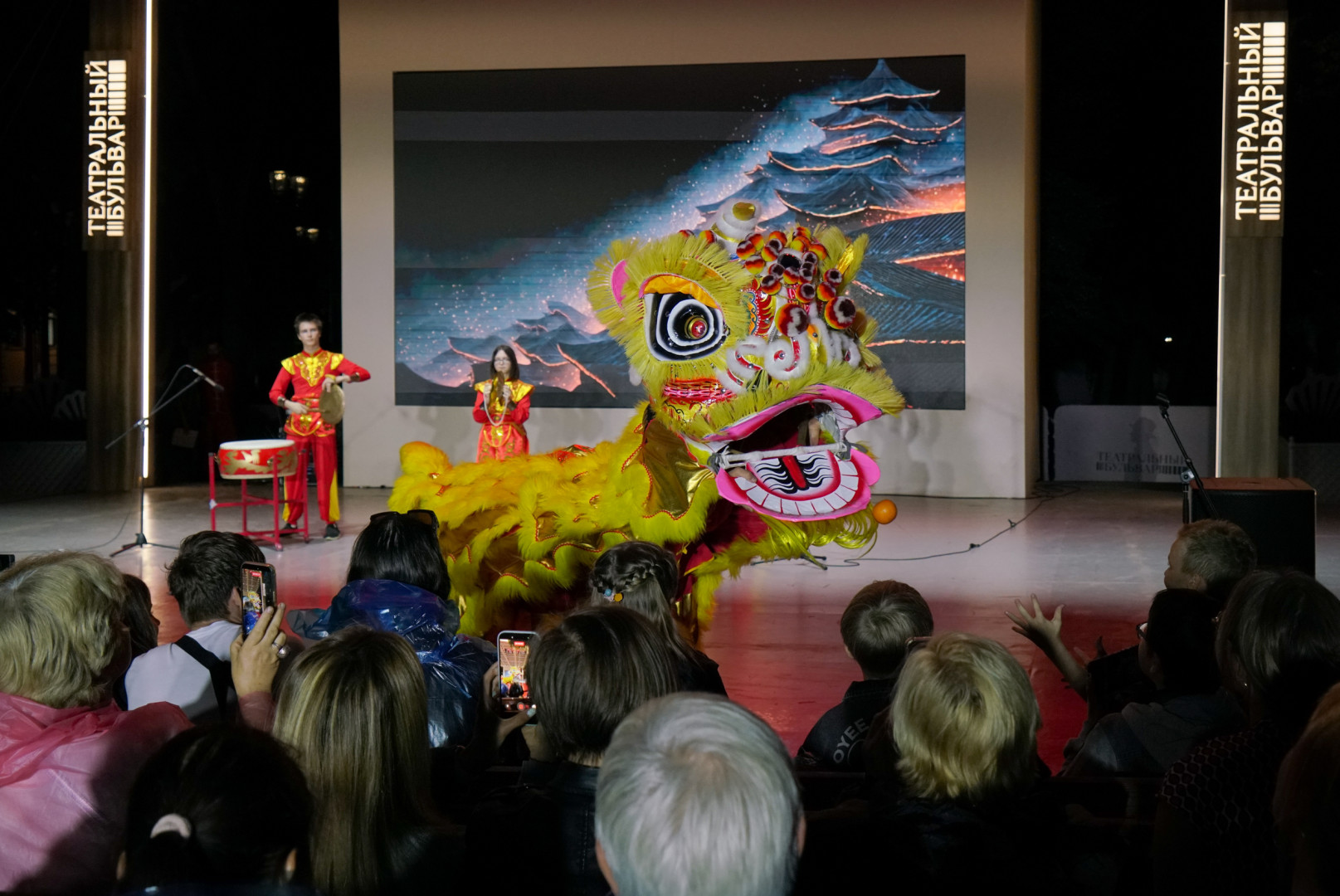
After the Indian dances, there was a demonstration of capoeira, followed by a Chinese drum show performed by the Dragon Crew group. The performers’ golden-scarlet outfits, the staccato rhythms of the instruments that symbolized the earth, the sky, and the connecting link between them, man, the traditional lion dance, and the story about China’s national customs literally captivated the audience.
It had already gotten dark outside when the performers of the «The Izba» theater, affiliated with the Russian museum of everyday life «Po Susecam», took the stage. Having managed to travel through various countries of the world in a single day, the festival visitors returned once again to their Slavic roots — the symbolic circle was complete. The celebration came to an end, but the atmosphere, mood, and new knowledge it gave to people will not disappear. Perhaps, after that, someone will decide to learn Chinese, someone will take their child to capoeira classes, and someone will become interested in ancient Slavic rituals. After all, the diversity of cultural traditions brings people from different countries closer together and helps them understand each other better.