
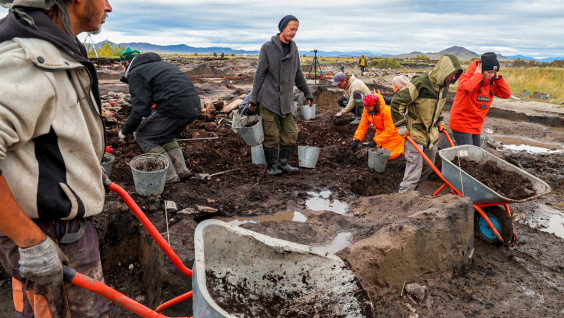
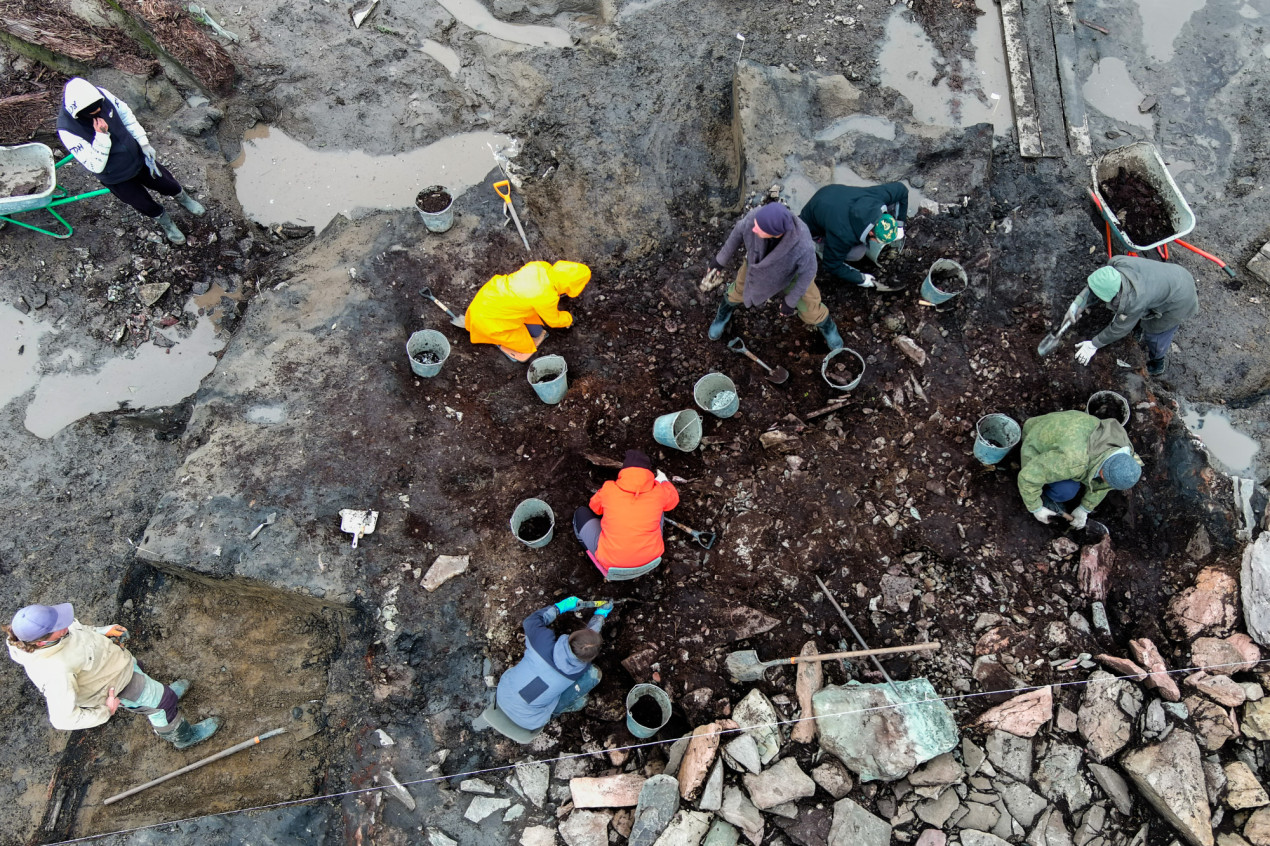
Work on the Tunnug-1 kurgan. Photo: Sergei Fadeichev
The ninth season of the expedition of the RGS and the Institute of History of Material Culture of the RAS to explore the Tunnug-1 kurgan has started. The work of scientists and volunteers at the excavation will last until the end of August in the Piy-Khem District of the Republic of Tuva.
Archaeologists have fully or partially studied 10 of the 16 sectors into which the monument is divided. In the central part of the kurgan, scientists found the remains of humans and horses. This allows experts to reconstruct step-by-step the ancient rite of mass burial, which was written about by the ancient Greek historian Herodotus. In addition, the analysis of the artifacts found during the expedition refutes the theory of the gradual spread of the Scythian culture from west to east and proves that its early forms were formed in the steppes of Southern Siberia by the end of the 9th century BC.
«The field camp has already been set up, and excavation work has begun. This season, we will continue to explore the main mound of the kurgan and the area around it, focusing on the northern section of Tunnug-1,» said Timur Sadykov, scientific director of the expedition, an employee at the IHMC RAS. «Peripheral areas near the kurgan may hide valuable finds. There are places of rituals around: altars, sacred sites or traces of funeral ceremonies. Additional burials may be located here or in the embankment itself. We found that the complex remained a burial site for thousands of years after its construction. In the pre-continental layer under the mound, the expedition had previously found fragments of ceramics from the Bronze Age, and funerary monuments of the Kokel culture of the first centuries of our era and medieval times were discovered in the immediate vicinity of the kurgan.»
Among the finds from previous seasons are unique bronze objects: a figure of a curled predator from the feline family, and 15 psaliums (bridle parts) with previously unknown images of snakes. Bronze castings or cutouts in the form of birds of prey are also common.
During excavations, scientists always take samples for a variety of analyses: radiocarbon, traceological, petrographic, isotopic, genetic, etc. They allow one to determine the age of artifacts, the origin of raw materials for weapons, family ties, lifestyle of people, and much more. When the fieldwork is completed, all finds are processed in a lab, and the results of the research are included in a scientific report with recommendations for the preservation of the archaeological site.
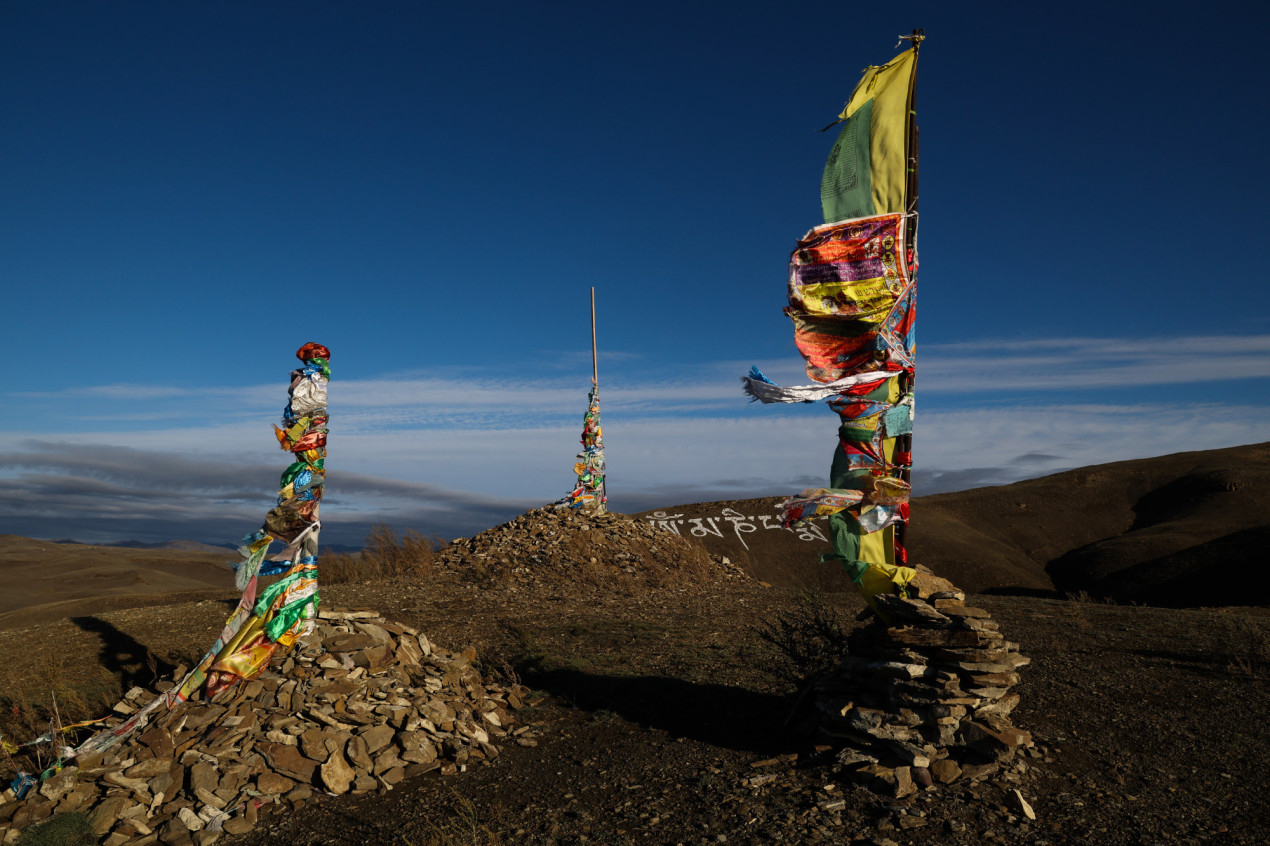
The Tuvan Valley of the Kings is hidden behind the Western Sayan Mountain ranges. Photo: Sergei Fadeichev
«Every year we select volunteers for the expedition, » said Natalya Belyakova, Director of the Expeditions and Research Department. «In previous years, the RGS international camp worked in the Valley of the Kings. Over the years of the expedition, volunteers from Russia, Belarus, the USA, Canada, Great Britain, Latvia, India, Ecuador, and other countries participated in the project. This year, the selection was held among Russian citizens; according to the results of this field season, 30 people from different regions of the country will take part in the excavations.»
Expeditions to the Tunnug-1 kurgan have been taking place since 2018. All the artifacts discovered during the excavations will become part of Russia’s cultural heritage. After the work is completed, the excavations are reclaimed, and the data obtained is used to prepare publications and exhibitions.