
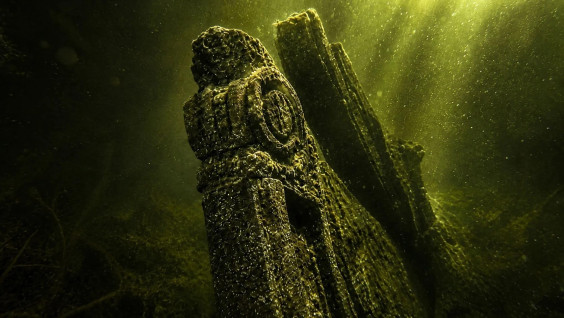

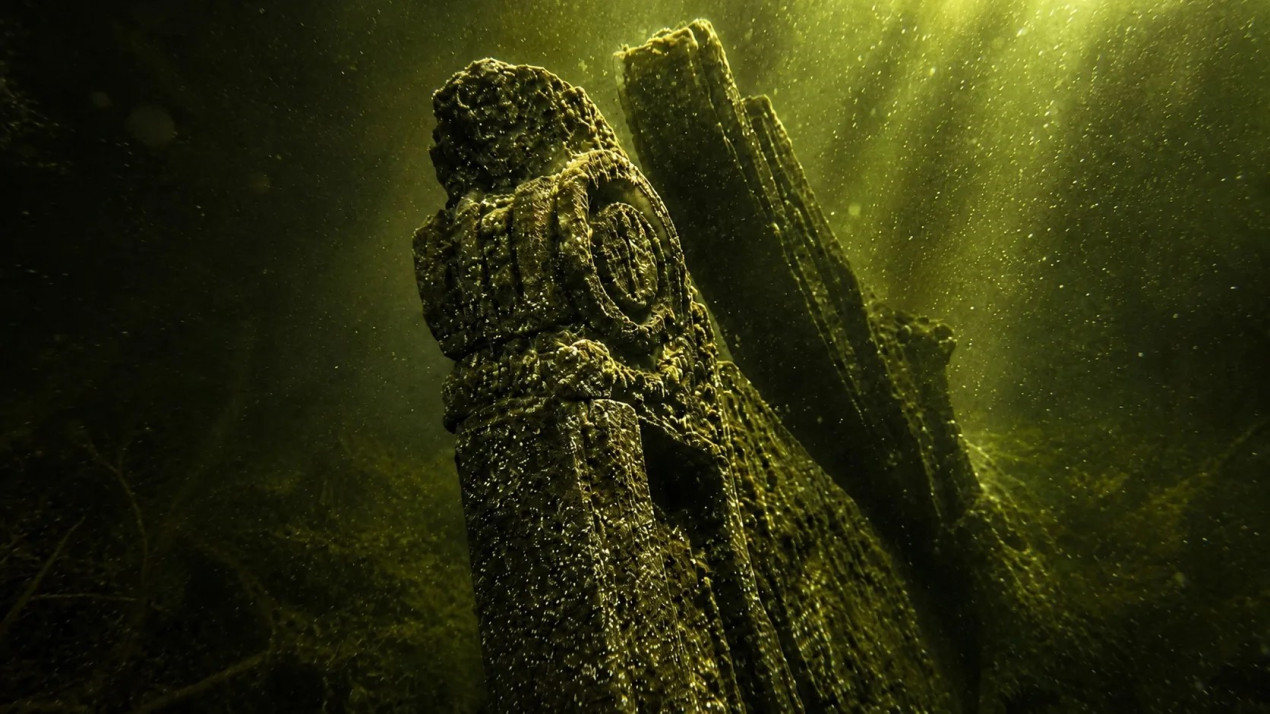
This is what the "Concurrent" looks like at the bottom of the Gulf of Finland. Photo: UET, the image of the object was processed using ChatGPT
As part of the RGS’s project «Voices of the Lost Ships», Konstantin Bogdanov’s underwater exploration team found a sunken ship in the Gulf of Finland. This is a two-masted Dutch schooner of the 19th century «Concurrent». The merchant sailboat got stuck in the ice off the island of Seskar while sailing from English Newcastle to St. Petersburg. The search was conducted with the support of the Presidential Grants Fund.
The schooner «Concurrent», with a displacement of 189 tons, was built in the town of Veendam (now the Netherlands) by order of the trading company belonging to the Wilkens brothers. The ship was launched on March 31, 1859. Its first and only captain was Abraham Danielz de Jonge. He was born on April 30, 1819, into the family of Daniel de Jonge, a sailor, and began serving as a cabin boy in 1832, eventually becoming a captain.
On May 7, 1874, the schooner was sailing with a cargo of coal from English Newcastle to St. Petersburg. The crew was in a hurry: the ice had just cleared, and the raw materials were especially expensive after the winter. However, off the island of Seskar in the Gulf of Finland, the ship was trapped by ice. Due to the strong movements of the ice field, several sailboats with the same cargo sank that spring. The schooner went down, but the crew of the «Concurrent», five Dutch and one Dane, managed to escape and reach Kronstadt. The sailboat itself was included in the list of lost commercial ships of the Netherlands.
«During the search for Soviet torpedo boats, we accidentally discovered a sailboat lying at a depth of 30 m a mile and a half from Seskar Island,» said Konstantin Bogdanov, head of the expedition. «The vessel is located directly on the line of the modern fairway which ships use today to reach the port of St. Petersburg. The object was identified by the ship’s bell. Historian Evgeny Paradeev helped restore the history of the 'Concurrent’ and its captain. Interestingly, last year, another sailing ship was found nearby, just a few kilometers from this place.»
According to researcher Konstantin Bogdanov, after the war, when mines were being trawled in the fairway, the ship was hooked with a cable. That is why all its superstructures were destroyed and its masts were broken. The hull of the sailboat was damaged, the stern was smashed, and the ship’s wheel was torn off and thrown astern. At the same time, the surviving wooden objects were well preserved. This is a feature of the Gulf of Finland: wood here often remains intact much longer than iron, because it is not susceptible to corrosion. In addition, the water has a low salinity, which slows down the destruction of organic matter. The complete absence of nets and the overall preservation are explained by the fact that the vessel lies directly on the main shipping channel, a safe passage for ships where industrial fishing has never been conducted.
In July 1875, Wilkens’ company received a certificate for a new schooner, a brig with a displacement of 172 tons, which was also called the «Concurrent». De Jonge became its captain again. He went sailing to Brazil. It was there that de Jonge died of typhus in July 1885 at the age of 66.
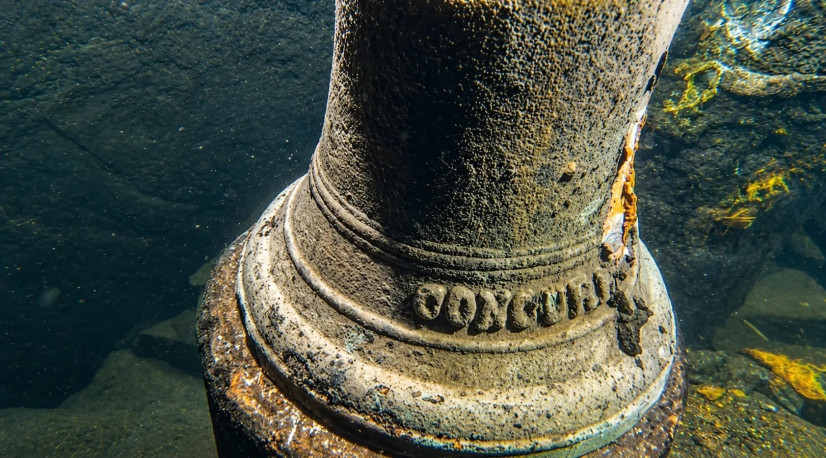
The ship's bell. Photo: UET, processed using ChatGPT
The «Voices of the Lost Ships» expedition has been held since 2012 with the support of the Baltic Fleet. Thanks to this, the death sites of more than 12,000 sailors and submariners were identified in the Gulf of Finland, 16 submarines and more than 20 ships were found and identified.